The Concrete Horizon: How Marine Infrastructure is Redefining the Ethics of Urban Expansion at Sea
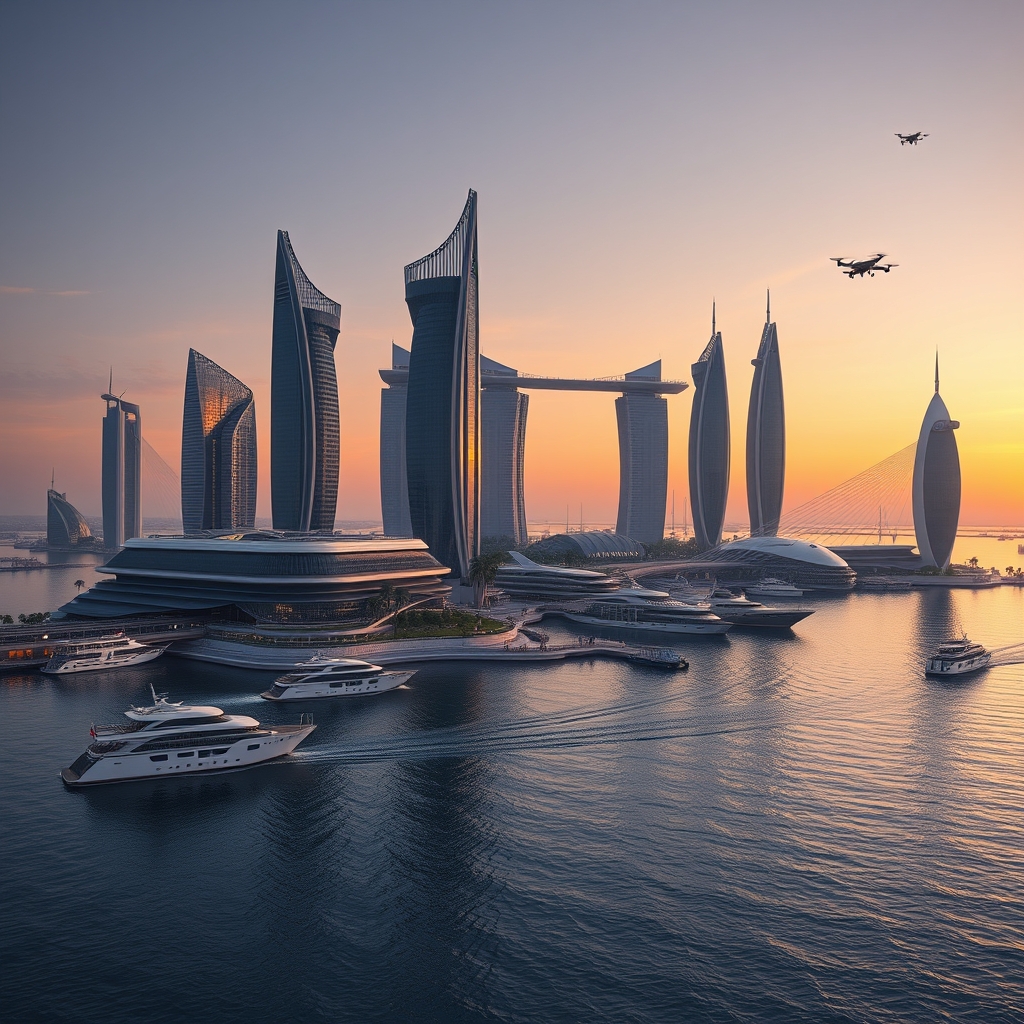
The ocean has long been a frontier of human ambition, a vast and seemingly limitless canvas upon which societies have projected their dreams of expansion, wealth, and dominance. Yet, as coastal cities strain under the pressures of population growth, climate change, and economic demand, the sea is no longer just a boundary—it is a resource to be engineered, a space to be colonized. The rise of marine infrastructure, from artificial archipelagos to floating real estate, represents a radical reimagining of urbanism, one that promises to solve the crises of land scarcity while simultaneously introducing a host of ethical and ecological dilemmas. The question is no longer whether we can build cities on water, but whether we should—and at what cost.
The Illusion of Empty Space
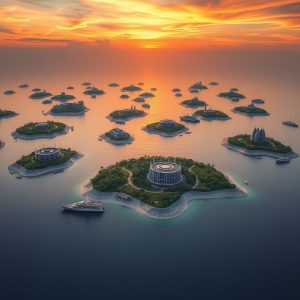
The allure of marine infrastructure lies in its promise of infinite expansion. With over 70% of the Earth’s surface covered by water, the ocean appears to offer an inexhaustible supply of space for urban development. Projects like Dubai’s Palm Jumeirah, China’s Forest City, and the Maldives’ floating islands are often marketed as visionary solutions to overcrowding, rising sea levels, and the relentless march of urbanization. Yet, this narrative of abundance is deeply misleading. The ocean is not an empty void; it is a complex, interconnected ecosystem that sustains life on a planetary scale. Every square meter of reclaimed land disrupts marine habitats, alters sediment flows, and introduces pollutants that ripple through the food chain. The assumption that the sea is a blank slate for human ambition ignores the fact that it is already occupied—by coral reefs, fish populations, migratory species, and countless microorganisms that form the foundation of the marine biosphere.
The Carbon Footprint of Paradise
Luxury island resorts and floating real estate developments are often framed as paragons of sustainability, leveraging cutting-edge technology to minimize their environmental impact. Solar panels, desalination plants, and zero-emission transportation systems are touted as evidence of a new era of eco-friendly urbanism. Yet, the reality is far more complicated. The construction of marine infrastructure requires vast quantities of sand, concrete, and steel—materials whose extraction and production are among the most carbon-intensive industrial processes on Earth. The Palm Jumeirah, for instance, required over 100 million cubic meters of sand dredged from the Persian Gulf, a process that destroyed seafloor ecosystems and released massive amounts of CO2. Similarly, the deep-sea foundations of floating cities demand advanced engineering techniques that rely on energy-intensive materials like reinforced concrete and steel piles, further exacerbating their carbon footprint. The paradox is stark: the very projects designed to adapt to climate change are often accelerating it.
The Legal Labyrinth of Submerged Sovereignty
Marine infrastructure does not exist in a legal vacuum. The construction of artificial islands, floating cities, and submerged land reclamation projects raises thorny questions about jurisdiction, ownership, and environmental responsibility. The United Nations Convention on the Law of the Sea (UNCLOS) provides a framework for maritime boundaries, but it was drafted long before the era of large-scale marine urbanism. Who owns the seabed beneath a floating city? Who is liable if a reclaimed island collapses or causes ecological damage to neighboring waters? The answers are far from clear. In some cases, nations have exploited legal ambiguities to assert sovereignty over artificial landforms, as China has done in the South China Sea, where military installations on reclaimed islands have redrawn geopolitical boundaries. Meanwhile, private developers operate in a gray area, where environmental regulations are often lax or nonexistent. The result is a patchwork of laws that fail to keep pace with technological innovation, leaving marine infrastructure in a state of legal limbo.
The Fragility of Engineered Resilience
Coastal resilience is a cornerstone of marine infrastructure, with developers promising that their projects are designed to withstand rising sea levels, storm surges, and other climate-related threats. Yet, the history of land reclamation is littered with examples of hubris. The Netherlands, a global leader in coastal engineering, has spent centuries battling the sea, only to find that its dikes and polders are increasingly vulnerable to extreme weather. In the Maldives, luxury resorts built on reclaimed land are already experiencing erosion and saltwater intrusion, forcing costly and unsustainable interventions. The truth is that marine infrastructure is not a permanent solution but a temporary fix, one that requires constant maintenance and adaptation. The deeper issue is that these projects often prioritize short-term economic gains over long-term ecological stability, creating a cycle of dependency on engineered solutions that may ultimately fail.
The Ethical Dilemma of Land Augmentation
At its core, marine infrastructure is an exercise in land augmentation—a process of creating new territory where none existed before. Yet, this act of creation is not neutral. It reflects a set of values that prioritize human needs over ecological integrity, economic growth over sustainability, and technological mastery over natural resilience. The ethical implications are profound. Who benefits from these projects? Who bears the costs? The answers are often unequal. Luxury island resorts cater to the global elite, while local communities are displaced or excluded from the economic benefits. In the Maldives, for example, the construction of artificial islands has led to the privatization of public beaches, cutting off access for local fishermen and residents. Meanwhile, the ecological costs—coral reef destruction, fish population declines, and coastal erosion—are borne by everyone, including future generations. The challenge is not just technical but moral: can we build cities on water without repeating the mistakes of the past, or are we doomed to recreate the same patterns of exploitation and environmental degradation that have defined terrestrial urbanism?
The ocean is not a frontier to be conquered but a partner to be respected. Marine infrastructure offers a tantalizing vision of the future, one where cities float on the waves and artificial islands redefine the boundaries of human habitation. Yet, this vision comes with a warning. The sea does not forgive carelessness, and the consequences of our ambitions will be felt for generations. The question is not whether we can build on water, but whether we can do so without sacrificing the very ecosystems that sustain us. The answer will determine not just the future of coastal cities, but the future of life on Earth.