The Floating Equation: How Smart Marine Cities Are Solving the Sustainability Puzzle of Land Reclamation
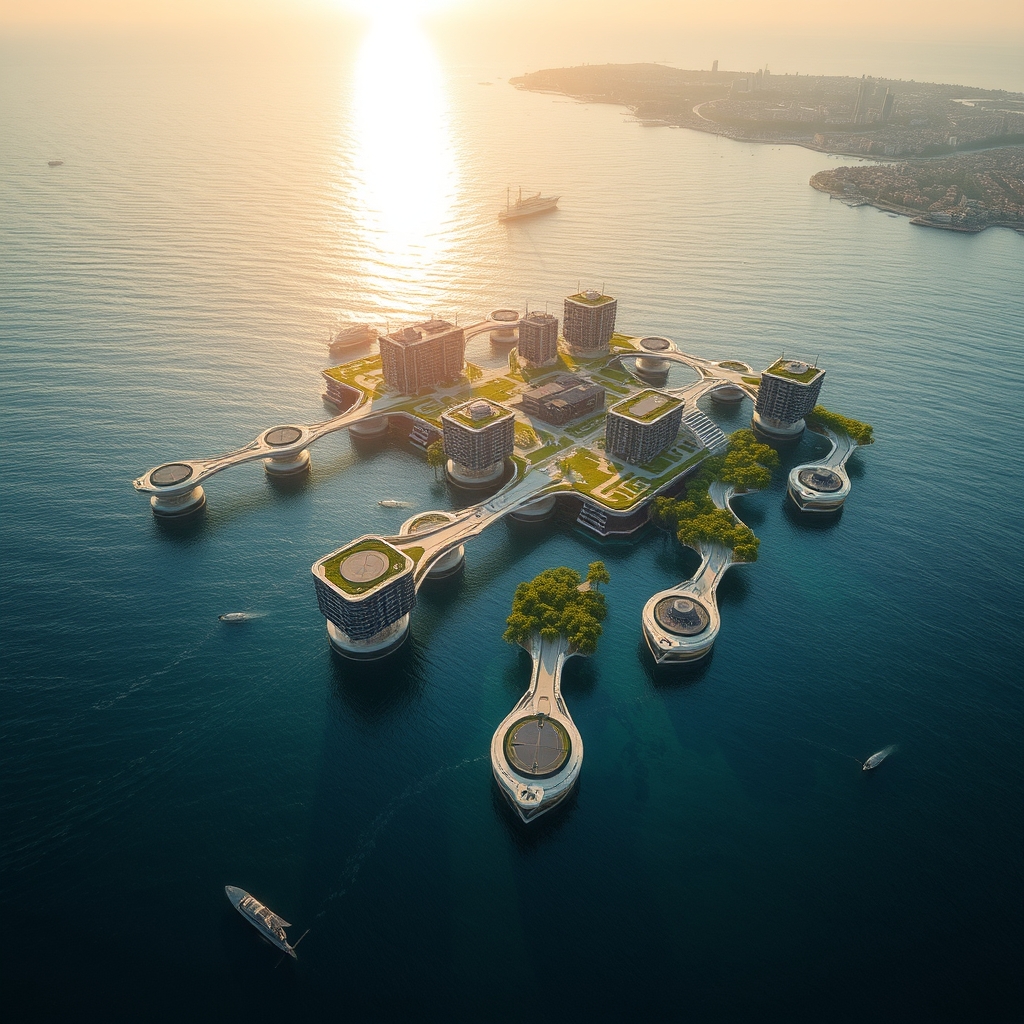
The ocean has long been a frontier of human ambition, a vast expanse where the boundaries of engineering and imagination blur. Yet, as coastal cities grapple with rising sea levels and urban sprawl, the race to reclaim land from the sea has taken on a new urgency—one that demands more than just brute-force construction. The era of simply dumping sand and concrete into the water to create artificial land is over. In its place, a more nuanced approach is emerging: one that balances the imperatives of urban expansion with the realities of coastal resilience and ecological sustainability. This is the era of smart marine cities, where land augmentation is not just about building outward but about rethinking the very foundations of maritime urbanism.
The Myth of Infinite Space
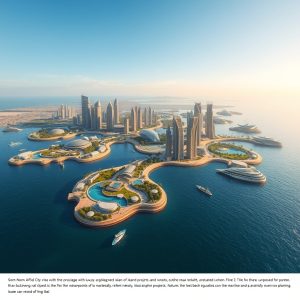
For decades, the allure of man-made islands and artificial archipelagos has been irresistible. Projects like Dubai’s Palm Jumeirah and China’s Forest City promised a future where land scarcity was a relic of the past. Yet, these developments often came at a steep cost—ecological disruption, sediment erosion, and the destabilization of marine ecosystems. The illusion of infinite space has collided with the harsh realities of geology and climate. The ocean, it turns out, is not a blank canvas but a dynamic, living system that resists human domination.
Today, the conversation has shifted. No longer is the question merely can we build it? but should we? The answer lies in the principles of eco-friendly reclamation, where engineering feats are measured not just by their scale but by their harmony with natural processes. Techniques like deep sea foundations and submerged land rights management are being reimagined to minimize environmental impact while maximizing long-term viability. The goal is no longer to conquer the sea but to coexist with it.
The Rise of Adaptive Infrastructure
The most innovative smart marine cities are those that embrace adaptability as a core design principle. Traditional coastal engineering relied on static structures—seawalls, breakwaters, and rigid landfills—that often exacerbated erosion and disrupted sediment flow. In contrast, modern approaches prioritize flexibility. Floating breakwaters, for instance, can dissipate wave energy without blocking natural currents, while modular land reclamation allows for incremental expansion that can be adjusted based on environmental feedback.
Singapore’s Marina Bay and the Netherlands’ Maasvlakte 2 exemplify this shift. Both projects integrate coastal resilience into their DNA, using advanced modeling to predict sediment movement and sea-level rise. The result is infrastructure that not only withstands the forces of nature but evolves alongside them. This is not just engineering; it is a form of maritime urban planning that treats the ocean as a partner rather than an adversary.
The Blue Economy’s Double-Edged Sword
The push for floating real estate and luxury island resorts has also exposed the contradictions within the blue economy. On one hand, these developments drive economic growth, creating jobs and attracting investment. On the other, they often prioritize short-term profits over long-term sustainability, leading to habitat destruction and increased vulnerability to climate change. The challenge lies in aligning the blue economy’s potential with the principles of reclamation sustainability.
One solution is the concept of multi-use marine infrastructure. Instead of single-purpose developments, cities are exploring hybrid models that combine residential, commercial, and ecological functions. For example, artificial reefs can double as breakwaters, while floating platforms can host both solar farms and aquaculture facilities. This approach not only maximizes the utility of reclaimed land but also ensures that ecological considerations are baked into the design from the outset.
The Legal and Ethical Labyrinth
Beyond the technical challenges, land augmentation at sea raises thorny legal and ethical questions. Who owns the seabed? How do submerged land rights intersect with international maritime law? And what happens when reclaimed land displaces traditional fishing communities or disrupts migratory patterns? These are not abstract concerns but pressing issues that shape the viability of future projects.
Countries like the Maldives and the Seychelles are pioneering new legal frameworks to address these questions, treating reclaimed land as a shared resource rather than a commodity. Meanwhile, international bodies such as the United Nations are pushing for standardized guidelines to ensure that marine infrastructure projects adhere to principles of equity and sustainability. The goal is to prevent a free-for-all in which the wealthiest nations and corporations monopolize the ocean’s resources.
The Future of Floating Urbanism
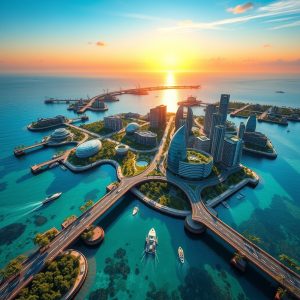
The next frontier of waterfront urbanism is not just about building on water but about building with water. Projects like the Oceanix City proposal—a floating metropolis designed to be self-sustaining and climate-resilient—hint at a future where cities are not fixed entities but dynamic systems that adapt to their environment. This vision requires a fundamental rethinking of urban design, one that prioritizes circular economies, renewable energy, and closed-loop water systems.
Yet, for all its promise, floating urbanism is not a panacea. The technology is still in its infancy, and the costs remain prohibitive for many nations. Moreover, the social and cultural implications of living on water—rather than beside it—are only beginning to be explored. What does it mean to be a coastal city when the coast is no longer a fixed line but a fluid boundary?
The most successful smart marine cities will be those that recognize the ocean not as a limitless resource but as a finite, fragile ecosystem. They will be cities that build with humility, acknowledging that the sea is not a void to be filled but a living system to be respected. In this new era of land reclamation, the measure of success will not be the size of the footprint but the depth of the harmony between human ambition and the natural world. The equation is complex, but the solution is clear: the future of coastal development lies not in domination but in collaboration.