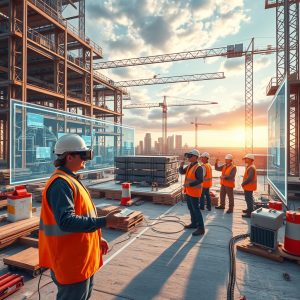
Modular Building Techniques and Smart Site Monitoring: The Synergy Driving Next-Generation Sustainable Construction

In an era where sustainability and efficiency are no longer optional but essential, the construction industry is undergoing a transformative shift. At the heart of this evolution lies the powerful synergy between modular building techniques and smart site monitoring—two innovations that are redefining how structures are conceived, built, and maintained. This fusion is not just about adopting new technologies; it’s about reimagining the entire construction ecosystem to prioritize precision, waste reduction, and real-time adaptability.
The Rise of Modular Construction: Efficiency Meets Sustainability
Modular construction has emerged as a game-changer in the quest for sustainable building methods. By fabricating building components off-site in controlled factory environments, this approach minimizes material waste, reduces construction timelines, and enhances quality control. Unlike traditional construction, where weather delays and on-site errors can derail projects, modular techniques ensure consistency and precision. Each module is engineered to exact specifications, allowing for seamless assembly on-site with minimal disruption to the surrounding environment.
The environmental benefits of modular construction are profound. According to the Modular Building Institute, this method can reduce construction waste by up to 90% compared to conventional building practices. Additionally, the controlled manufacturing process allows for better insulation, tighter seals, and improved energy efficiency—key factors in creating structures that meet stringent sustainability standards. From residential homes to commercial high-rises, modular construction is proving that speed and sustainability can coexist without compromising on design or durability.
Precision Engineering: The Backbone of Modular Innovation
At the core of modular construction lies precision engineering—a discipline that leverages advanced software, robotics, and automated processes to ensure every component fits together flawlessly. Digital tools like Building Information Modeling (BIM) enable architects and engineers to simulate the entire construction process before a single module is built. This not only reduces errors but also optimizes material usage, further driving down costs and environmental impact.
For example, prefabricated steel frames and cross-laminated timber (CLT) panels are increasingly used in modular projects due to their strength, sustainability, and ease of assembly. These materials are not only eco-friendly but also allow for greater design flexibility, enabling architects to push the boundaries of creativity while adhering to green building certifications like LEED and BREEAM. The result? Structures that are not only faster to build but also more resilient and energy-efficient.
Smart Site Monitoring: The Eyes and Ears of Modern Construction
While modular construction streamlines the building process, smart site monitoring ensures that every phase of a project is executed with unparalleled accuracy and transparency. By integrating IoT sensors, drones, and AI-driven analytics, construction sites are transforming into data-rich environments where real-time insights drive decision-making. These technologies provide a 360-degree view of the site, from tracking material deliveries to monitoring worker safety and environmental conditions.
One of the most significant advantages of smart site monitoring is its ability to enhance resource allocation. Sensors embedded in equipment and materials can detect inefficiencies, such as idle machinery or excess inventory, allowing project managers to adjust workflows dynamically. This not only reduces waste but also ensures that projects stay on schedule and within budget. Moreover, AI-powered predictive analytics can forecast potential delays or hazards, enabling proactive measures to mitigate risks before they escalate.
Real-Time Transparency: A New Standard for Accountability
Transparency has long been a challenge in the construction industry, where delays, cost overruns, and miscommunication can derail even the most well-planned projects. Smart site monitoring addresses this issue by providing stakeholders with real-time access to project data. Cloud-based platforms aggregate information from sensors, drones, and wearable devices, offering a unified dashboard that tracks progress, safety compliance, and environmental impact.
This level of transparency fosters greater collaboration among architects, contractors, and clients. For instance, clients can monitor the construction process remotely, gaining confidence in the project’s adherence to sustainability goals. Meanwhile, contractors can use data-driven insights to optimize workflows, ensuring that every resource—from labor to materials—is utilized efficiently. The result is a more accountable, streamlined, and sustainable construction process.
The Human-Centric Approach: Balancing Technology and Empathy
While technology plays a pivotal role in modern construction, the human element remains irreplaceable. Modular building techniques and smart site monitoring are not just about efficiency; they are about creating spaces that prioritize the well-being of occupants and workers alike. Human-centric design principles ensure that structures are not only functional but also comfortable, accessible, and inspiring.
For example, modular construction allows for greater customization, enabling architects to design spaces that reflect the unique needs of their occupants. Whether it’s a residential home with adaptable layouts or an office building with ergonomic workstations, modular techniques make it easier to incorporate human-centric features without sacrificing sustainability. Similarly, smart site monitoring enhances worker safety by identifying hazards in real time, reducing the risk of accidents and improving overall job satisfaction.
Eco-Friendly Material Selection: The Foundation of Sustainable Design
The choice of materials is a critical factor in the sustainability of any construction project. Modular techniques and smart monitoring systems enable builders to select eco-friendly materials with greater precision. From recycled steel and reclaimed wood to low-VOC paints and energy-efficient insulation, these materials reduce the environmental footprint of buildings while enhancing indoor air quality and occupant health.
Moreover, smart monitoring systems can track the lifecycle of materials, ensuring that they are sourced responsibly and disposed of sustainably. For instance, sensors can monitor the condition of structural components, alerting maintenance teams to potential issues before they become costly problems. This proactive approach not only extends the lifespan of buildings but also reduces the need for resource-intensive repairs.
The fusion of modular building techniques and smart site monitoring represents a paradigm shift in the construction industry. By embracing these innovations, builders can create structures that are not only faster and more cost-effective to construct but also kinder to the planet and its people. As technology continues to evolve, the possibilities for sustainable construction are limitless—ushering in an era where every building is a testament to efficiency, transparency, and human-centric design. The future of construction is not just about erecting structures; it’s about building a legacy of sustainability and innovation that will endure for generations to come.