The Fragile Horizon: How Oceanfront Developments Are Testing the Limits of Coastal Engineering
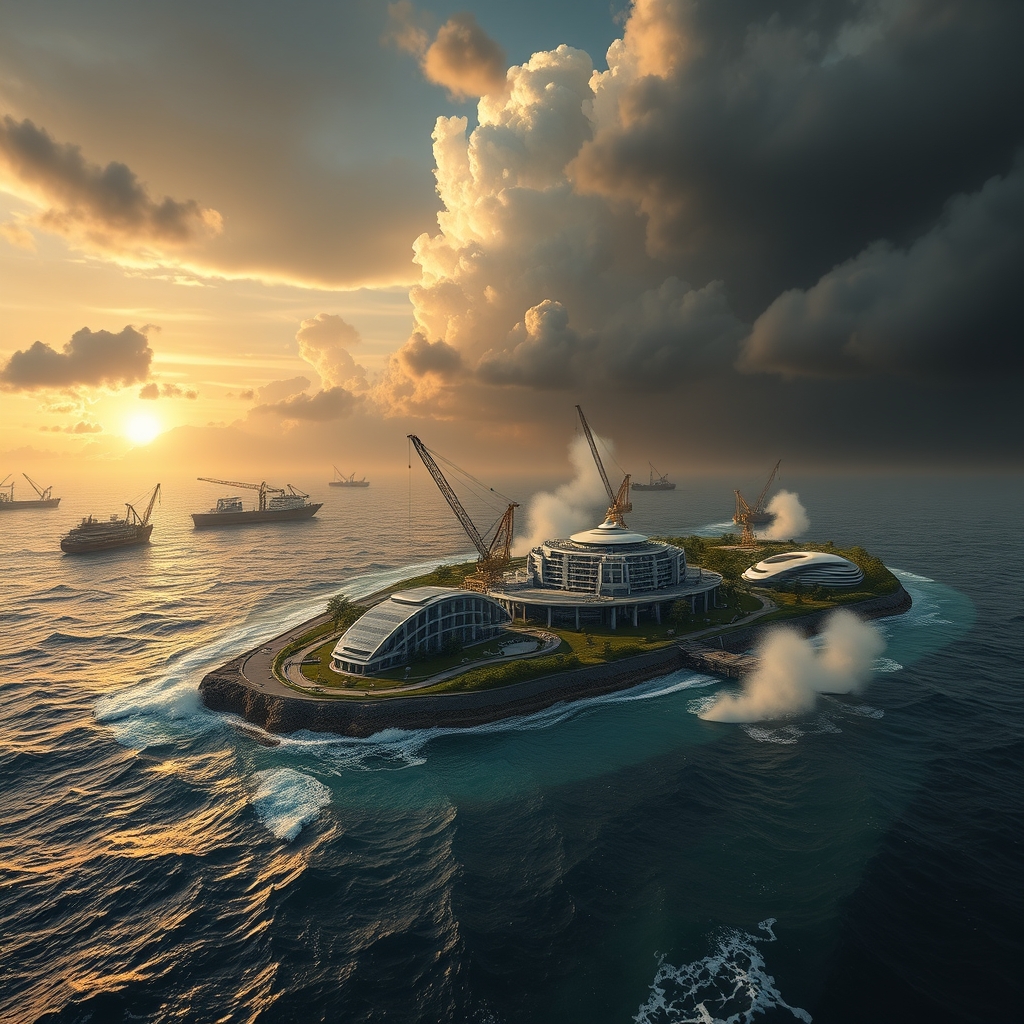
The ocean has always been a frontier of human ambition, a vast and untamed space where dreams of expansion collide with the immutable forces of nature. In the 21st century, this frontier has become a battleground for innovation, where the pursuit of waterfront urbanism and luxury island resorts is pushing the boundaries of coastal engineering to its breaking point. The rise of man-made islands and artificial archipelagos is not merely a testament to human ingenuity but a stark reminder of the fragility of our relationship with the sea. These projects, often hailed as marvels of modern engineering, are increasingly revealing the cracks in our approach to sustainable land reclamation and coastal resilience.
The Illusion of Control
At the heart of every oceanfront development lies a paradox: the belief that we can master the sea, bending its will to our architectural and economic desires. The Palm Jumeirah in Dubai, Eko Atlantic in Nigeria, and the Forest City in Malaysia are not just feats of engineering; they are monuments to this illusion. Each of these projects was conceived with the promise of urban expansion and economic prosperity, yet each has faced unforeseen challenges that expose the limits of our control. The Palm Jumeirah, for instance, has struggled with erosion, sinking, and the relentless force of tidal currents, forcing engineers to implement costly and ongoing maintenance measures. These are not isolated incidents but symptoms of a broader failure to fully grasp the dynamic and unpredictable nature of coastal ecosystems.
The Cost of Ambition
The pursuit of floating real estate and luxury island resorts is often justified by the economic benefits they bring—tourism revenue, job creation, and global prestige. However, the true cost of these developments is frequently obscured by glossy marketing campaigns and political rhetoric. The environmental toll is staggering: destruction of marine habitats, disruption of sediment flows, and the alteration of local hydrodynamics. In the case of Eko Atlantic, the project has been criticized for exacerbating coastal erosion in neighboring communities, displacing thousands of people who once relied on the ocean for their livelihoods. The irony is palpable: a development designed to protect Lagos from rising seas is, in fact, accelerating the very processes it seeks to mitigate.
The Myth of Eco-Friendly Reclamation
In response to growing criticism, many developers have rebranded their projects as examples of eco-friendly reclamation. Terms like “green infrastructure” and “sustainable marine cities” are bandied about with little regard for their actual meaning. The reality is that most reclamation projects, no matter how “green” their branding, rely on outdated and environmentally destructive techniques. Dredging, for example, is a common method used to create new land, but it devastates seabeds, releases buried pollutants, and disrupts marine life. Even when developers incorporate artificial reefs or mangrove restoration into their plans, these measures are often tokenistic, designed more to appease regulators than to genuinely restore ecological balance.
The Legal and Ethical Quagmire
Beyond the environmental concerns, man-made islands and artificial archipelagos raise complex legal and ethical questions. Who owns the seabed? How do we define submerged land rights in an era where nations are racing to claim underwater territories? The United Nations Convention on the Law of the Sea (UNCLOS) provides a framework, but it is increasingly inadequate in the face of rapid technological advancements and geopolitical ambitions. China’s construction of military outposts on reclaimed islands in the South China Sea is a case in point, where land augmentation has become a tool of territorial expansion, escalating tensions in one of the world’s most volatile regions. The lack of clear international regulations governing these practices leaves the door open for exploitation, where the line between innovation and imperialism blurs.
The Future of Coastal Resilience
If there is a path forward, it lies not in the continued domination of the sea but in a fundamental rethinking of our approach to coastal resilience. The most successful projects are those that work with the ocean rather than against it. The Netherlands, for example, has long embraced a philosophy of “living with water,” using natural barriers like dunes and wetlands to protect its coastline. Similarly, Singapore’s Marina Barrage combines flood control with freshwater storage, demonstrating how smart marine cities can integrate infrastructure with ecological preservation. These examples prove that resilience is not about building higher walls but about designing systems that adapt to the sea’s rhythms.
The Role of Technology and Innovation
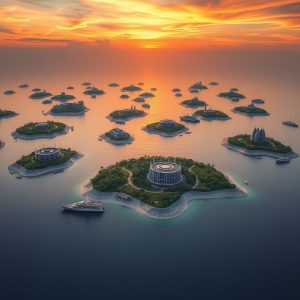
Emerging technologies offer promising avenues for more sustainable marine infrastructure. Floating foundations, modular construction, and bio-engineered materials are being explored as alternatives to traditional reclamation methods. The Oceanix City project, a proposed floating metropolis designed to withstand hurricanes and rising seas, represents a radical departure from conventional coastal development. By leveraging buoyancy and flexibility, such designs could minimize environmental disruption while providing safe, adaptable spaces for human habitation. However, these innovations remain largely untested at scale, and their long-term viability is far from guaranteed. The challenge lies in scaling these solutions without repeating the mistakes of the past—prioritizing profit over sustainability, and control over coexistence.
The ocean is not a blank canvas for human ambition but a dynamic, living system that demands respect and humility. The rush to build artificial archipelagos and luxury island resorts reflects a deeper cultural obsession with conquest and control, one that is increasingly at odds with the realities of a changing climate. The failures of past projects should serve as a cautionary tale, a reminder that the sea does not yield easily to human designs. The future of coastal resilience will not be found in the relentless expansion of our shorelines but in our ability to adapt, to listen, and to design with the ocean—not against it. The horizon is fragile, and the choices we make today will determine whether it remains a symbol of possibility or becomes a monument to hubris.