The Calculated Risks of Land from Sea: How Sustainable Reclamation is Redefining the Blue Economy
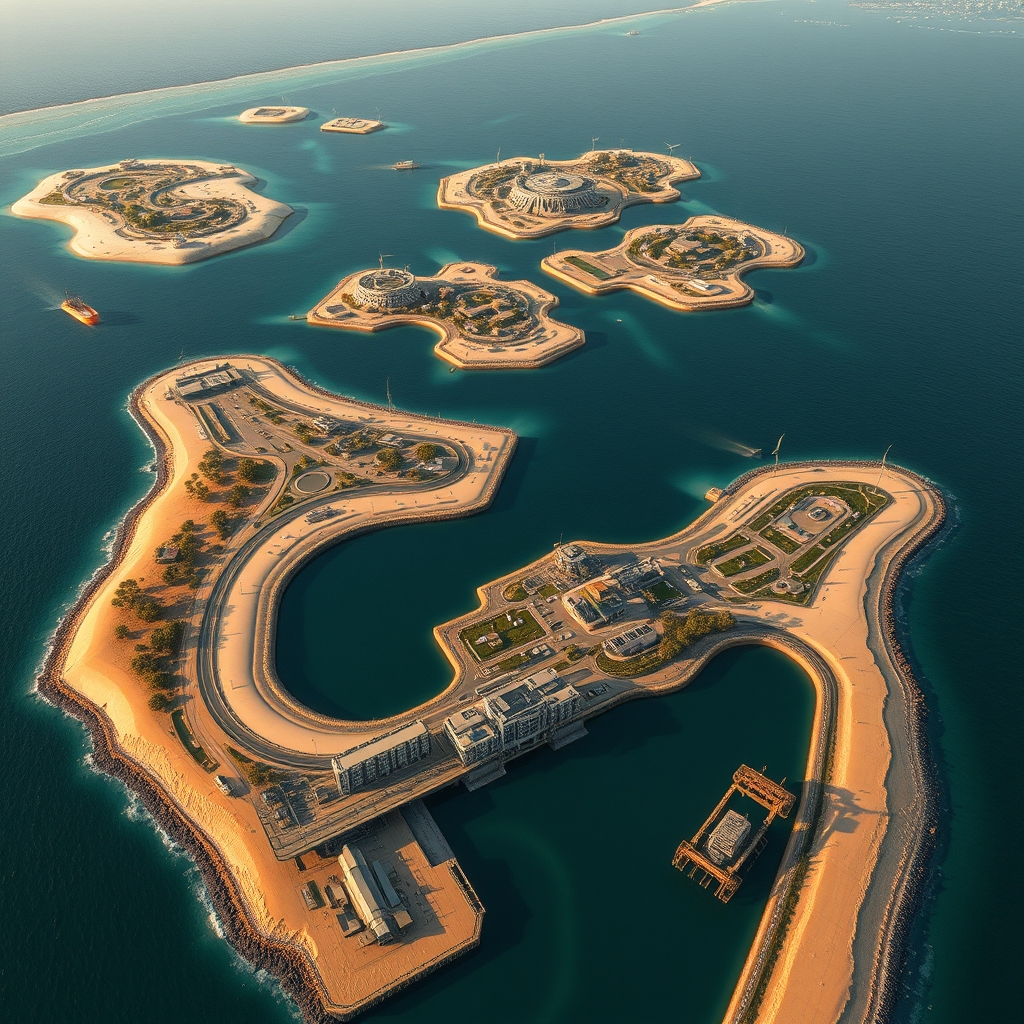
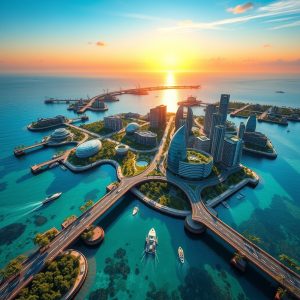
The ocean has long been a frontier for human ambition, a vast expanse where the limits of engineering and ecology collide. As coastal cities strain under the pressures of urbanization and climate change, the allure of land reclamation has grown from a pragmatic solution into a high-stakes gamble. The promise of new territory—whether for luxury resorts, smart marine cities, or floating real estate—has fueled a wave of projects that push the boundaries of what is possible. Yet, beneath the glossy renderings and bold proclamations of sustainability, lies a complex web of trade-offs, where the line between innovation and hubris blurs.
The Illusion of Limitless Expansion
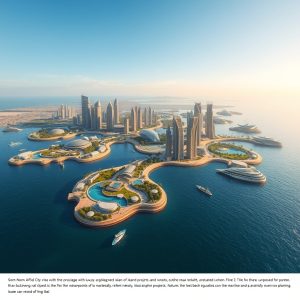
Land reclamation is not a new concept. For centuries, civilizations have sought to wrest territory from the sea, from the polders of the Netherlands to the artificial islands of Dubai. What has changed is the scale and ambition of these projects. Today, entire archipelagos are being conjured from the depths, not merely as functional spaces but as symbols of human ingenuity. The Palm Jumeirah, Eko Atlantic, and Malaysia’s Forest City are not just feats of engineering; they are statements of intent, declarations that the ocean’s boundaries are negotiable.
Yet, the illusion of limitless expansion is precisely that—an illusion. Every square meter of reclaimed land comes at a cost, not just in financial terms but in ecological and social ones. The dredging of seabeds disrupts marine ecosystems, displaces fisheries, and alters sediment flows, often with cascading effects on coastal erosion and water quality. The deep-sea foundations required to support these structures demand materials and techniques that are still being refined, raising questions about long-term stability in an era of rising sea levels. The Blue Economy, often touted as a sustainable alternative to terrestrial development, risks becoming a euphemism for the same extractive practices that have depleted land-based resources.
The Myth of Eco-Friendly Reclamation
In response to growing criticism, many modern reclamation projects now brand themselves as “eco-friendly” or “sustainable.” Green certifications, carbon-neutral pledges, and promises of biodiversity offsets have become standard fare in the marketing of these developments. But how much of this is substantive, and how much is mere greenwashing?
The reality is that truly sustainable land reclamation remains an elusive goal. While techniques like sand replenishment, artificial reefs, and mangrove restoration can mitigate some environmental impacts, they cannot fully compensate for the loss of natural habitats. The very act of creating land where none existed before is, by definition, an intervention in a delicate balance. Even the most carefully designed projects can have unintended consequences, from altered tidal patterns to the introduction of invasive species. The challenge is not just to build greener, but to question whether building at all is the wisest course of action.
The Legal and Ethical Quagmire
Beyond the environmental concerns, land reclamation raises thorny legal and ethical questions. Who owns the seabed, and who has the right to transform it? The United Nations Convention on the Law of the Sea (UNCLOS) provides a framework for maritime boundaries, but enforcement is uneven, and disputes over submerged land rights are increasingly common. In some cases, reclamation projects have been used as tools of geopolitical assertion, with nations staking claims to contested waters through the creation of artificial islands. The South China Sea, where China’s “Great Wall of Sand” has redrawn the map, is a stark example of how land augmentation can become a proxy for power struggles.
Ethically, the question is even more fraught. Reclamation projects often displace local communities, particularly in developing nations where coastal populations rely on fishing and small-scale agriculture. The promise of economic growth and job creation is frequently used to justify these disruptions, but the benefits rarely trickle down to those most affected. Instead, the spoils of reclamation—luxury resorts, high-end real estate, and exclusive marinas—tend to accrue to the already wealthy, deepening inequalities both within and between nations.
The Future of Coastal Resilience
As sea levels rise and storms grow more intense, the need for coastal resilience has never been more urgent. Yet, the solutions being proposed are often reactive rather than proactive. Reclamation projects, for all their ambition, are fundamentally defensive measures, designed to protect existing assets rather than adapt to a changing climate. The focus on building outward—into the sea—reflects a broader reluctance to confront the root causes of coastal vulnerability, from overdevelopment to carbon emissions.
Smart marine cities and floating real estate offer tantalizing glimpses of a more adaptive future. These innovations, which prioritize flexibility and modularity, could redefine urban expansion in ways that are less destructive and more responsive to environmental shifts. But they are not without their own challenges. Floating structures require advanced materials and maintenance, and their long-term viability in harsh marine conditions is still unproven. Moreover, the high costs of these technologies risk creating a two-tiered system, where only the wealthy can afford to live in climate-resilient spaces.
The Unanswered Question of Sustainability
The central tension in land reclamation is whether it can ever truly be sustainable. The term itself is often used as a shield, a way to deflect criticism by invoking the language of environmental stewardship. But sustainability is not just about minimizing harm; it is about recognizing the limits of human intervention. The ocean is not an infinite resource, nor is it a blank canvas for human ambition. It is a dynamic, interconnected system, one that we ignore at our peril.
As the race to reclaim land from the sea accelerates, the stakes grow ever higher. The projects of today will shape the coastlines of tomorrow, determining not just where we live, but how we live. The challenge is not just to build bigger or smarter, but to ask whether we are building wisely. The ocean does not yield its territory easily, and the true test of our ingenuity may lie not in how much we can take, but in how little we can afford to lose.