The Saltwater Paradox: How Eco-Friendly Reclamation is Crafting a New Coastal Reality
The coastal frontier has long been a battleground between human ambition and ecological reality. As urban expansion pushes against the limits of terrestrial space, the ocean has emerged as the next logical frontier for development. Yet, the pursuit of sustainable land reclamation is not merely an engineering challenge—it is a philosophical reckoning with the very nature of permanence. The rise of artificial archipelagos, smart marine cities, and floating real estate is not just reshaping coastlines; it is forcing a fundamental redefinition of what it means to build in harmony with an environment that refuses to stand still.
The Illusion of Control in a Fluid World
For centuries, coastal engineering has operated under the assumption that land and sea are distinct, separable entities. Dikes, seawalls, and landfill projects were designed to impose order on chaos, to carve out pockets of stability in an inherently unstable environment. But the illusion of control is crumbling. Rising sea levels, intensifying storm surges, and the slow but inexorable subsidence of reclaimed land have exposed the fragility of these interventions. The Netherlands, often hailed as the gold standard of coastal resilience, now faces the reality that its famed polders may not be as impervious as once believed. The question is no longer whether we can reclaim land from the sea, but whether we can do so without accelerating the very forces that threaten to erase our efforts.
The Myth of Eco-Friendly Reclamation
The term “eco-friendly reclamation” has become a buzzword in maritime urban planning, a promise that technology can mitigate the environmental costs of land augmentation. Projects like Singapore’s Pulau Semakau, a landfill turned nature reserve, or the Maldives’ Hulhumalé, a reclaimed island designed with climate adaptation in mind, are often cited as success stories. But these examples obscure a uncomfortable truth: no reclamation is truly sustainable. Dredging disrupts marine ecosystems, altering sedimentation patterns and smothering benthic habitats. The carbon footprint of transporting millions of tons of sand—often sourced from distant, ecologically sensitive areas—is staggering. Even the most meticulously planned projects leave scars on the seafloor, scars that may take decades, if not centuries, to heal.
Yet, the allure of eco-friendly reclamation persists because it offers a narrative of redemption. It allows developers to frame land augmentation as an act of environmental stewardship rather than exploitation. The reality is more nuanced. Sustainable reclamation is not about eliminating impact—it is about minimizing it, about accepting that every intervention carries a cost, and that the true measure of success lies in whether the benefits outweigh the long-term consequences. This requires a shift in mindset, one that moves beyond the binary of progress versus preservation and instead embraces the messy, iterative process of adaptation.
The Legal and Ethical Labyrinth of Submerged Land Rights
As reclamation projects proliferate, they are colliding with a legal framework that was never designed to accommodate the complexities of artificial land. The United Nations Convention on the Law of the Sea (UNCLOS) provides a baseline for maritime boundaries, but it offers little guidance on the status of reclaimed territory. Is an artificial island an extension of sovereign land, or does it remain subject to the same legal ambiguities as the seabed beneath it? The answer has profound implications for everything from taxation to environmental regulation.
Consider the case of China’s artificial islands in the South China Sea. These projects are not merely engineering feats—they are geopolitical statements, assertions of sovereignty in a region where maritime borders are fiercely contested. The international community has largely rejected China’s claims, but the legal precedent remains unsettled. If a nation can create land where none existed before, does that land inherit the same rights and protections as natural territory? The question is not just academic; it is a ticking time bomb for future conflicts over resources, jurisdiction, and environmental responsibility.
The Blue Economy’s Double-Edged Sword
The blue economy—an economic model centered on the sustainable use of ocean resources—has emerged as a counterpoint to the extractive practices of the past. Floating real estate, offshore wind farms, and marine aquaculture are often touted as the future of coastal development, promising to generate wealth without depleting finite resources. But the blue economy is not a panacea. It is a high-stakes gamble, one that risks repeating the same mistakes of terrestrial development: prioritizing short-term gains over long-term resilience.
Luxury island resorts, for example, are frequently marketed as paragons of sustainable tourism. Yet, their ecological footprint tells a different story. The Maldives’ artificial islands, built atop coral reefs, have disrupted fragile marine ecosystems. The energy demands of air conditioning, desalination, and waste management in these remote locations are often met by diesel generators, undermining their green credentials. The blue economy’s promise of sustainability is only as strong as the regulations that govern it—and those regulations are still catching up to the pace of innovation.
The Future of Coastal Resilience: A Delicate Balancing Act
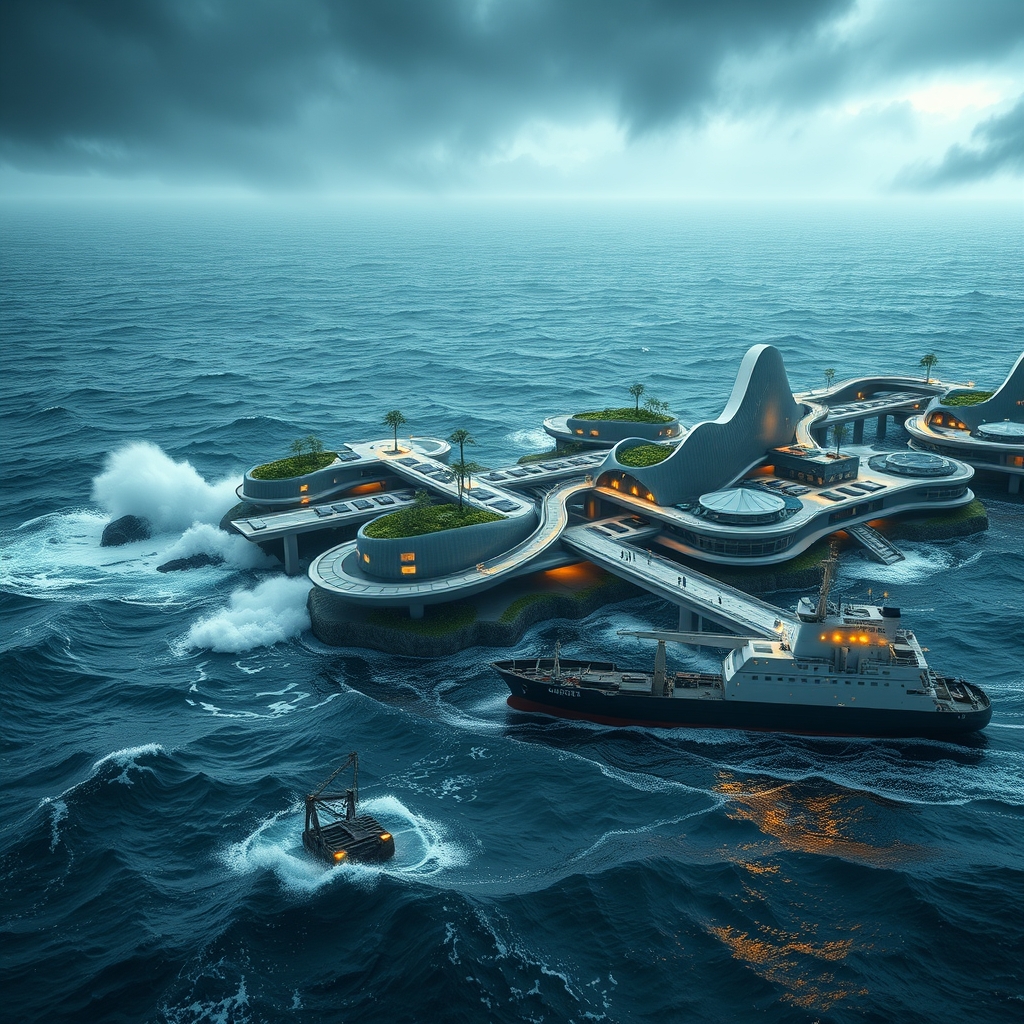
The challenge of sustainable land reclamation is not merely technical; it is existential. It forces us to confront the limits of human ingenuity in the face of a planet that is increasingly unpredictable. The most successful projects will not be those that seek to dominate the sea, but those that learn to coexist with it. This means designing for flexibility—floating foundations that can rise with the tides, permeable barriers that allow sediment to flow, and modular infrastructure that can be adapted as conditions change.
It also means rethinking our relationship with the coast. For too long, we have treated the shoreline as a boundary to be fortified, a line to be defended. But the coast is not a static frontier; it is a dynamic interface, a place of exchange between land and sea. The future of coastal resilience lies not in resisting this fluidity, but in embracing it. This will require a new kind of engineering, one that is as attuned to the rhythms of the ocean as it is to the demands of urban development. It will require a new kind of governance, one that balances the needs of people with the rights of the ecosystems that sustain them. And above all, it will require humility—the recognition that no matter how advanced our technology becomes, the sea will always have the final say.
The saltwater paradox is this: the more we seek to control the coast, the more we reveal our own vulnerability. Sustainable land reclamation is not about conquering the sea, but about learning to live with it. The question is not whether we can build on water, but whether we can do so without drowning in the consequences of our ambition.