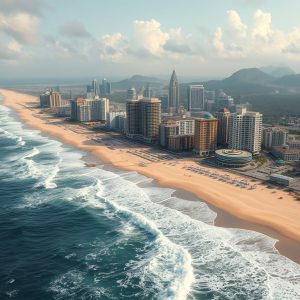
The Architectural Alchemy of Salt and Sand: How Deep Sea Foundations Are Forging the Next Era of Maritime Urbanism
The ocean has long been a frontier of human ambition, a vast and unyielding canvas upon which societies have projected their desires for expansion, wealth, and control. Yet, as coastal cities strain under the dual pressures of urbanization and climate change, the sea is no longer merely a boundary to be crossed but a space to be colonized. The rise of deep sea foundations in land reclamation projects represents a seismic shift in this narrative, one that promises to redefine the very fabric of maritime urbanism. But beneath the glossy renderings of floating cities and artificial archipelagos lies a more complex reality—one where engineering prowess collides with ecological fragility, and where the alchemy of salt and sand may yet prove to be a Faustian bargain.
The Engineering Marvels Beneath the Waves
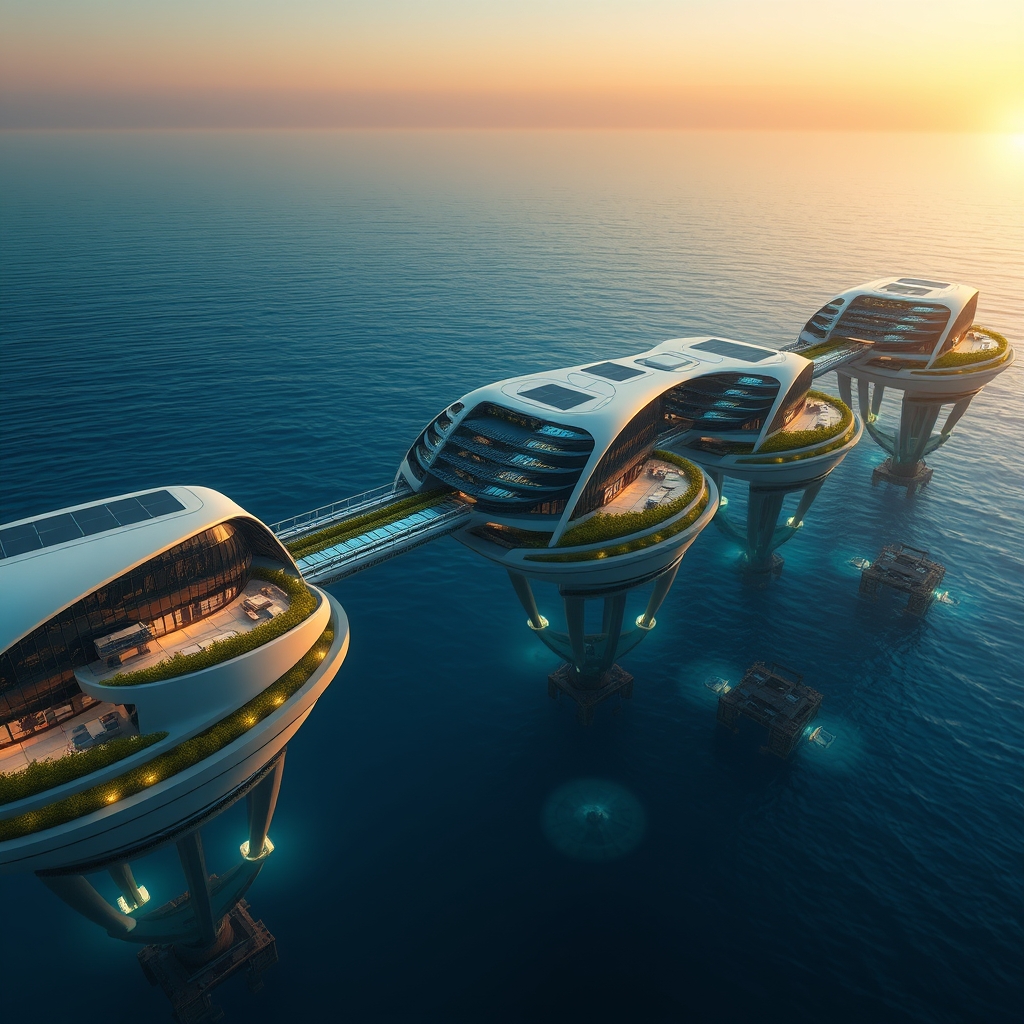
Deep sea foundations are not merely an evolution of traditional land reclamation; they are a revolution. Unlike their shallow-water predecessors, which relied on dredging and filling techniques, these structures delve into the abyssal depths, anchoring themselves to the seabed with a precision that borders on the surgical. The technology is a marvel of modern engineering: caissons sunk into the ocean floor, piled foundations driven deep into sediment, and hybrid systems that combine the rigidity of steel with the adaptability of concrete. The result is a platform capable of supporting not just buildings, but entire urban ecosystems—hospitals, schools, parks, and even airports—all perched atop the unforgiving expanse of the open sea.
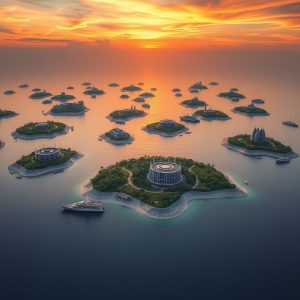
Take, for instance, the Palm Jumeirah in Dubai, a man-made island that has become the poster child for artificial archipelagos. Its foundations extend over 30 meters below sea level, a testament to the scale of ambition driving these projects. Yet, for all its grandeur, the Palm Jumeirah is a relic of an earlier era—one that prioritized spectacle over sustainability. The next generation of deep sea foundations, however, is being designed with a different ethos in mind. Projects like the Maldives’ “Floating City” or the Netherlands’ “Space at Sea” initiative are leveraging modular, buoyant structures that can adapt to rising sea levels, reducing the need for invasive dredging and minimizing disruption to marine ecosystems. These are not just feats of engineering; they are experiments in coexistence, where the built environment is no longer an imposition on nature but a negotiation with it.
The Ecological Paradox of Progress
Yet, for all their promise, deep sea foundations are not without their contradictions. The very act of reclaiming land from the sea is an inherently disruptive process, one that alters sediment flows, disrupts marine habitats, and risks exacerbating coastal erosion. The ecological toll of these projects is often obscured by the allure of their architectural grandeur. Consider the case of Hong Kong’s Chek Lap Kok Airport, built on a reclaimed island. While the project was hailed as a triumph of modern engineering, it also resulted in the destruction of critical wetland habitats and the displacement of local fishing communities. The lesson is clear: no amount of technological innovation can fully mitigate the environmental costs of land reclamation.
The challenge, then, is to reconcile ambition with accountability. Eco-friendly reclamation techniques, such as the use of geotextile tubes filled with dredged sediment or the creation of artificial reefs to support marine biodiversity, offer a glimmer of hope. But these solutions are not panaceas. They require a level of foresight and restraint that has often been lacking in the rush to expand. The question is not whether deep sea foundations can be built sustainably, but whether they can be built at all without repeating the mistakes of the past. The answer may lie in a shift from a mindset of domination to one of collaboration—where engineers, ecologists, and policymakers work in tandem to ensure that the sea remains not just a resource to be exploited, but a partner in the creation of resilient, adaptive urban spaces.
The Legal Labyrinth of Submerged Sovereignty
Beyond the technical and ecological challenges, deep sea foundations also navigate a treacherous legal landscape. The United Nations Convention on the Law of the Sea (UNCLOS) establishes a framework for maritime boundaries, but it was never designed to account for the complexities of artificial landmasses. Who owns the seabed beneath a reclaimed island? What are the rights of coastal states when these structures extend beyond their territorial waters? And how do submerged land rights intersect with the broader principles of the blue economy?
These questions are not merely academic. In the South China Sea, the construction of artificial islands has become a flashpoint for geopolitical tension, with China, Vietnam, and the Philippines all staking claims to reclaimed territory. The legal ambiguities surrounding these projects have turned them into proxies for broader disputes over sovereignty and resource rights. Meanwhile, in the Caribbean, the Bahamas has begun exploring the sale of submerged land rights to private developers, raising concerns about the commodification of the ocean floor. The implications are profound: if the sea is to become the next frontier of urban expansion, then the rules governing its use must be rewritten to reflect the realities of the 21st century.
The Future of Maritime Urbanism: A Delicate Balance
The rise of deep sea foundations is a testament to humanity’s unyielding desire to push the boundaries of what is possible. But it is also a reminder of the delicate balance that must be struck between progress and preservation. The cities of the future will not be built on solid ground, but on the shifting sands of the ocean floor—a reality that demands a new approach to urban planning, one that is as attuned to the rhythms of the sea as it is to the needs of its inhabitants.
Smart marine cities, with their sensor-laden infrastructure and adaptive design, offer a glimpse of what this future might look like. Imagine a city that rises and falls with the tides, where buildings are not static structures but dynamic systems capable of responding to environmental changes in real time. This is not science fiction; it is the logical extension of the technologies being developed today. Yet, for all their potential, these cities will only succeed if they are built on a foundation of sustainability—one that prioritizes the health of the ocean as much as the ambitions of its builders. The alchemy of salt and sand is not just a metaphor for the transformation of the sea into land; it is a reminder that the future of maritime urbanism will be forged in the crucible of compromise, where the dreams of progress are tempered by the realities of nature.
The ocean has always been a mirror, reflecting back the best and worst of human ingenuity. As we stand on the brink of a new era of land reclamation, the choices we make today will determine whether that reflection is one of harmony or hubris. The deep sea foundations we lay now will not just support buildings; they will shape the future of coastal resilience, the blue economy, and the very notion of what it means to live in balance with the sea. The question is not whether we can build these cities, but whether we can build them in a way that ensures they endure—not as monuments to our ambition, but as testaments to our wisdom.