The Illusion of Permanence: How Man-Made Islands Are Testing the Limits of Coastal Resilience
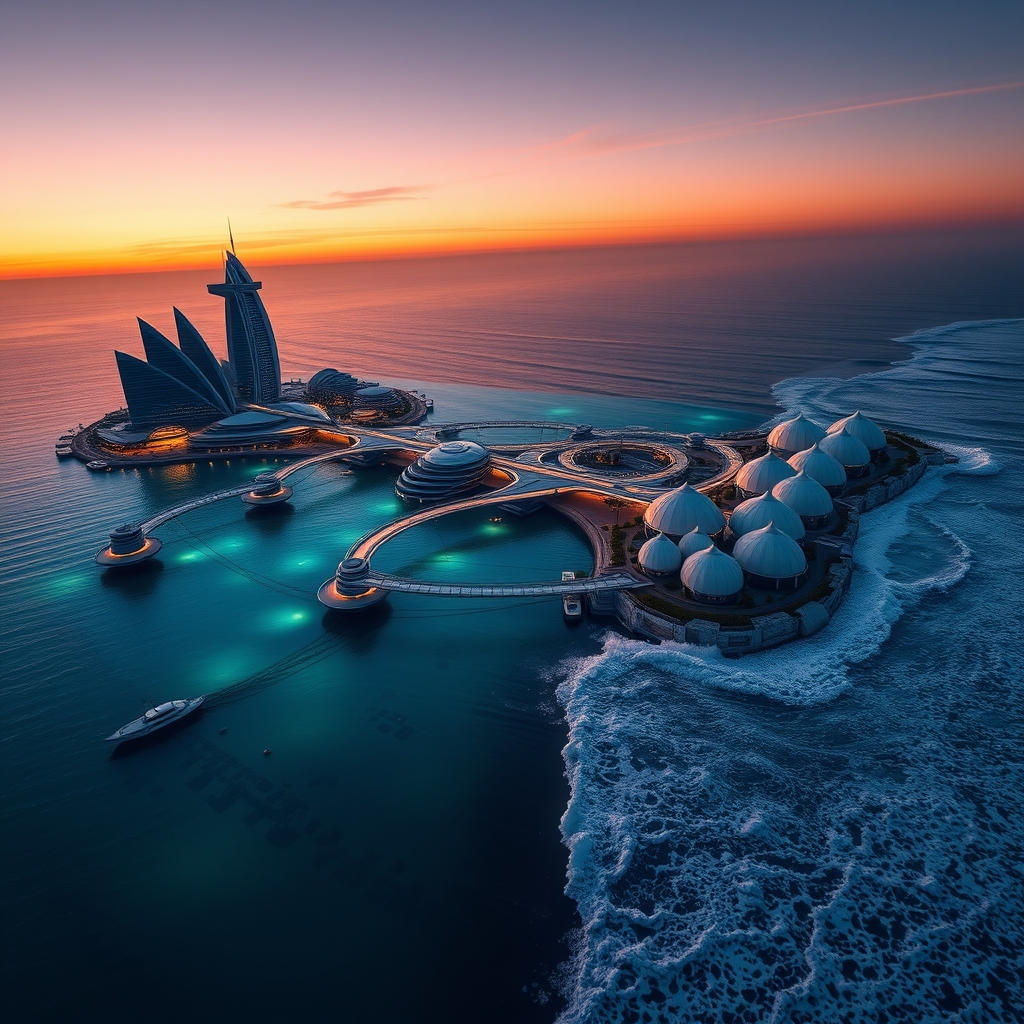
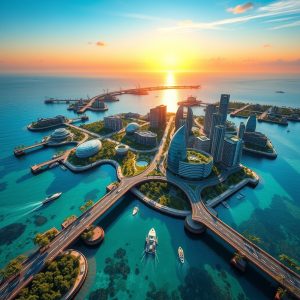
The relentless pursuit of urban expansion has driven humanity to push the boundaries of geography itself, carving new territories from the sea with a mix of ambition and hubris. Man-made islands, once the stuff of speculative fiction, have become a tangible symbol of human ingenuity—and a stark reminder of the fragility of our engineered solutions. These artificial archipelagos, whether designed for luxury resorts, smart marine cities, or floating real estate, are often hailed as marvels of coastal engineering. Yet beneath their gleaming surfaces lies a precarious reality: the illusion of permanence in a world where the sea refuses to be tamed.
The Myth of Control
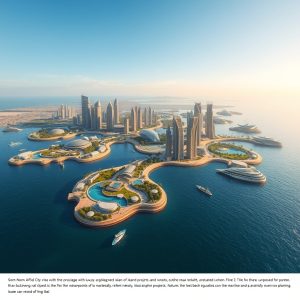
Coastal resilience is not a static achievement but a dynamic negotiation between human ambition and natural forces. Man-made islands, particularly those built on shallow seabeds or through land augmentation, are frequently presented as triumphs of modern engineering. The Palm Jumeirah in Dubai, for instance, is a testament to what can be achieved with enough capital and concrete. Yet, these projects often overlook the long-term consequences of disrupting marine ecosystems and altering sediment flows. The very act of reclaiming land from the sea sets in motion a chain of ecological and hydrological reactions that can undermine the stability of these structures over time.
Deep sea foundations and advanced coastal engineering techniques have allowed developers to construct islands in increasingly challenging environments. However, the deeper the foundations, the more complex the interplay between the artificial landmass and the surrounding water. Subsidence, erosion, and the gradual shifting of sediments are not mere technical challenges—they are existential threats to the viability of these projects. The question is no longer whether these islands can be built, but whether they can endure.
The Cost of Luxury
Luxury island resorts and high-end floating real estate are often the most visible manifestations of this trend, marketed as utopian escapes from the constraints of traditional urbanism. Yet, their very existence is predicated on a paradox: the more exclusive and isolated these developments become, the more vulnerable they are to the forces of nature. The Maldives’ artificial islands, for example, are a direct response to the existential threat of rising sea levels. But their construction has often come at the expense of coral reefs and marine biodiversity, further eroding the natural barriers that once protected the archipelago’s shores.
The blue economy infrastructure that underpins these projects is frequently touted as sustainable, but the reality is far more nuanced. Eco-friendly reclamation techniques, such as dredging with minimal environmental disruption or using recycled materials, are steps in the right direction. However, they do little to address the fundamental issue: the unsustainable consumption of space. Every square meter of reclaimed land represents a disruption to marine habitats, a shift in local hydrology, and a gamble against the inevitability of climate change.
The Legal and Ethical Quagmire
Beyond the technical and ecological challenges, man-made islands also raise thorny questions about submerged land rights and maritime urban planning. Who owns the seabed, and who has the authority to transform it? The legal frameworks governing these projects are often ambiguous, particularly in international waters, where the absence of clear jurisdiction creates opportunities for exploitation. The United Nations Convention on the Law of the Sea (UNCLOS) provides a baseline, but enforcement is inconsistent, and loopholes abound.
Ethically, the creation of artificial islands forces a reckoning with the limits of human dominion over nature. Are these projects a necessary adaptation to rising sea levels, or are they a form of environmental colonialism, where the wealthy and powerful carve out new territories at the expense of the planet’s most vulnerable ecosystems? The answer is not straightforward, but the consequences of inaction—or worse, unchecked expansion—are becoming increasingly difficult to ignore.
The Future of Floating Cities
As sea levels rise and coastal cities face unprecedented threats, the allure of floating real estate and smart marine cities grows stronger. These concepts promise a future where urban expansion is not limited by geography but enabled by innovation. Yet, the transition from vision to reality is fraught with challenges. Floating cities, for instance, must contend with the corrosive effects of saltwater, the logistical complexities of offshore infrastructure, and the psychological barriers of living on a structure that is, by definition, impermanent.
Maritime urban planning is evolving to meet these challenges, with a growing emphasis on modular designs, renewable energy integration, and adaptive reuse of materials. But even the most advanced smart marine cities are not immune to the laws of physics or the unpredictability of climate change. The key to their success lies not in the illusion of control, but in the humility to adapt—to design with nature, rather than against it.
The narrative of man-made islands is one of human ambition clashing with the immutable forces of nature. These projects are not inherently flawed, but their sustainability hinges on a willingness to confront uncomfortable truths: that the sea is not a blank canvas, that land reclamation is not a one-time achievement, and that resilience is not a destination but a continuous process. The question is not whether we can build these islands, but whether we can build them in a way that respects the delicate balance of the ecosystems we seek to inhabit. The illusion of permanence may be seductive, but it is the acceptance of impermanence that will define the future of coastal resilience.