The Synthetic Shoreline: How Artificial Archipelagos Are Rewriting the Rules of Maritime Urbanism
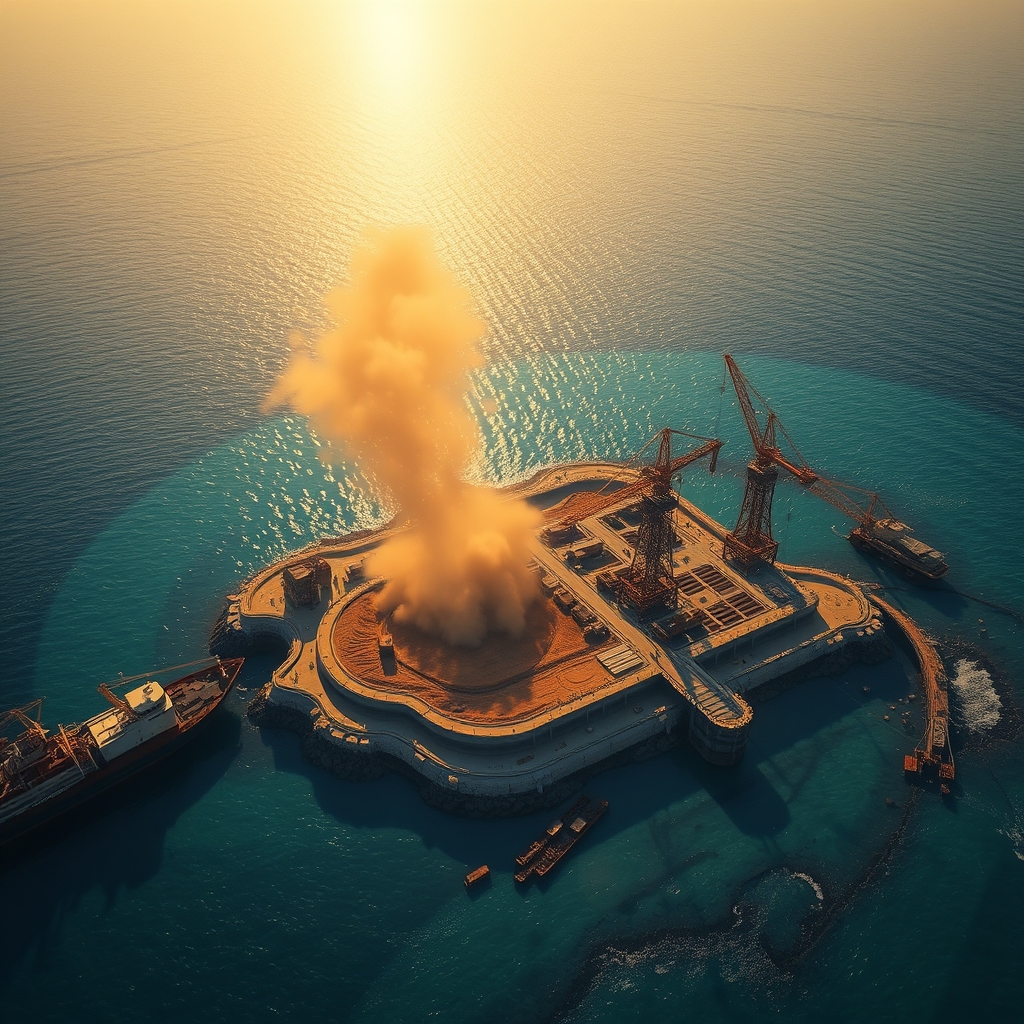
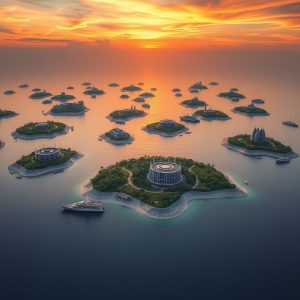
The ocean has long been a frontier of human ambition, a vast and seemingly limitless canvas for expansion. Yet, as coastal cities strain under the pressures of urbanization, climate change, and economic demand, the sea is no longer just a boundary—it is a resource to be engineered, a space to be colonized. Artificial archipelagos, once the stuff of speculative fiction, have emerged as the most audacious expression of this shift, transforming maritime urbanism from a discipline of adaptation into one of outright creation. But beneath the sleek renderings and grand promises lies a fundamental question: Are these synthetic shorelines a triumph of human ingenuity or a reckless gamble with ecological and social consequences we are only beginning to understand?
The Illusion of Control in a Fluid World
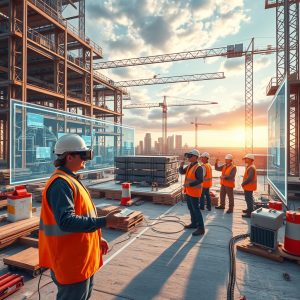
At the heart of artificial archipelago projects is the assumption that the ocean can be tamed—that through sheer engineering prowess, we can impose order on a dynamic, unpredictable environment. The Palm Jumeirah in Dubai, Eko Atlantic in Nigeria, and Malaysia’s Forest City are often cited as proof of concept, monuments to what can be achieved when capital, technology, and political will align. Yet, these projects are not mere feats of construction; they are acts of defiance against natural systems that have evolved over millennia. The very materials used to build them—dredged sand, reinforced concrete, and steel—are extracted, transported, and assembled in ways that disrupt marine ecosystems, alter sediment flows, and exacerbate coastal erosion elsewhere.
The irony is stark: while these archipelagos are marketed as solutions to urban sprawl and rising sea levels, they often accelerate the problems they claim to solve. The dredging required to create them destroys seagrass beds and coral reefs, which act as natural barriers against storm surges. The impermeable surfaces of these man-made islands prevent the natural absorption of wave energy, increasing the risk of flooding for adjacent coastal communities. And the sheer scale of these projects—some spanning thousands of hectares—creates microclimates that can intensify local weather patterns, turning what was once a buffer against the elements into a liability.
The Mirage of Sustainability
Sustainability is the watchword of modern urban development, and artificial archipelagos are no exception. Developers tout green certifications, renewable energy integration, and eco-friendly designs as proof that these projects are not just viable but virtuous. Yet, the reality is far more complicated. The carbon footprint of constructing an artificial island is staggering: the energy required to dredge, transport, and compact millions of tons of sand is equivalent to the annual emissions of small nations. The materials themselves—often sourced from distant quarries or seabeds—add another layer of environmental cost, one that is rarely accounted for in the glossy brochures.
Moreover, the sustainability claims of these projects often rely on a narrow definition of the term, one that prioritizes energy efficiency and waste reduction over broader ecological impacts. A LEED-certified luxury resort built on reclaimed land may boast solar panels and water recycling systems, but if its construction has destroyed a mangrove forest or disrupted a critical fish spawning ground, can it truly be called sustainable? The answer is not just a matter of semantics; it is a fundamental challenge to the way we measure progress in maritime urbanism. If the goal is to create resilient, livable spaces, then the metrics must extend beyond the boundaries of the project itself, encompassing the health of the surrounding marine environment and the well-being of coastal communities.
The Social Costs of Synthetic Shorelines
Artificial archipelagos are not just engineering marvels; they are social experiments, often with profound and unintended consequences. The most obvious of these is displacement. Coastal communities, particularly in the Global South, are frequently uprooted to make way for these projects, their homes and livelihoods sacrificed in the name of progress. In Lagos, the construction of Eko Atlantic has led to the forced eviction of fishing communities, who have seen their access to traditional fishing grounds cut off by the massive sea walls designed to protect the new development. In the Maldives, the government’s plan to build a series of artificial islands has raised concerns about the erosion of local cultures and the concentration of wealth in the hands of a few.
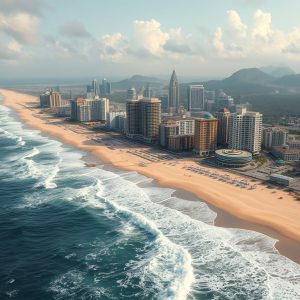
Even in wealthier nations, the social implications of artificial archipelagos are fraught. These projects are often designed with a specific demographic in mind—affluent residents, tourists, and investors—creating enclaves of privilege that are physically and economically isolated from the rest of the city. The result is a form of urban fragmentation, where the benefits of maritime urbanism are unevenly distributed, and the costs are borne by those least able to afford them. The Palm Jumeirah, for instance, is a masterclass in exclusivity, with its gated communities, private beaches, and luxury resorts catering to a global elite while the rest of Dubai grapples with the environmental and social fallout of its rapid expansion.
The Legal and Ethical Labyrinth
The rise of artificial archipelagos has also exposed gaps in international law, particularly when it comes to submerged land rights and maritime boundaries. The United Nations Convention on the Law of the Sea (UNCLOS) provides a framework for defining territorial waters and exclusive economic zones, but it was not designed with man-made islands in mind. As a result, disputes over sovereignty, jurisdiction, and resource rights have become increasingly common. China’s construction of artificial islands in the South China Sea, for example, has sparked geopolitical tensions, with neighboring countries accusing Beijing of using these projects to assert control over disputed waters.
Ethically, the creation of artificial archipelagos raises questions about the limits of human intervention in natural systems. If we can build islands, should we? And if so, under what conditions? The precautionary principle—a cornerstone of environmental law—suggests that in the absence of scientific certainty, we should err on the side of caution. Yet, the pace of development in maritime urbanism often outstrips our ability to fully assess its impacts, leaving regulators and policymakers scrambling to keep up. The result is a patchwork of regulations that vary widely from country to country, creating opportunities for exploitation and inconsistency.
The Future of Maritime Urbanism: Adaptation or Hubris?
The allure of artificial archipelagos is undeniable. They offer a tantalizing vision of the future, one where cities expand not outward but upward and outward into the sea, where the boundaries between land and water blur, and where human ingenuity triumphs over the constraints of geography. Yet, this vision comes with a caveat: it assumes that the ocean is a blank slate, a passive recipient of human ambition rather than a dynamic, living system with its own rhythms and limits. The truth is that the sea does not yield easily, and the history of land reclamation is littered with examples of projects that have failed, either through environmental degradation, economic collapse, or social upheaval.
The challenge for maritime urbanism in the 21st century is not just to build more, but to build smarter—to recognize that the ocean is not a frontier to be conquered, but a partner to be collaborated with. This means designing projects that work with natural systems rather than against them, that prioritize ecological resilience over short-term profit, and that include coastal communities in the planning process rather than displacing them. It means acknowledging that the sea is not infinite, and that every artificial island, every reclaimed hectare, comes with a cost that must be accounted for. The question is not whether we can build these synthetic shorelines, but whether we should—and if we do, how we can ensure that they serve the greater good rather than the narrow interests of a privileged few. The tides of change are already upon us, and the choices we make today will determine whether maritime urbanism becomes a force for sustainability or a cautionary tale of human hubris.