Precision Engineering and Lean Practices: The Dynamic Duo Transforming Sustainable Construction
In an era where sustainability is no longer a choice but a necessity, the construction industry is undergoing a profound transformation. At the heart of this evolution lies a powerful synergy between precision engineering methods and lean construction practices. This combination is not just redefining how buildings are constructed but also ensuring that every project is executed with unparalleled efficiency, minimal waste, and a deep commitment to environmental stewardship. As urban landscapes continue to expand, the demand for smarter, greener, and more adaptable construction solutions has never been more urgent.
The Foundation of Precision Engineering
Precision engineering in construction is akin to performing surgery with a scalpel rather than a sledgehammer. It involves the use of advanced technologies such as Building Information Modeling (BIM), laser scanning, and automated machinery to achieve exacting standards in every phase of a project. These tools allow for meticulous planning, where every measurement, material, and maneuver is calculated with pinpoint accuracy. The result? Structures that are not only built to last but also constructed with a fraction of the waste traditionally associated with the industry.
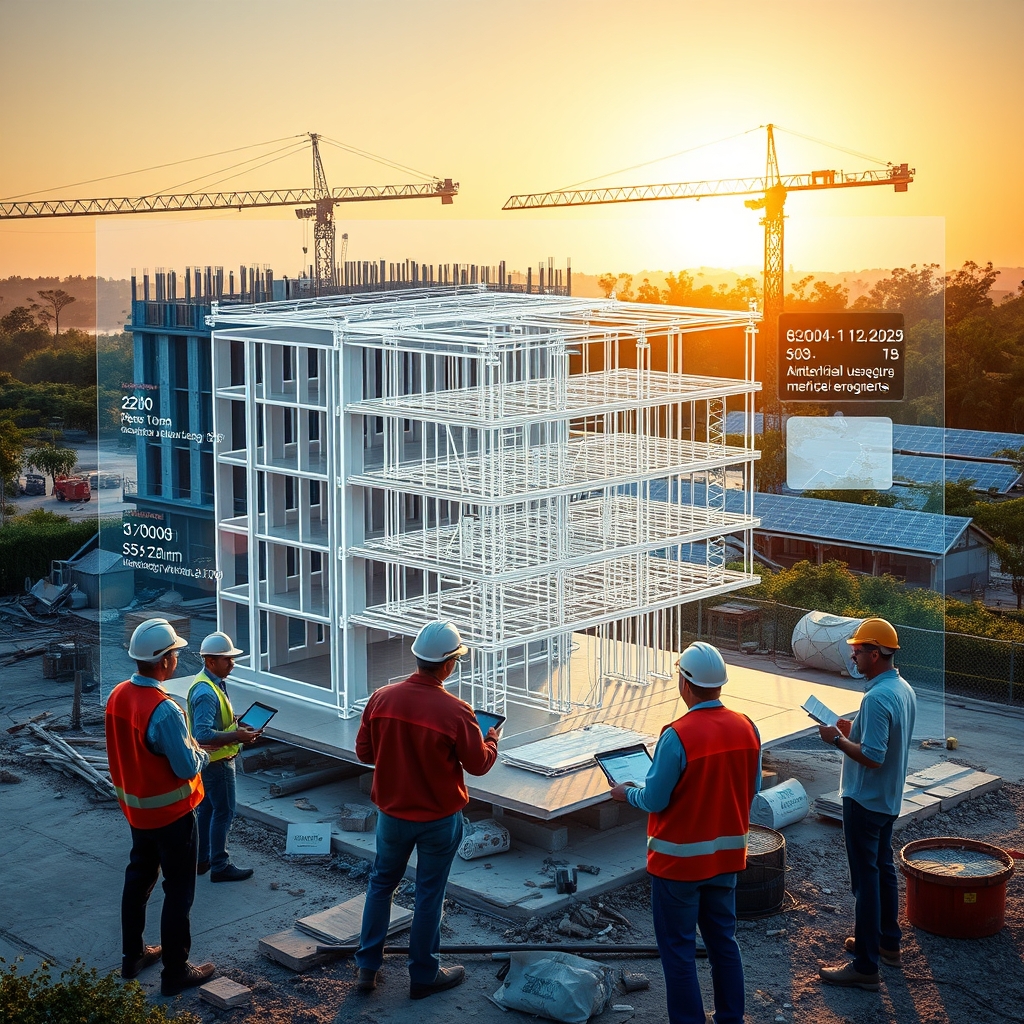
One of the most compelling examples of precision engineering in action is the use of prefabricated components. By manufacturing building elements off-site in controlled environments, construction teams can ensure consistency in quality while significantly reducing material waste. This approach also minimizes on-site disruptions, leading to faster project completion and lower carbon footprints. When combined with digital twin technology, which creates a virtual replica of the physical site, precision engineering enables real-time monitoring and adjustments, ensuring that every aspect of the build aligns with the original design.
Lean Construction: Doing More with Less
While precision engineering focuses on the technical aspects of construction, lean practices address the human and process-driven elements. Originating from the manufacturing principles pioneered by Toyota, lean construction is all about maximizing value while minimizing waste. This philosophy extends beyond material waste to include time, effort, and even energy—every resource is scrutinized to ensure it contributes meaningfully to the final outcome.
At its core, lean construction emphasizes collaboration and continuous improvement. Teams are encouraged to work in tandem, breaking down silos that often plague traditional construction projects. Daily stand-up meetings, known as “huddles,” keep everyone aligned on goals and challenges, fostering a culture of transparency and accountability. Tools like the Last Planner System (LPS) enable teams to plan work in short, manageable increments, allowing for quick adjustments when unforeseen issues arise. This agility is crucial in an industry where delays and cost overruns are all too common.
Moreover, lean construction prioritizes the elimination of non-value-added activities. For instance, just-in-time delivery of materials ensures that resources are available when needed, reducing storage costs and the risk of damage or theft. Similarly, modular construction techniques allow for parallel workflows, where different teams can work on various sections of a project simultaneously, further accelerating timelines without compromising quality.
The Intersection of Precision and Lean
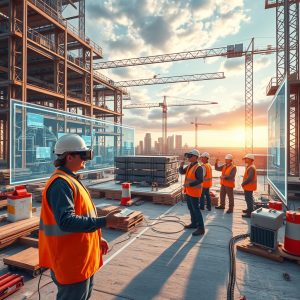
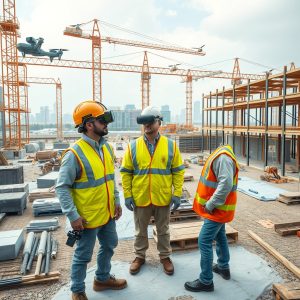
The true magic happens when precision engineering and lean construction practices converge. Imagine a project where every component is designed with exacting precision, manufactured off-site to eliminate waste, and delivered just in time for installation. On-site, teams operate with a shared digital model, using augmented reality (AR) to visualize the build in real time and identify potential clashes before they occur. This level of integration not only streamlines the construction process but also enhances safety, as workers are less likely to encounter unexpected hazards.
This synergy also extends to sustainability. Precision engineering reduces material waste, while lean practices minimize energy consumption and carbon emissions. Together, they create a framework where buildings are not only constructed efficiently but also designed to operate sustainably over their lifecycle. For example, energy-efficient HVAC systems, smart lighting, and renewable energy integrations can be seamlessly incorporated into the design, ensuring that the building remains eco-friendly long after construction is complete.
Real-World Success Stories
Several high-profile projects around the world have demonstrated the transformative potential of combining precision engineering with lean construction. One notable example is the Edge in Amsterdam, often hailed as the world’s most sustainable office building. The project leveraged BIM and digital twin technology to optimize every aspect of the design, from energy use to space utilization. Lean principles were applied throughout construction, resulting in a 30% reduction in material waste and a 50% faster build time compared to traditional methods.
Similarly, the construction of the Shanghai Tower in China showcased how modular techniques and precision engineering could be scaled to create one of the tallest and most energy-efficient skyscrapers in the world. By prefabricating key components and using advanced monitoring systems, the project team was able to reduce construction time by 20% while achieving a 21% improvement in energy efficiency. These examples underscore the fact that sustainability and efficiency are not mutually exclusive—they are, in fact, mutually reinforcing.
Overcoming Challenges and Embracing the Future
Despite its many advantages, the adoption of precision engineering and lean construction is not without challenges. One of the primary hurdles is the initial investment required for advanced technologies and training. Many construction firms, particularly smaller ones, may hesitate to adopt these methods due to the perceived high costs. However, the long-term savings in material waste, labor efficiency, and energy consumption often outweigh the upfront expenses, making it a worthwhile investment.
Another challenge lies in shifting the industry’s culture. Construction has long been a traditional field, resistant to change. However, as the benefits of these methods become increasingly evident, more firms are beginning to embrace innovation. Industry-wide initiatives, such as green building certifications and government incentives for sustainable construction, are also playing a crucial role in driving adoption.
Looking ahead, the future of construction will likely be shaped by even greater integration of technology and sustainability. Advances in artificial intelligence (AI) and machine learning could further enhance precision engineering, enabling predictive modeling that anticipates and mitigates potential issues before they arise. Meanwhile, lean practices will continue to evolve, with a growing emphasis on circular economy principles, where materials are reused and recycled to minimize environmental impact.
As the construction industry continues to evolve, the fusion of precision engineering and lean practices will remain a cornerstone of sustainable building. These methods are not just about constructing buildings—they are about creating a legacy of efficiency, innovation, and environmental responsibility. The projects of today are laying the groundwork for a future where every structure is a testament to what can be achieved when technology and sustainability go hand in hand, proving that the built environment can be both a marvel of human ingenuity and a guardian of the planet.