Tides of Transformation: The Unseen Costs of Waterfront Urbanism in the Era of Land Augmentation
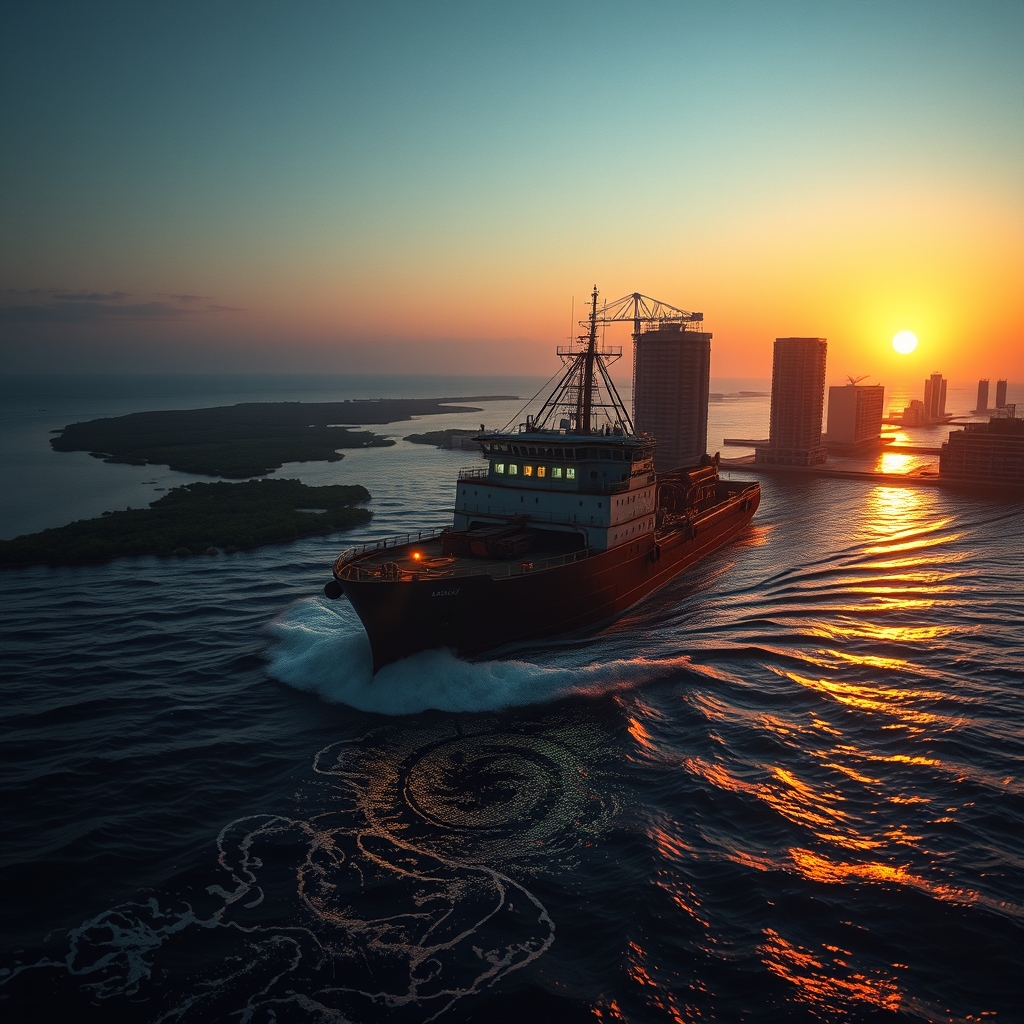
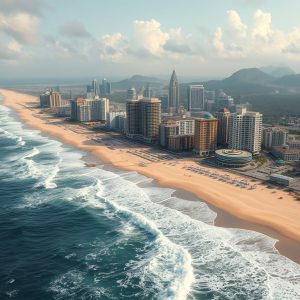
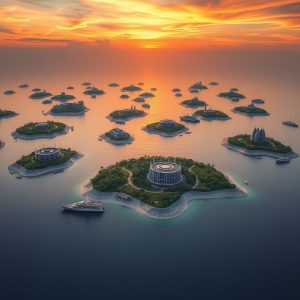
The relentless march of urbanization has pushed coastal cities to the brink of their natural limits, forcing a reckoning with the finite nature of land. Waterfront urbanism, once a niche experiment in maritime architecture, has now become a global phenomenon, driven by the seductive promise of limitless expansion. Yet, beneath the glossy renderings of artificial archipelagos and floating real estate lies a complex web of ecological, economic, and ethical dilemmas that demand scrutiny. The question is no longer whether we can reclaim land from the sea, but whether we should—and at what cost.
The Illusion of Empty Horizons
The allure of man-made islands is undeniable. They offer a blank canvas for urban planners, a chance to escape the constraints of overcrowded cities, and a lucrative opportunity for developers. Projects like Dubai’s Palm Jumeirah and Malaysia’s Forest City have captured the world’s imagination, presenting a vision of futuristic living where luxury and innovation converge on the water. But these developments are not merely feats of engineering; they are manifestations of a deeper cultural obsession with dominion over nature. The sea, once a boundary, is now a frontier to be conquered, its depths mined for real estate gold.
Yet, the narrative of infinite expansion is a dangerous one. The ocean is not an empty void but a dynamic, living system that sustains countless species and regulates the planet’s climate. Land augmentation disrupts this balance, altering tidal flows, sediment transport, and marine habitats. The consequences are often irreversible. In the Maldives, where entire islands have been reclaimed to combat rising sea levels, the long-term viability of such projects remains uncertain. The very act of building on water may accelerate erosion elsewhere, creating a zero-sum game where one community’s gain is another’s loss.
The Myth of Sustainability in Reclamation
Proponents of eco-friendly reclamation argue that modern techniques can mitigate environmental harm. Dredging methods have evolved, they claim, with precision engineering minimizing disruption to marine ecosystems. Some projects even tout their use of recycled materials or artificial reefs to offset ecological damage. But these measures are often little more than greenwashing—a thin veneer of sustainability over a fundamentally extractive process. The truth is that no amount of technological innovation can fully compensate for the loss of natural coastal defenses like mangroves and wetlands, which act as buffers against storms and nurseries for marine life.
Moreover, the sustainability of reclamation projects is frequently measured in narrow, short-term metrics. A man-made island may boast LEED-certified buildings and solar panels, but what of the carbon footprint of its construction? The energy-intensive process of dredging, transporting, and compacting millions of tons of sand and rock is rarely accounted for in the glossy brochures. And what happens when sea levels rise faster than anticipated? Many of these projects are designed with a lifespan of decades, not centuries, leaving future generations to grapple with the consequences of today’s hubris.
The Legal Quagmire of Submerged Land Rights
The rush to reclaim land has also exposed a legal vacuum in maritime governance. Who owns the seabed? How far do a nation’s territorial rights extend? These questions, once the domain of diplomats and naval strategists, are now central to the economics of land augmentation. The United Nations Convention on the Law of the Sea (UNCLOS) provides a framework, but its application is often murky, particularly in disputed waters. In the South China Sea, for instance, competing claims over artificial islands have escalated into geopolitical tensions, with little regard for the environmental toll.
Even within a single country, submerged land rights can be a contentious issue. In the United States, the federal government and coastal states frequently clash over jurisdiction, with developers caught in the middle. The lack of clear regulations creates a Wild West atmosphere, where projects proceed with minimal oversight, and environmental safeguards are treated as optional. The result is a patchwork of policies that prioritize economic gain over ecological stewardship, leaving communities vulnerable to the long-term consequences of unchecked reclamation.
The Human Cost of Maritime Urban Planning
Behind the sleek renderings and grand visions of smart marine cities lies a less glamorous reality: the displacement of communities and the erosion of cultural heritage. Coastal reclamation often targets areas inhabited by fishing villages, indigenous groups, or low-income populations, who lack the political clout to resist. In Lagos, Nigeria, the Eko Atlantic project promises to transform the city’s waterfront into a gleaming financial hub, but it has also sparked fears of gentrification and the loss of livelihoods for local fishermen. Similar stories play out across the globe, from Jakarta to Mumbai, where the pursuit of waterfront urbanism comes at the expense of those who have lived in harmony with the sea for generations.
The irony is that many of these projects are sold as solutions to urban overcrowding, yet they often exacerbate inequality. Luxury island resorts and high-end residential developments cater to the wealthy, while the working-class communities that sustain the city are pushed further to the margins. The promise of coastal resilience becomes a hollow one when the benefits are unevenly distributed, and the burdens—environmental degradation, rising sea levels, and economic displacement—are borne by those least equipped to handle them.
The Future of Floating Real Estate: Innovation or Folly?
As traditional reclamation methods face growing scrutiny, floating real estate has emerged as a seemingly more sustainable alternative. Projects like the Netherlands’ Schoonschip and the Maldives’ Floating City offer a vision of urban living that adapts to, rather than resists, the natural movements of the sea. Proponents argue that floating structures can reduce the environmental impact of land augmentation, while also providing a flexible solution to rising sea levels. But the technology is still in its infancy, and the long-term viability of these developments remains unproven.
Critics point out that floating cities are not immune to the same economic and social challenges as their land-based counterparts. The cost of construction and maintenance is prohibitively high for most communities, and the infrastructure required to support them—such as desalination plants and renewable energy systems—is complex and energy-intensive. Moreover, the idea of a fully self-sustaining floating city is a utopian fantasy, one that ignores the realities of global supply chains and resource dependencies. The sea may offer a new frontier, but it is not a blank slate; it is a shared resource, and its exploitation must be carefully managed to avoid repeating the mistakes of the past.
The tide of waterfront urbanism shows no signs of receding. As coastal cities grapple with the dual pressures of population growth and climate change, the temptation to expand into the sea will only grow stronger. But the true test of progress lies not in our ability to conquer nature, but in our willingness to coexist with it. The most resilient coastal cities of the future may not be those that build the highest seawalls or the most extravagant artificial islands, but those that embrace the sea as a partner rather than a adversary. The choice is ours: to repeat the errors of the past or to chart a new course, one that honors the delicate balance between human ambition and the natural world.