The Mirage of Control: How Artificial Archipelagos Expose the Fragility of Human Ambition Over Nature
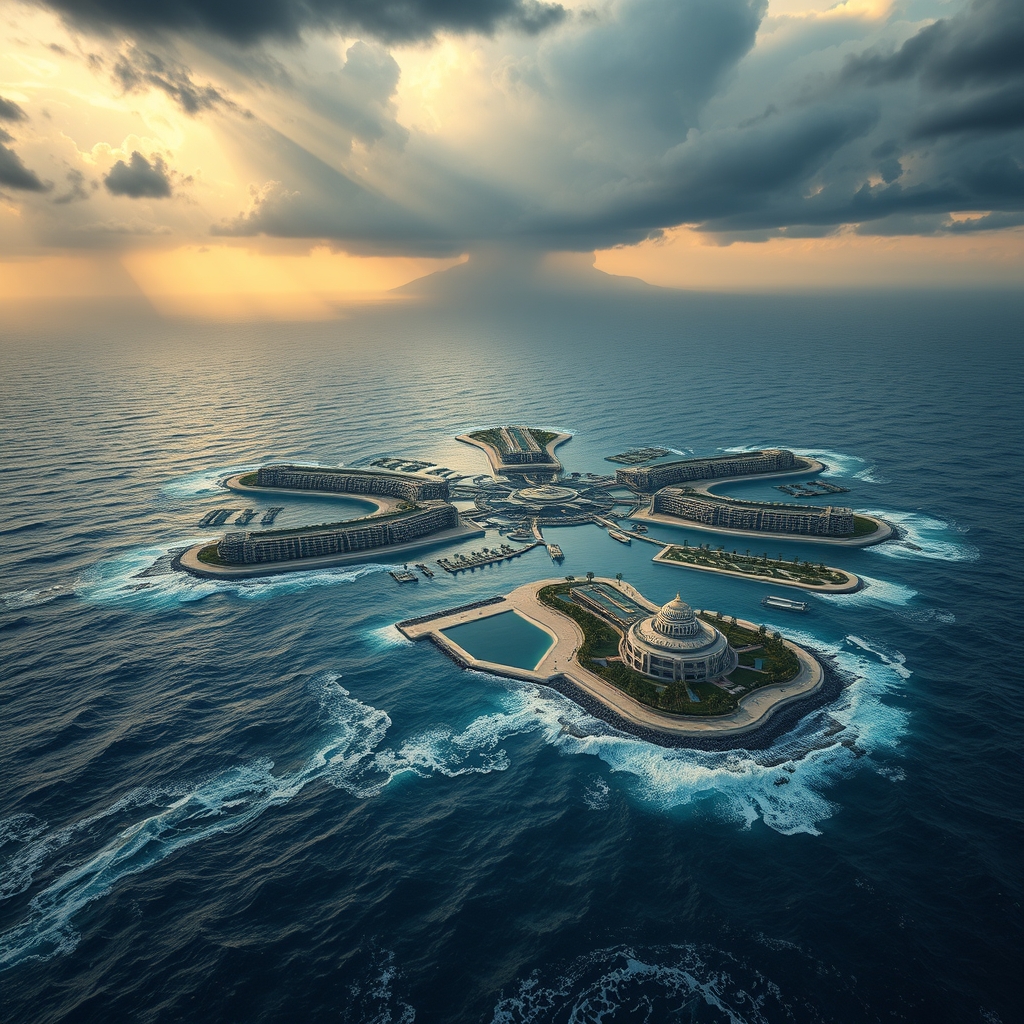
The ocean has always been a canvas for human ambition, a vast expanse where dreams of dominion are painted in steel and concrete. Yet, as artificial archipelagos rise from the waves—monuments to engineering prowess and unchecked aspiration—they reveal a truth far less flattering: our mastery over nature is an illusion, a fragile construct built on shifting sands and even more precarious assumptions. These man-made islands, touted as the future of urban expansion and luxury living, are not just feats of coastal engineering; they are experiments in hubris, testing the limits of what the planet can endure before pushing back.
The Seductive Allure of Infinite Space
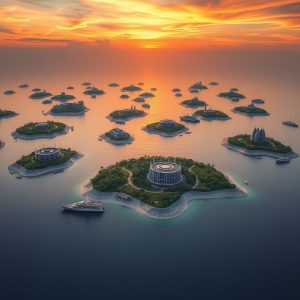
At first glance, artificial archipelagos appear to solve a fundamental problem of modernity: the scarcity of land. Cities like Dubai, with its Palm Jumeirah and The World islands, or China’s ambitious reclamation projects in the South China Sea, promise a solution to urban sprawl by literally creating new ground. The logic is seductive—if land is finite, why not manufacture more? Yet, this reasoning ignores the ecological and geological realities that underpin such endeavors. The ocean is not a blank slate; it is a dynamic, living system, and every ton of sand dredged, every cubic meter of concrete poured, disrupts a delicate balance that has evolved over millennia.
The Palm Jumeirah, for instance, required over 100 million cubic meters of sand and rock to construct, a process that altered local currents, accelerated coastal erosion, and devastated marine ecosystems. The islands of The World, once envisioned as a playground for the global elite, now sit half-submerged, a stark reminder that nature does not yield to human whims without consequence. These projects are not just engineering marvels; they are cautionary tales, illustrating the dangers of assuming that technology can outpace the natural world’s capacity for adaptation and resistance.
The Illusion of Sustainability in the Blue Economy
Proponents of artificial archipelagos often frame them as pillars of the so-called “Blue Economy,” a concept that promises sustainable growth through the exploitation of marine resources. Yet, the reality is far more complex. The Blue Economy is not a monolith; it is a patchwork of competing interests, where economic gains are often prioritized over ecological stewardship. Luxury island resorts, for example, are marketed as eco-friendly havens, yet their construction frequently involves dredging, which destroys coral reefs and seagrass beds—critical habitats that support marine biodiversity and protect coastlines from erosion.
Moreover, the carbon footprint of these projects is staggering. The energy required to dredge, transport, and stabilize materials, coupled with the emissions from the construction and operation of these developments, undermines any claims of sustainability. The Maldives’ Hulhumalé, a reclaimed island designed to combat sea-level rise, is a case in point. While it may offer a temporary reprieve for the nation’s population, its construction has disrupted local fisheries and altered sedimentation patterns, raising questions about the long-term viability of such solutions. The Blue Economy, in this context, is less a model of sustainability and more a rebranding of exploitation, where the ocean’s resources are commodified under the guise of progress.
The Geopolitical Chessboard of Artificial Land
Beyond their environmental impact, artificial archipelagos are also geopolitical pawns, tools of sovereignty and power projection in an era of rising maritime tensions. China’s construction of military installations on reclaimed islands in the South China Sea is a prime example, where land augmentation is not just about urban expansion but about asserting control over strategic waterways. These projects are not merely engineering feats; they are statements of intent, designed to redraw maritime boundaries and challenge the status quo.
The legal implications of such actions are profound. The United Nations Convention on the Law of the Sea (UNCLOS) was not designed to account for the creation of artificial land, leaving a gray area in which nations can exploit ambiguities to expand their territorial claims. This legal vacuum has led to disputes, with neighboring countries accusing China of violating international law by militarizing reclaimed islands. The result is a precarious balance, where the pursuit of artificial land threatens to destabilize regional security and undermine the very principles of maritime governance.
The Psychological Toll of Living on Borrowed Time
For the residents and investors who call these islands home, the psychological impact of living on reclaimed land is often overlooked. The knowledge that one’s home is, quite literally, built on borrowed time—vulnerable to erosion, rising sea levels, and the unpredictable whims of nature—creates a unique form of existential unease. Luxury resorts like those in the Maldives or the Bahamas market themselves as paradises, yet their very existence is a gamble, a bet that the forces of nature can be held at bay indefinitely.
This precarity is not just a matter of physical safety; it is a challenge to the human psyche. The illusion of permanence that these islands provide is just that—an illusion. Storms, tidal surges, and the slow but inexorable rise of sea levels serve as constant reminders that the land beneath one’s feet is not as solid as it seems. In this context, artificial archipelagos are not just physical structures; they are psychological experiments, testing humanity’s ability to reconcile its desire for control with the reality of its own vulnerability.
The Uncomfortable Truth: Nature Always Wins
The rise of artificial archipelagos is a testament to human ingenuity, but it is also a stark reminder of our limitations. No amount of engineering prowess can fully tame the ocean, and every attempt to do so comes with a cost—one that is often borne by the environment and, ultimately, by future generations. The question is not whether we can build these islands, but whether we should. The answer lies not in the blueprints of ambitious developers, but in the sobering reality that nature does not negotiate. It adapts, it endures, and it always finds a way to reclaim what was taken from it. The mirage of control that artificial archipelagos represent is just that—a fleeting illusion, destined to dissolve in the face of time and tide.
As the waves lap against the shores of these man-made marvels, they carry with them a warning: the ocean is not a frontier to be conquered, but a force to be respected. The future of coastal development lies not in the relentless pursuit of land augmentation, but in the humility to work with nature, rather than against it. The alternative is a future where our grandest achievements are swallowed by the very waters from which they emerged, a silent testament to the folly of believing we could ever truly master the sea.