The Invisible Costs of Luxury: How Floating Real Estate is Exploiting the Blue Economy’s Sustainable Illusions
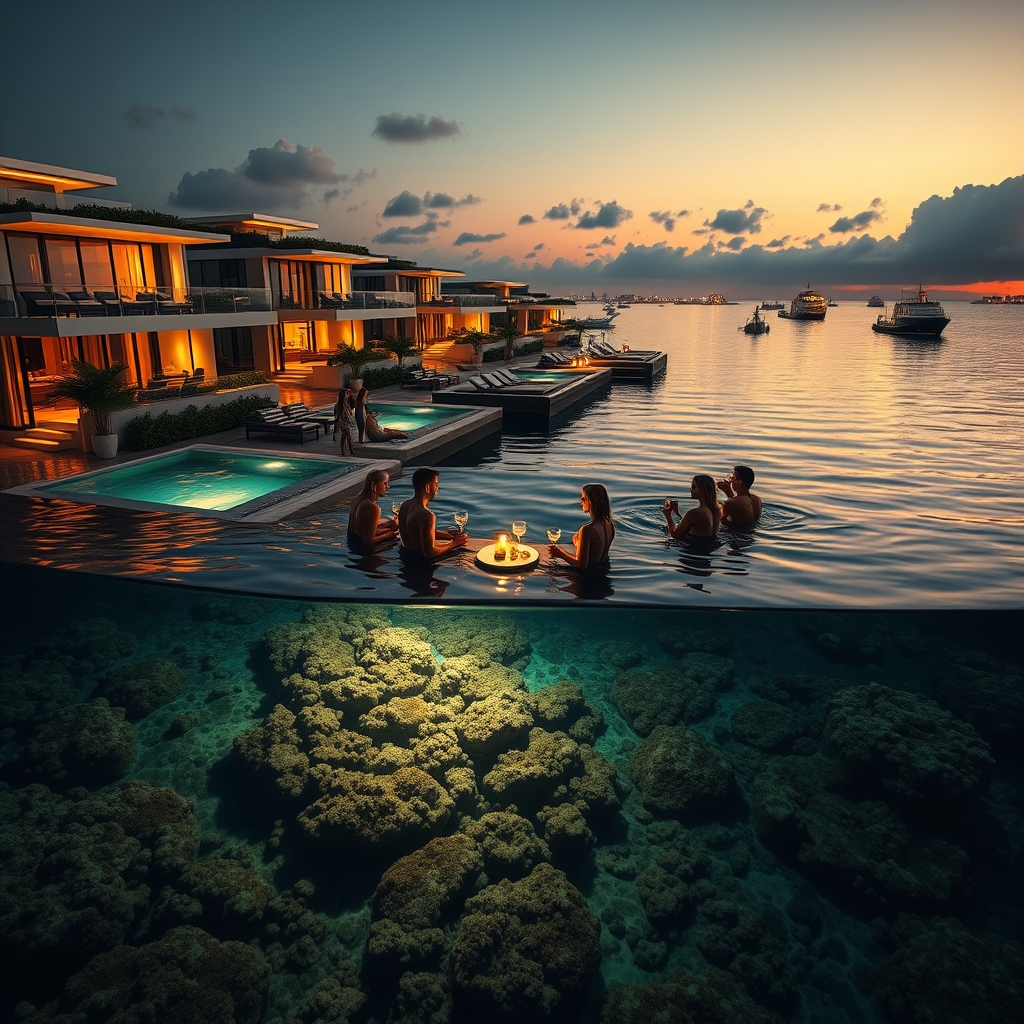
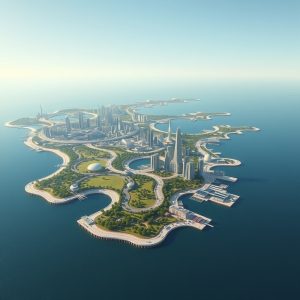
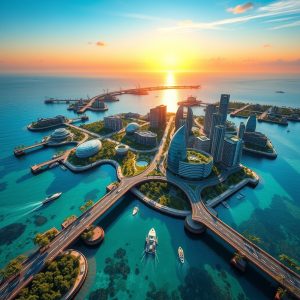
The Blue Economy was supposed to be the great reconciliation—a marriage of economic ambition and ecological stewardship, where the ocean’s vastness would yield prosperity without plunder. Yet, as floating real estate projects proliferate from Monaco to the Maldives, the rhetoric of sustainability is increasingly drowned out by the clinking of champagne flutes on private yacht decks. These developments, often marketed as paragons of coastal resilience and smart marine urbanism, are instead exposing the fragility of the Blue Economy’s foundational promises. The question is no longer whether we can build on water, but whether we should—and at what cost to the ecosystems and communities we claim to protect.
The Mirage of Eco-Friendly Reclamation
Floating real estate projects are frequently touted as the epitome of sustainable land augmentation. Developers argue that by constructing on water, they avoid the ecological disruption of traditional land reclamation, which often involves dredging, sediment displacement, and the destruction of marine habitats. The reality, however, is far more nuanced. While floating structures may reduce some forms of terrestrial impact, they introduce a host of new ecological challenges. The installation of deep-sea foundations, for instance, disrupts benthic ecosystems, while the shading effects of large platforms can alter light penetration, affecting photosynthesis in underwater flora. Moreover, the materials used in these projects—concrete, steel, and synthetic polymers—are rarely sourced or disposed of sustainably, leaving a carbon footprint that rivals, if not exceeds, that of conventional construction.
Take the case of Oceanix City, a proposed floating metropolis designed to house 10,000 residents off the coast of Busan, South Korea. The project’s promotional materials emphasize its modular design, renewable energy integration, and zero-waste systems. Yet, critics point out that the environmental impact assessment for the project remains opaque, with little transparency about the long-term effects on local fisheries or the potential for microplastic pollution from the synthetic materials used in construction. The Blue Economy’s sustainability narrative, it seems, is being co-opted to greenwash what is, at its core, a luxury-driven enterprise.
The Illusion of Coastal Resilience
Proponents of floating real estate argue that these developments are inherently resilient to sea-level rise, a claim that is both technically accurate and dangerously misleading. While it is true that floating structures can adapt to changing water levels, their resilience is not a substitute for systemic coastal adaptation. In fact, the proliferation of private floating enclaves risks creating a two-tiered system of coastal resilience: one for the wealthy, who can afford to retreat to their buoyant sanctuaries, and another for everyone else, left to contend with the escalating risks of erosion, flooding, and storm surges.
This disparity is already evident in cities like Miami, where luxury floating condominiums are marketed as climate-proof investments while low-income communities in nearby neighborhoods like Little Haiti face displacement due to rising sea levels. The irony is stark: the same developers who tout floating real estate as a solution to climate change are often the ones accelerating coastal gentrification, pricing out long-term residents and eroding the social fabric of waterfront communities. Coastal resilience, it turns out, is not just a matter of engineering—it is a matter of equity.
The Legal Labyrinth of Submerged Land Rights
Floating real estate also operates in a legal gray area, particularly when it comes to submerged land rights. Unlike traditional land reclamation, which involves the creation of new terrestrial space, floating structures occupy water columns that are often subject to complex jurisdictional claims. In many countries, the seabed and subsoil are considered public property, yet the legal frameworks governing their use are woefully outdated. This ambiguity has led to disputes over everything from taxation to environmental regulation, with developers exploiting loopholes to avoid accountability.
In the United Arab Emirates, for example, the construction of floating villas in Dubai’s man-made lagoons has sparked debates over whether these structures should be classified as real estate or maritime vessels. The distinction is not merely semantic: it determines whether developers must comply with building codes, environmental regulations, or maritime law. The lack of clarity has allowed some projects to bypass environmental impact assessments entirely, further undermining the Blue Economy’s sustainability goals.
The Economic Paradox of Floating Luxury
The economic logic of floating real estate is equally fraught. On the surface, these projects appear to be a boon for the Blue Economy, generating jobs, attracting investment, and diversifying coastal economies. Yet, the economic benefits are often concentrated in the hands of a few, while the costs—environmental degradation, social displacement, and infrastructure strain—are borne by the many. In the Maldives, for instance, luxury floating resorts have become a cornerstone of the national economy, yet the revenue they generate rarely trickles down to local communities. Instead, it flows into the coffers of international hotel chains and real estate conglomerates, leaving Maldivians to grapple with the consequences of overdevelopment, including coral reef degradation and freshwater shortages.
Moreover, the speculative nature of floating real estate markets introduces a new layer of financial risk. Unlike traditional real estate, which is tethered to stable land values, floating properties are subject to the whims of maritime law, insurance markets, and climate uncertainty. A single catastrophic storm or legal ruling could render an entire development worthless, leaving investors—and taxpayers—on the hook for the losses. The Blue Economy, it seems, is not immune to the boom-and-bust cycles that have long plagued terrestrial real estate markets.
The Ethical Dilemma of Infinite Horizons
The most insidious aspect of floating real estate is its implicit promise of infinite expansion. By framing the ocean as a frontier ripe for colonization, developers perpetuate the myth that the Earth’s resources are limitless—a narrative that has driven ecological destruction for centuries. The reality, of course, is that the ocean is not an empty canvas but a complex, interconnected ecosystem that sustains life on Earth. Every floating villa, every artificial archipelago, every luxury resort built on water represents a withdrawal from this shared inheritance, a privatization of the commons in the name of profit.
The challenge, then, is not just to build more sustainably, but to rethink our relationship with the ocean entirely. The Blue Economy’s vision of a harmonious coexistence between human ambition and marine ecosystems is not inherently flawed, but it is being hijacked by short-term interests that prioritize luxury over longevity. If floating real estate is to have a future, it must be one that is accountable to the communities it displaces, the ecosystems it disrupts, and the generations it purports to serve. Otherwise, it will remain what it has always been: a mirage of sustainability, shimmering on the horizon but dissolving upon closer inspection.
The ocean’s vastness is not an invitation to exploit, but a reminder of our responsibility to steward. The choice is not between progress and stagnation, but between a future where the Blue Economy serves the many or the few. The tides of change are already upon us, and the question is whether we will build with them or against them.