Forging the Future: How Sustainable Land Reclamation is Redefining Coastal Living
The relentless march of urbanization has pushed coastal cities to their limits, forcing innovators to look beyond the shoreline for solutions. Sustainable land reclamation has emerged as a transformative approach, blending cutting-edge engineering with ecological sensitivity to create new spaces where water once dominated. This practice is not merely about expanding territory; it’s about reimagining how humanity coexists with the ocean, turning challenges like rising sea levels and urban congestion into opportunities for sustainable growth.
The Rise of Artificial Archipelagos: A New Frontier
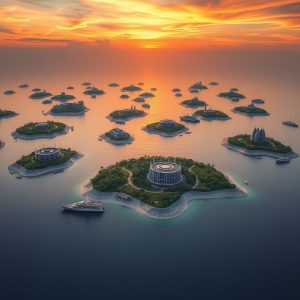
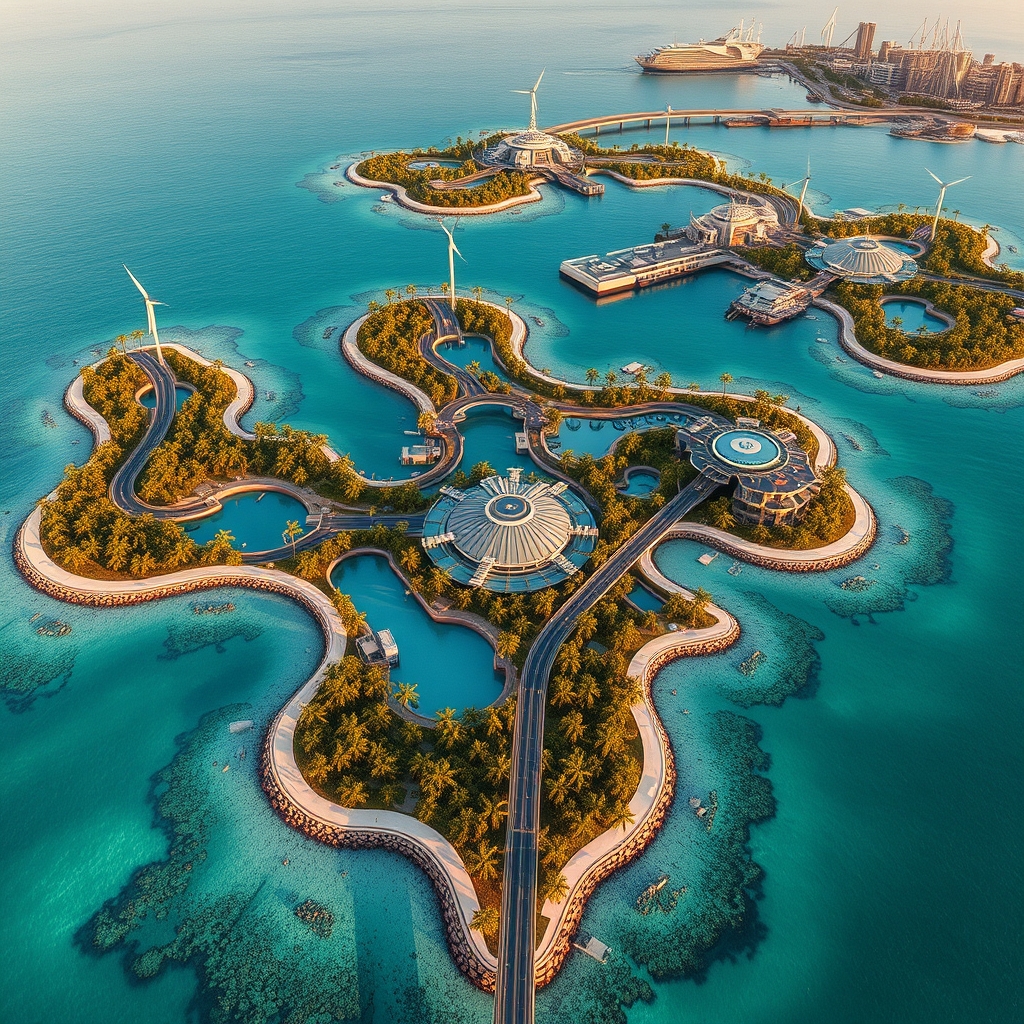
Artificial archipelagos represent one of the most ambitious forms of land reclamation, where clusters of man-made islands are designed to function as self-sustaining ecosystems. Projects like Dubai’s Palm Islands and The World have captured global attention, but the next generation of these developments is prioritizing sustainability. Modern archipelagos are being engineered with porous edges to allow natural water flow, reducing erosion and supporting marine biodiversity. These islands are no longer just symbols of luxury; they are testbeds for smart marine cities, where renewable energy, circular economies, and resilient infrastructure converge.
One standout example is the proposed Maldives Floating City, a pioneering project that aims to combat sea-level rise by constructing a network of buoyant neighborhoods. Unlike traditional reclamation, which relies on dredging and landfill, this approach uses modular, eco-friendly platforms that rise and fall with the tides. The design integrates coral-friendly materials and artificial reefs, ensuring that the development enhances rather than disrupts the surrounding marine environment. Such innovations are redefining what it means to build on water, proving that human ingenuity can harmonize with nature.
Waterfront Urbanism: Designing for Resilience and Community
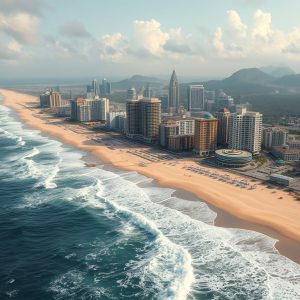
Waterfront urbanism is evolving beyond mere aesthetics to address the pressing needs of coastal resilience. Cities like Rotterdam and Singapore have embraced land augmentation as a tool for climate adaptation, creating elevated parks, flood barriers, and amphibious architecture. These projects are not just defensive measures; they are vibrant public spaces that foster community engagement and economic vitality. For instance, Rotterdam’s Waterplein Benthemplein doubles as a basketball court and a water storage basin during heavy rainfall, demonstrating how multifunctional design can turn infrastructure into an asset.
The shift toward eco-friendly reclamation is also evident in the materials used. Traditional methods often relied on sand and gravel, which can devastate marine habitats. Today, engineers are exploring alternatives like recycled construction waste, bio-based composites, and even 3D-printed reef structures. These materials not only reduce environmental impact but also enhance the longevity of reclaimed land. In Monaco, the Portier Cove extension project has set a new standard by using a mix of sustainable fill and deep-sea foundations to minimize disruption to the seabed. The result is a seamless extension of the city that blends urban density with ecological responsibility.
Luxury Meets Sustainability: The Future of Island Resorts
The luxury island resort industry is undergoing a quiet revolution, driven by demand for experiences that are as sustainable as they are indulgent. Developers are increasingly turning to floating real estate and submerged land rights to create exclusive retreats that tread lightly on the planet. Projects like the Oceanix City concept, a floating metropolis designed to withstand hurricanes and rising seas, are pushing the boundaries of what’s possible. These resorts are powered by renewable energy, feature zero-waste systems, and incorporate marine permaculture to restore local ecosystems.
In the Maldives, the Soneva Jani resort has taken a different approach by building overwater villas on stilts, allowing natural water flow beneath the structures. The resort’s commitment to sustainability extends to its construction, which used locally sourced materials and avoided harmful chemicals. Such developments are proving that luxury and environmental stewardship are not mutually exclusive. Instead, they are setting a new benchmark for the industry, where opulence is measured not just by extravagance but by the positive impact on the surrounding environment.
Maritime Urban Planning: Balancing Growth and Conservation
As coastal cities expand, maritime urban planning has become a critical discipline, ensuring that growth does not come at the expense of marine ecosystems. The concept of the blue economy—where economic activities are aligned with ocean conservation—is gaining traction, guiding projects that prioritize both development and sustainability. For example, the Netherlands’ Sand Motor, a massive artificial sandbank, serves as a natural coastal defense while creating new habitats for wildlife. This project exemplifies how land augmentation can be a tool for restoration, not just expansion.
Deep-sea foundations are another innovation reshaping coastal engineering. By anchoring structures to the seabed, developers can create stable platforms for everything from wind farms to floating neighborhoods. This technology is particularly valuable in regions prone to extreme weather, where traditional land reclamation methods would be vulnerable to erosion. In Japan, the Goto Floating Wind Farm uses deep-sea foundations to harness offshore wind energy, demonstrating how marine infrastructure can support both urban expansion and renewable energy goals.
The Legal and Ethical Dimensions of Reclaimed Land
The surge in land reclamation has also sparked complex legal and ethical debates, particularly around submerged land rights. Who owns the seabed, and how should reclaimed land be governed? These questions are becoming increasingly urgent as nations vie for control over strategic maritime territories. International law, such as the United Nations Convention on the Law of the Sea (UNCLOS), provides a framework, but disputes persist, particularly in regions like the South China Sea, where artificial islands have become geopolitical flashpoints.
Ethically, the challenge lies in ensuring that reclamation projects benefit local communities rather than displacing them. In some cases, land augmentation has led to the gentrification of coastal areas, pushing out fishermen and indigenous populations. To counter this, cities like Amsterdam are adopting participatory planning processes, where residents have a say in how reclaimed land is used. This approach not only fosters social equity but also ensures that developments reflect the needs and values of the people they serve.
The future of coastal living hinges on our ability to innovate responsibly, where every square meter of reclaimed land is a testament to human creativity and ecological respect. As sea levels rise and urban populations grow, the solutions we devise today will shape the resilience and sustainability of our coastal cities for generations to come. The ocean, once seen as a barrier, is now a canvas for a new era of urbanism—one where water and land coexist in harmony, and where every development is an opportunity to heal the planet as much as it is to expand it.