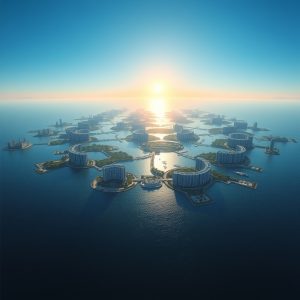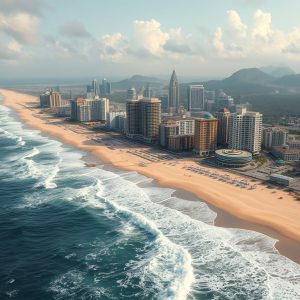
The Sedimentary Compromise: How Eco-Friendly Reclamation is Forcing a Reckoning Between Ambition and Ecology
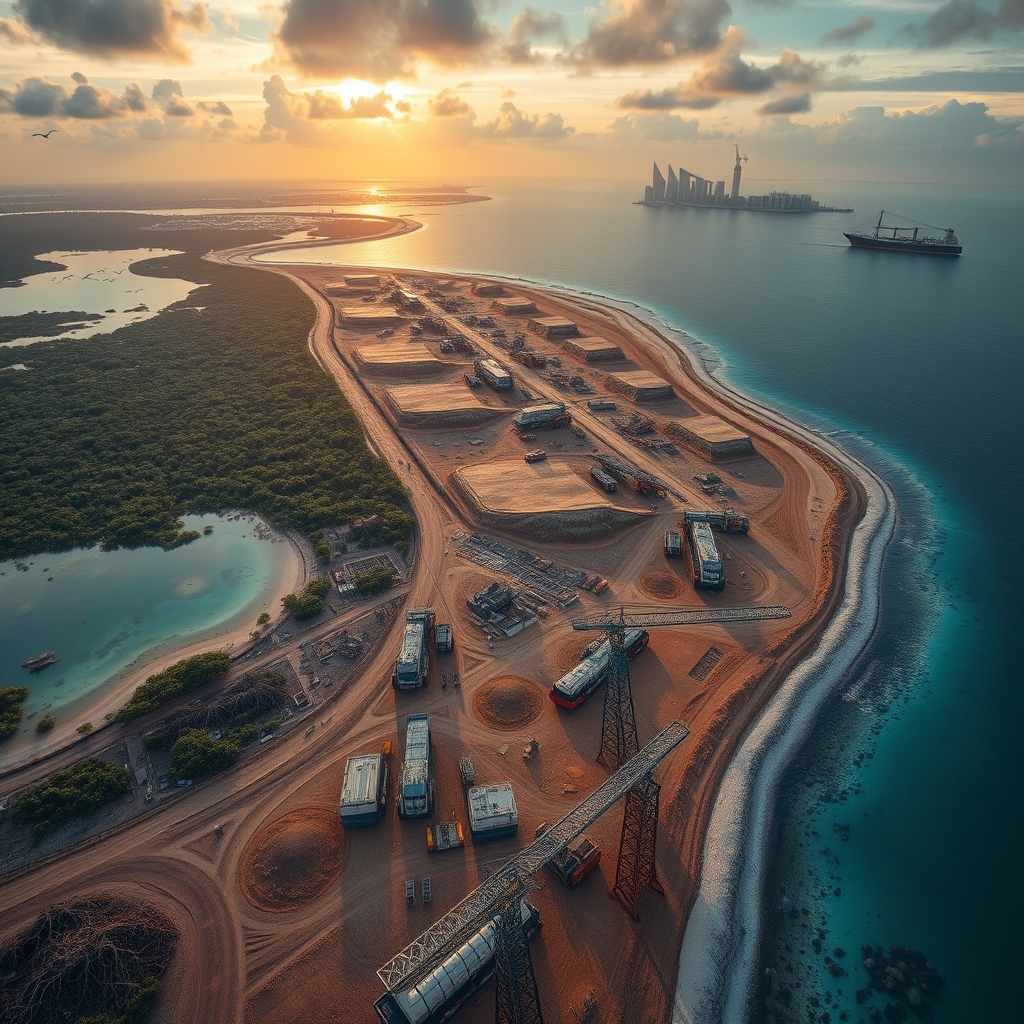
The relentless march of urban expansion has long treated the ocean as a frontier of infinite potential, a blank canvas for human ambition. Yet, as the consequences of unchecked land augmentation become impossible to ignore, the narrative is shifting. Sustainable land reclamation is no longer a fringe concept but a necessary recalibration of how we interact with coastal ecosystems. The question is no longer whether we can build man-made islands or artificial archipelagos, but whether we can do so without repeating the mistakes of the past—mistakes that have left shorelines eroded, marine habitats decimated, and communities vulnerable to the very forces they sought to conquer.
The Myth of Infinite Resources
For decades, the assumption that the ocean could absorb the costs of human ingenuity went unchallenged. Dredging, landfill, and deep-sea foundations were deployed with little regard for the long-term ecological toll. The result? A litany of unintended consequences: sediment plumes smothering coral reefs, altered tidal patterns accelerating coastal erosion, and the displacement of marine species critical to local fisheries. The illusion of infinite resources has collided with the reality of finite ecosystems, forcing a reckoning. Coastal engineering, once a discipline defined by brute-force solutions, is now grappling with the need for precision—where every cubic meter of reclaimed land must be justified not just economically, but ecologically.
The Rise of the Blue Economy’s Ethical Dilemma
The blue economy, a term that once evoked images of untapped wealth and boundless opportunity, is now entangled in an ethical paradox. On one hand, it promises economic growth through maritime urban planning, floating real estate, and luxury island resorts. On the other, it demands accountability for the environmental degradation that often accompanies such developments. The tension is palpable in projects like Dubai’s Palm Jumeirah or China’s artificial islands in the South China Sea, where the line between innovation and exploitation blurs. These ventures were not designed with sustainability in mind, yet they serve as cautionary tales for a new generation of coastal developments. The challenge now is to reconcile the economic imperatives of the blue economy with the ecological realities of a planet in flux.
Coastal Resilience as a Moving Target
If there is one certainty in the age of climate change, it is that coastal resilience is not a static goal but a moving target. Rising sea levels, intensifying storm surges, and shifting sediment patterns demand adaptive strategies that go beyond traditional coastal engineering. Smart marine cities, once a futuristic concept, are now being tested in real time. Projects like the Netherlands’ Sand Motor—a dynamic coastal defense system that uses natural sediment transport—demonstrate how land augmentation can work with ecological processes rather than against them. Similarly, floating neighborhoods in the Maldives and Rotterdam offer a glimpse into a future where urban expansion does not come at the expense of the sea. These innovations are not without their challenges, but they signal a shift from domination to coexistence.
The Legal Quagmire of Submerged Land Rights
As the boundaries between land and sea blur, so too do the legal frameworks that govern them. Submerged land rights, once a niche area of maritime law, have become a battleground for competing interests. Who owns the seabed? Who is responsible for the environmental fallout of reclamation projects? These questions are no longer theoretical. In the South China Sea, overlapping territorial claims have turned artificial islands into geopolitical flashpoints, while in the Caribbean, luxury island resorts have sparked disputes over the rights of local communities displaced by coastal developments. The legal labyrinth is further complicated by international treaties like the United Nations Convention on the Law of the Sea (UNCLOS), which attempts to balance sovereign rights with environmental protections. Yet, as reclamation projects proliferate, the gaps in these frameworks become glaringly apparent, exposing the need for a more cohesive approach to marine governance.
The Cost of Ignoring the Sedimentary Paradox
The sedimentary paradox—the idea that land reclaimed from the sea is inherently unstable—is not new, but its implications are becoming harder to ignore. Traditional reclamation methods rely on compacting loose sediment to create stable foundations, a process that is both energy-intensive and ecologically disruptive. Yet, even the most meticulously engineered projects are vulnerable to subsidence, erosion, and the relentless forces of the ocean. The collapse of Japan’s Kansai International Airport, built on a man-made island, serves as a stark reminder of the risks. The solution? A shift toward eco-friendly reclamation techniques that prioritize permeability, natural sediment flow, and the integration of green infrastructure. Mangrove restoration, artificial reefs, and bio-engineered shorelines are not just environmental niceties; they are essential components of a resilient coastal future.
The era of treating the ocean as a limitless resource is over. The projects that will define the next century of coastal development will be those that acknowledge the ocean’s agency—not as a passive recipient of human ambition, but as a dynamic force that demands respect. The most successful smart marine cities will not be the ones that dominate the sea, but those that learn to move with it, adapting to its rhythms rather than imposing their own. The sedimentary compromise is not a surrender to nature, but a recognition that the future of land augmentation lies in collaboration, not conquest. The question is no longer whether we can build on water, but whether we can do so without drowning in the consequences of our own hubris.