The Sedimentary Gambit: How Land Reclamation is Betting Against the Ocean’s Memory

The ocean does not forget. It remembers every grain of sand displaced, every ton of sediment dredged from its depths, and every artificial shore erected in defiance of its rhythms. Yet, the audacity of human ambition persists, reshaping coastlines and conjuring land from water with a confidence that borders on hubris. Sustainable land reclamation, once a niche pursuit of coastal engineering, has evolved into a high-stakes gamble—a bet against the ocean’s memory, where the stakes are not just economic but existential. The question is no longer whether we can reclaim land from the sea, but whether we can do so without awakening the latent forces that govern its depths.
The Illusion of Permanence in a Fluid World
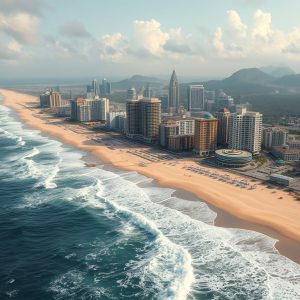
At the heart of land reclamation lies a fundamental paradox: the pursuit of permanence in a world defined by flux. Coastal resilience, often touted as the cornerstone of modern reclamation projects, is not a static achievement but a dynamic negotiation. The Netherlands, a pioneer in land augmentation, has spent centuries perfecting its dike systems and polders, yet even its most advanced infrastructure remains vulnerable to the whims of rising seas and storm surges. The illusion of control is seductive, but the ocean’s memory is long, and its patience infinite. Projects like Dubai’s Palm Jumeirah or China’s artificial archipelagos in the South China Sea are testaments to human ingenuity, but they are also reminders of the fragility of such endeavors. These man-made islands, often marketed as symbols of luxury and progress, are built on foundations of sand and ambition, both of which are susceptible to erosion.
The Ethical Quagmire of Submerged Land Rights
Reclamation does not occur in a vacuum. It is entangled in a web of legal, ecological, and geopolitical complexities, chief among them the contentious issue of submerged land rights. The United Nations Convention on the Law of the Sea (UNCLOS) provides a framework for maritime sovereignty, but its application is often murky, particularly in disputed waters. When nations like China or the United Arab Emirates reclaim land in contested areas, they are not merely altering coastlines—they are redrawing maritime borders, often at the expense of neighboring states. The legal battles that ensue are not just about territory but about the very definition of sovereignty in an era where land is no longer a fixed commodity. The Blue Economy, with its promise of sustainable marine infrastructure, is thus caught in a paradox: how can it thrive when its foundational practices are mired in legal ambiguity and ecological risk?
The Carbon Footprint of Paradise
Luxury island resorts and floating real estate developments are often sold as eco-friendly marvels, but their environmental credentials are frequently more mirage than reality. The carbon footprint of constructing a man-made island is staggering. Dredging, the process of excavating sediment from the seabed, releases vast amounts of CO2, disrupts marine ecosystems, and alters sediment flows that have taken millennia to stabilize. The concrete and steel used to fortify these artificial shores further exacerbate their environmental impact, while the energy demands of maintaining such developments—air conditioning, desalination, and waste management—are often overlooked in sustainability assessments. Eco-friendly reclamation is not an oxymoron, but it requires a radical rethinking of what sustainability means in the context of land augmentation. It demands transparency, accountability, and a willingness to confront the uncomfortable truth that paradise, when built on borrowed land, comes at a cost.
The Deep Sea Foundations of a Fragile Future
Advances in deep sea foundations have opened new frontiers for land reclamation, allowing engineers to anchor artificial islands to the ocean floor with unprecedented precision. These technologies, often hailed as the future of maritime urbanism, are not without their risks. The deeper the foundations, the greater the disruption to benthic ecosystems, which play a crucial role in carbon sequestration and marine biodiversity. Moreover, the long-term stability of these foundations remains untested in the face of accelerating climate change. Sea level rise, ocean acidification, and increasingly frequent extreme weather events pose existential threats to even the most robust reclamation projects. The irony is stark: the very technologies designed to secure our coastal futures may instead hasten their undoing if they are not deployed with caution and humility.
The Mirage of Smart Marine Cities
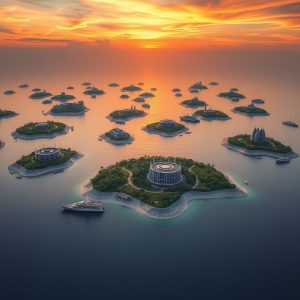
Smart marine cities, with their promises of resilience, efficiency, and sustainability, represent the pinnacle of modern reclamation ambitions. These urban utopias, often envisioned as floating metropolises or self-sustaining archipelagos, are predicated on the idea that technology can outsmart nature. Yet, the history of coastal engineering is littered with examples of hubris—from the levee failures of Hurricane Katrina to the chronic flooding of Jakarta, a city sinking under the weight of its own reclamation projects. The allure of smart marine cities lies in their potential to harmonize urban expansion with ecological stewardship, but their success hinges on a critical assumption: that we can predict and control the forces of nature. The ocean, however, is not a machine to be programmed. It is a living, breathing entity, and its responses to human intervention are often unpredictable, if not outright hostile.
The seductive narrative of land reclamation as a panacea for urban sprawl and coastal vulnerability is beginning to unravel. The ocean’s memory is not a passive force but an active one, and it is reminding us—through eroding shores, sinking cities, and escalating legal battles—that our ambitions are not without consequences. The challenge ahead is not to conquer the sea but to coexist with it, to build not in defiance of its rhythms but in harmony with them. The gamble of land reclamation is not one we can afford to lose, but it is one we must approach with eyes wide open, acknowledging that the house—no matter how grand—always holds the advantage.