The Liquid Frontier: How Smart Marine Cities Are Reclaiming the Future Without Repeating the Past
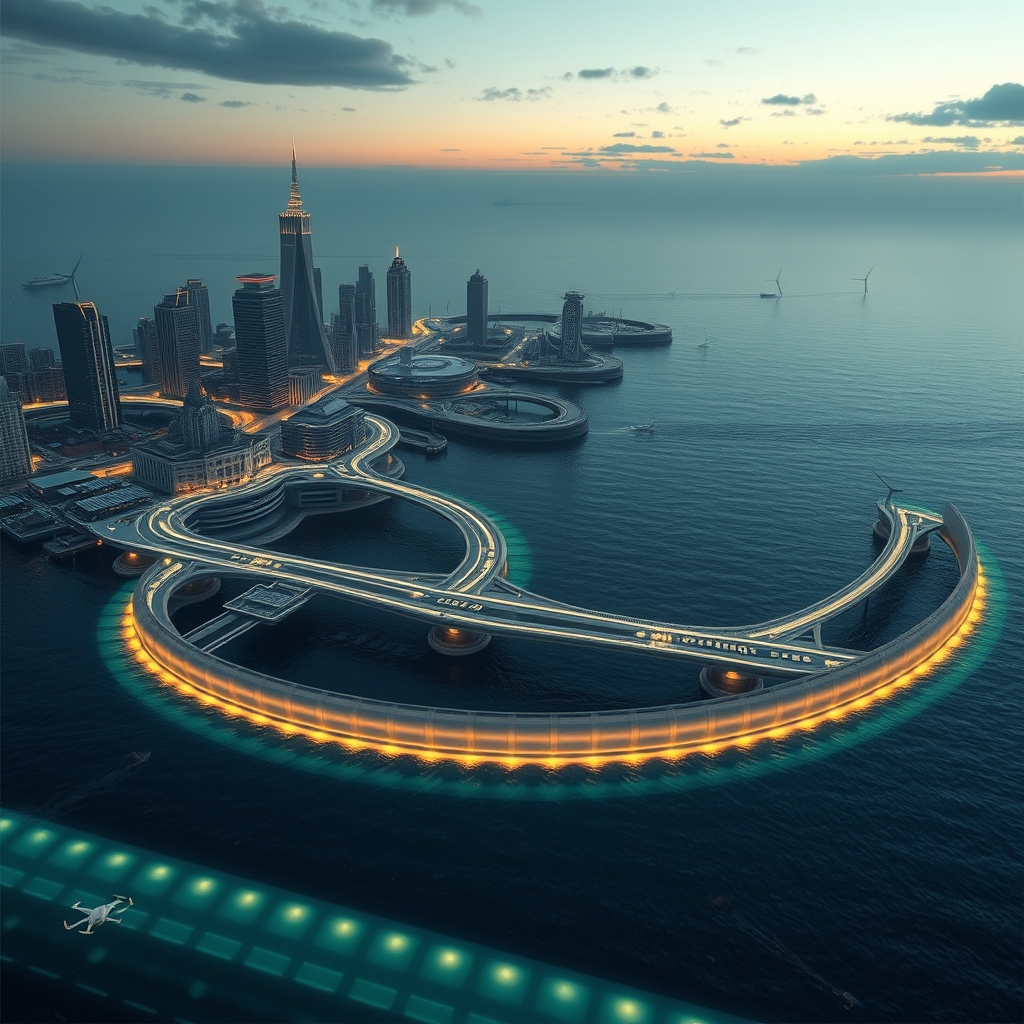
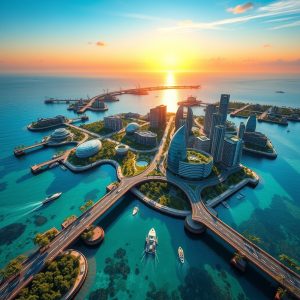
The ocean has long been humanity’s last uncharted territory—a vast, untamed expanse that has beckoned dreamers, engineers, and opportunists alike. Yet, as coastal cities strain under the weight of urban expansion and rising sea levels, the once-fanciful idea of building upon the water has evolved from speculative fiction to an urgent necessity. The question is no longer whether we can construct artificial archipelagos or floating real estate, but whether we can do so without repeating the ecological and ethical missteps of the past. Smart marine cities, with their promise of coastal resilience and sustainable land reclamation, offer a tantalizing vision of the future—but only if they confront the hard truths of their own limitations.
The Myth of Infinite Adaptability
Proponents of waterfront urbanism often frame marine infrastructure as the ultimate adaptive solution to climate change. The logic is seductive: if the sea is rising, why not rise with it? Floating neighborhoods, submerged land rights, and deep-sea foundations are marketed as innovations that transcend the vulnerabilities of traditional coastal engineering. Yet, this narrative conveniently overlooks the fact that even the most advanced smart marine cities are still bound by the laws of physics, economics, and ecology. The Dutch, masters of land reclamation, have spent centuries perfecting their dike systems, yet their latest projects—like the Sand Motor, a man-made peninsula designed to naturally redistribute sand along the coast—are not just feats of engineering but humbling reminders of nature’s unpredictability. The ocean does not negotiate; it erodes, inundates, and reshapes on its own terms. The illusion of control is precisely that—an illusion.
The Cost of Coastal Resilience
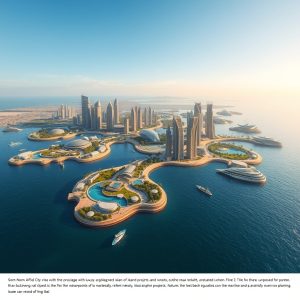
Building on water is an expensive gamble. The Palm Jumeirah, Dubai’s iconic artificial archipelago, required over 100 million cubic meters of sand and rock, dredged from the Persian Gulf at a cost of billions. Its construction disrupted marine ecosystems, altered local currents, and left the development vulnerable to erosion and subsidence. Yet, it remains a symbol of ambition, a blueprint for luxury island resorts and oceanfront developments worldwide. The problem is not the ambition itself, but the failure to account for the long-term costs. Coastal resilience is not a one-time investment; it is an ongoing battle against entropy. Smart marine cities must integrate adaptive infrastructure—floating breakwaters, modular foundations, and real-time monitoring systems—not as optional upgrades but as foundational elements. The alternative is a future where man-made islands become ecological liabilities, their maintenance costs spiraling as sea levels rise and storms intensify.
The Blue Economy’s Ethical Dilemma
The blue economy, a term that encompasses everything from maritime trade to deep-sea mining, is often hailed as the next frontier of economic growth. But its expansion is predicated on the commodification of the ocean—a resource that is, by definition, shared and finite. Submerged land rights, for instance, are a legal minefield. Who owns the seabed? Who is responsible when reclamation projects encroach on traditional fishing grounds or disrupt migratory routes? The Maldives, a nation at the forefront of sea level adaptation, has turned to land augmentation to secure its future, but its projects have sparked debates over sovereignty and environmental justice. The construction of Hulhumalé, a man-made island designed to relocate climate refugees, has been both a lifeline and a lightning rod for criticism. Its success hinges not just on engineering, but on whether it can reconcile the needs of its people with the ecological realities of its surroundings.
Reclamation Without Repetition
The history of land reclamation is littered with cautionary tales. From the sinking neighborhoods of Jakarta to the disappearing wetlands of Louisiana, the consequences of short-sighted coastal engineering are painfully evident. The challenge for smart marine cities is to break this cycle. Eco-friendly reclamation is not a buzzword; it is a necessity. Projects like Singapore’s Pulau Semakau, a landfill-turned-nature-reserve, demonstrate that reclamation can coexist with conservation. Similarly, the Netherlands’ Room for the River program, which prioritizes natural floodplains over rigid infrastructure, offers a model for coastal resilience that works with, rather than against, the environment. The key is to design for adaptability, not permanence. Floating real estate, for example, must be modular, allowing for reconfiguration as conditions change. Deep-sea foundations must be reversible, minimizing long-term ecological disruption. The goal is not to conquer the ocean, but to negotiate a fragile, ever-shifting truce.
The Unseen Stakes of Maritime Urban Planning
Maritime urban planning is often reduced to a technical challenge—how to build on water without sinking. But the stakes are far greater. The ocean is not just a construction site; it is a living system that sustains billions of people. The rush to develop artificial archipelagos and luxury island resorts risks repeating the mistakes of terrestrial urbanization: sprawl, inequality, and environmental degradation. Smart marine cities must be more than just technologically advanced; they must be equitable. This means prioritizing public access over private enclaves, integrating green spaces into floating neighborhoods, and ensuring that the benefits of reclamation are distributed fairly. It also means acknowledging that some areas are simply too vulnerable to develop. Coastal engineering can only do so much; at some point, retreat may be the most sustainable option.
The liquid frontier is not a blank canvas, but a dynamic, unforgiving force that demands respect. Smart marine cities have the potential to redefine urban expansion, but only if they confront the hard truths of their own limitations. The ocean does not care for our ambitions; it responds to our actions. The future of waterfront urbanism will be determined not by the boldness of our visions, but by the humility of our designs. The question is not whether we can build on water, but whether we can do so without drowning in our own hubris.