Beyond the Shoreline: The High-Stakes Gamble of Artificial Archipelagos in the Age of Climate Uncertainty
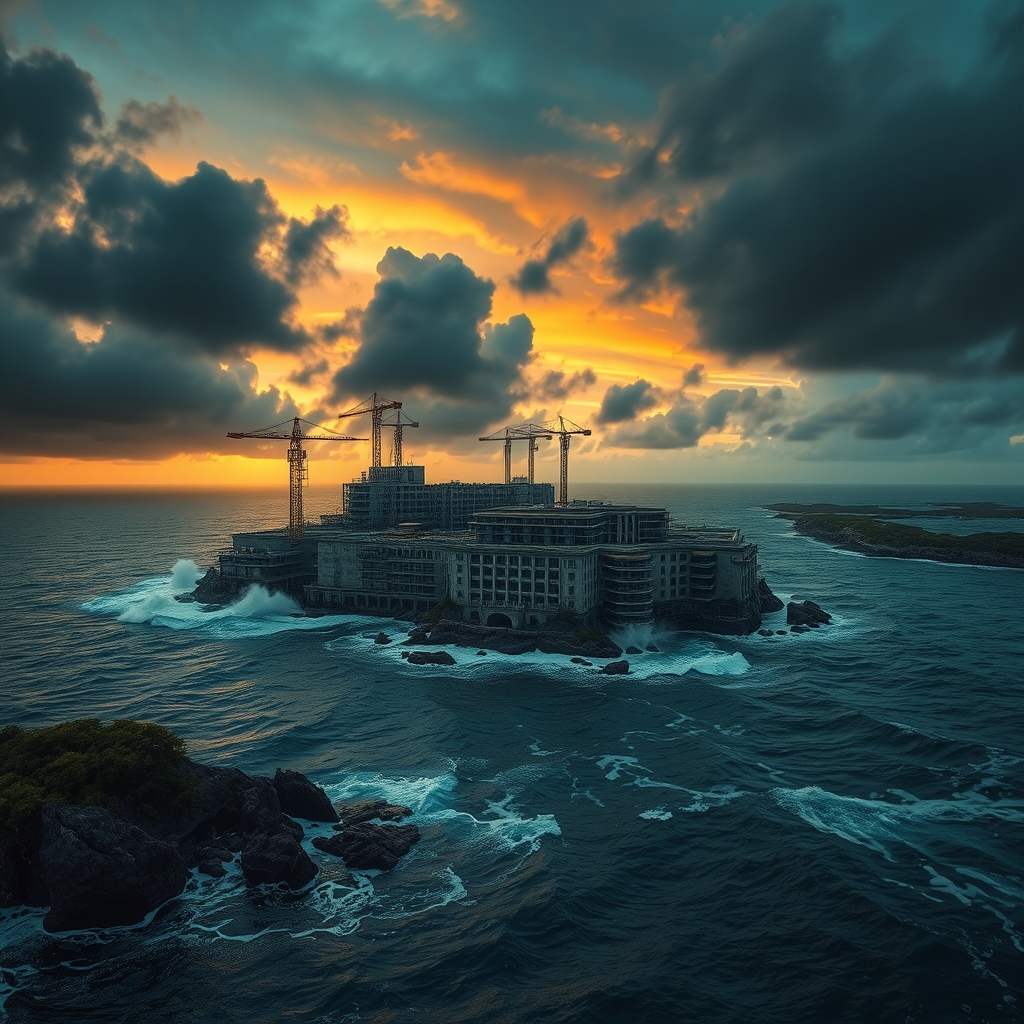
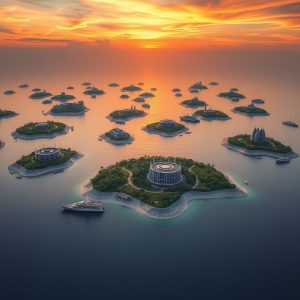
The ocean has long been humanity’s final frontier—a vast, untamed expanse that beckons with the promise of expansion, wealth, and reinvention. Yet, as coastal cities strain under the dual pressures of urbanization and rising sea levels, the allure of artificial archipelagos has shifted from speculative fantasy to a high-stakes engineering reality. These man-made island chains, touted as the next frontier of waterfront urbanism, are not merely feats of coastal engineering; they are gambles against an unpredictable climate, where the stakes are measured in billions of dollars, ecological integrity, and the very future of maritime urban planning.
The Illusion of Infinite Expansion
For decades, land augmentation has been sold as a panacea for overcrowded cities and dwindling real estate. Dubai’s Palm Islands, The World, and Malaysia’s Forest City were once heralded as triumphs of human ingenuity—proof that the ocean could be tamed, commodified, and repackaged as luxury. But beneath the glossy renderings and celebrity endorsements lies a harsh truth: these projects are often built on precarious foundations, both literally and metaphorically. Deep-sea foundations, once thought to be immutable, now groan under the weight of shifting currents, erosion, and the slow creep of sea-level rise. The very act of reclaiming land from the sea disrupts sediment flows, accelerates coastal erosion elsewhere, and creates a domino effect of unintended consequences that ripple far beyond the project’s boundaries.
Consider the case of Forest City, a $100 billion megaproject off the coast of Johor, Malaysia. Marketed as a “smart marine city” for the global elite, its developers promised a self-sustaining utopia with floating real estate, green spaces, and cutting-edge infrastructure. Yet, within years of its inception, the project has been plagued by financial woes, environmental backlash, and accusations of ecological negligence. The irony is stark: a development designed to embody the future of urban expansion now stands as a cautionary tale of hubris, where the pursuit of profit outpaced the realities of coastal resilience.
The Mirage of Eco-Friendly Reclamation
In response to mounting criticism, developers have pivoted toward the language of sustainability, branding their projects as “eco-friendly reclamation” or “blue economy infrastructure.” But scratch beneath the surface, and the rhetoric often reveals itself to be little more than greenwashing. True sustainability in land reclamation demands more than solar panels and mangrove plantations—it requires a fundamental rethinking of how we interact with marine ecosystems. The Netherlands, a pioneer in coastal engineering, has demonstrated that reclamation can coexist with environmental stewardship, but only through meticulous planning, adaptive design, and a willingness to work with the ocean, not against it.
Yet, such restraint is rare in an industry driven by short-term gains. The rush to capitalize on submerged land rights has led to a gold rush mentality, where developers stake claims to underwater territories with little regard for long-term viability. The result? Projects like the Maldives’ Hulhumalé, a reclaimed island designed to relocate climate refugees, now face existential threats from the very phenomenon they were meant to mitigate. Without robust sea-level adaptation strategies, these islands risk becoming modern-day Atlantises—submerged relics of a bygone era of unchecked ambition.
The Legal and Ethical Quagmire of Submerged Land Rights
The scramble for artificial archipelagos has also exposed a legal vacuum in international maritime law. Who owns the rights to reclaimed land? How do nations delineate boundaries in a fluid, ever-changing environment? The United Nations Convention on the Law of the Sea (UNCLOS) offers a framework, but its provisions are often ambiguous, leaving room for disputes and exploitation. China’s aggressive expansion in the South China Sea, where artificial islands serve as military outposts, underscores the geopolitical stakes of land augmentation. Here, reclamation is not just an economic endeavor but a tool of territorial assertion, blurring the lines between infrastructure and imperialism.
Ethically, the question looms larger: Is it just to privatize the ocean for the benefit of a privileged few? Luxury island resorts and floating real estate developments cater to the ultra-wealthy, while coastal communities—those most vulnerable to climate change—are often displaced or priced out of their ancestral lands. The blue economy, with its promise of sustainable marine development, risks becoming another avenue for inequality, where the spoils of the sea are hoarded by those who can afford to buy a piece of the horizon.
Rethinking Maritime Urban Planning
The failures of artificial archipelagos are not failures of engineering, but of imagination. The most successful examples of waterfront urbanism—from Copenhagen’s climate-resilient harbor to Singapore’s Marina Bay—prioritize integration over isolation. These projects do not seek to conquer the ocean but to coexist with it, employing adaptive design, permeable infrastructure, and nature-based solutions to enhance coastal resilience. Floating neighborhoods, like those proposed in the Netherlands’ Schoonschip project, offer a glimpse of what the future could hold: dynamic, modular communities that rise and fall with the tides, rather than resisting them.
Yet, such models remain the exception, not the rule. The majority of artificial archipelagos are still conceived as static, fortress-like enclaves, designed to keep the ocean at bay rather than engage with it. This defensive posture is a relic of 20th-century thinking, where nature was seen as an obstacle to be overcome, not a partner to be collaborated with. The shift toward smart marine cities requires a paradigm change—one that embraces uncertainty, prioritizes flexibility, and acknowledges that the ocean is not a blank canvas, but a living, breathing entity with its own agency.
The allure of artificial archipelagos is undeniable. They promise a future where humanity’s footprint extends beyond the shoreline, where cities rise from the waves, and where the boundaries of possibility are redrawn. But the ocean does not yield its secrets easily. Every ton of reclaimed land, every deep-sea foundation poured, is a bet against the forces of nature—a bet that history suggests we are ill-equipped to win. The challenge, then, is not to build more islands, but to build smarter: to design with humility, to plan with foresight, and to recognize that the true measure of coastal resilience lies not in how much land we can claim from the sea, but in how well we can adapt to its rhythms. The horizon is not a line to be crossed, but a threshold to be respected.