The Carbon Footprint of Paradise: How Luxury Island Resorts Are Undermining Eco-Friendly Reclamation
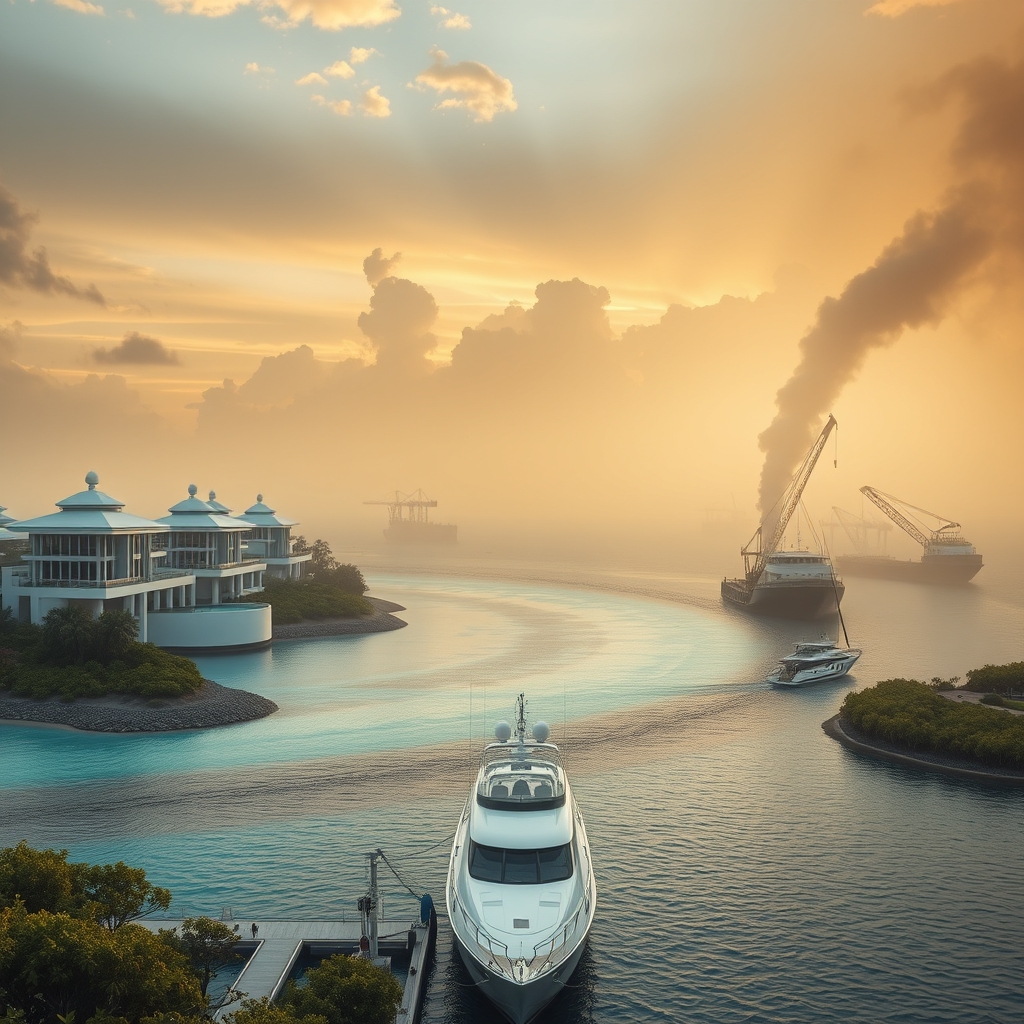
The allure of man-made islands is undeniable. They promise exclusivity, untouched beauty, and a retreat from the chaos of urban life. Yet, beneath the glossy brochures and Instagram-worthy sunsets, a darker reality emerges: the carbon footprint of luxury island resorts is often a direct contradiction to the principles of eco-friendly reclamation. These projects, marketed as sustainable marvels, frequently prioritize opulence over environmental stewardship, revealing a fundamental flaw in the narrative of blue economy infrastructure.
The Mirage of Sustainability
Luxury island resorts are frequently touted as pioneers of sustainable land augmentation, leveraging cutting-edge coastal engineering to minimize ecological disruption. Solar panels glisten on rooftops, desalination plants hum quietly in the background, and recycled materials are proudly showcased in construction. Yet, these efforts are often superficial, designed more for public relations than genuine environmental impact. The energy demands of air-conditioned villas, infinity pools, and private yachts far outstrip the modest gains of solar arrays. The carbon emissions from transporting high-end materials—marble from Italy, teak from Indonesia, glass from Germany—are rarely accounted for in the sustainability reports.
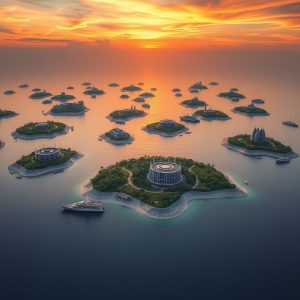
Moreover, the reclamation process itself is a carbon-intensive endeavor. Dredging, a common method for creating artificial archipelagos, releases vast amounts of CO2 stored in marine sediments. The construction of deep sea foundations, while necessary for stability, disrupts marine ecosystems and often involves the use of concrete, one of the most carbon-heavy materials on the planet. The irony is stark: projects designed to harmonize with nature are, in practice, accelerating its degradation.
The Illusion of Exclusivity
The marketing of luxury island resorts hinges on the promise of seclusion—a private paradise untouched by the masses. Yet, this exclusivity comes at a cost. The infrastructure required to support these developments—private airports, helipads, and marinas—expands the carbon footprint exponentially. The guests who arrive by private jet or superyacht contribute more to climate change in a single trip than the average person does in a year. The very act of creating these islands, often in pristine coastal areas, disrupts local ecosystems and displaces marine life, all in the name of catering to the whims of the ultra-wealthy.
Waterfront urbanism, when applied to luxury resorts, often ignores the principles of coastal resilience. These projects are designed to withstand storms and rising sea levels, but their primary function is to serve as playgrounds for the elite, not as models of sustainable living. The focus on short-term profitability undermines long-term ecological viability, leaving these islands vulnerable to the very forces they claim to defy.
The Blue Economy’s Dirty Secret
The blue economy, a concept that envisions sustainable use of ocean resources, is frequently invoked to justify the development of luxury island resorts. Yet, the reality is far from the ideal. These projects often exploit submerged land rights, securing permits under the guise of economic development while sidestepping environmental regulations. The legal frameworks governing marine infrastructure are riddled with loopholes, allowing developers to bypass stringent ecological assessments in favor of expedited approvals.
Floating real estate, another darling of the blue economy, is similarly problematic. While it promises to reduce the need for land reclamation, the materials used in floating structures—such as polystyrene and reinforced plastics—are rarely biodegradable. The maintenance of these structures, including anti-fouling treatments and regular dredging, further degrades marine environments. The narrative of innovation masks a grim truth: these projects are often as extractive as they are visionary.
The Cost of Coastal Engineering
Coastal engineering, the discipline tasked with designing resilient waterfront developments, is stretched thin by the demands of luxury island resorts. The focus on aesthetics and luxury often overshadows the need for functional, sustainable design. For instance, seawalls and breakwaters, while effective at protecting against erosion, can disrupt natural sediment flows, leading to unintended consequences like beach loss and habitat destruction. The reliance on hard infrastructure, rather than nature-based solutions like mangrove restoration, reflects a broader failure to integrate ecological principles into maritime urban planning.
The deep sea foundations that anchor these islands are another point of contention. While they provide stability, their construction involves disturbing the seabed, which can release stored carbon and disrupt benthic ecosystems. The long-term environmental impact of these foundations is poorly understood, yet they are deployed with alarming frequency in the rush to create new land from sea.
A Path Forward?
The challenges posed by luxury island resorts are not insurmountable, but they require a fundamental shift in priorities. Eco-friendly reclamation must move beyond token gestures and embrace a holistic approach that accounts for the full lifecycle of a project. This means prioritizing low-carbon materials, minimizing dredging, and integrating renewable energy sources in a way that genuinely offsets the resort’s energy demands. It also means rethinking the concept of exclusivity—sustainable development cannot be a privilege reserved for the wealthy.
Maritime urban planning must also evolve to prioritize coastal resilience over short-term profits. This includes investing in nature-based solutions, such as artificial reefs and mangrove forests, which provide both ecological and protective benefits. Smart marine cities, which leverage technology to monitor and mitigate environmental impacts, offer a promising alternative to traditional coastal engineering. Yet, their success hinges on a commitment to transparency and accountability, ensuring that sustainability is not just a buzzword but a measurable outcome.
The carbon footprint of paradise is a reminder that progress cannot be measured solely by economic gains or architectural grandeur. The true test of sustainable land reclamation lies in its ability to harmonize human ambition with ecological reality. As the demand for waterfront developments grows, so too does the urgency of redefining what it means to build responsibly in the age of climate change. The choices made today will determine whether these man-made islands become symbols of innovation or monuments to environmental folly.