The Blueprints of Ambition: How Smart Marine Cities Are Navigating the Ethical Dilemmas of Land Augmentation
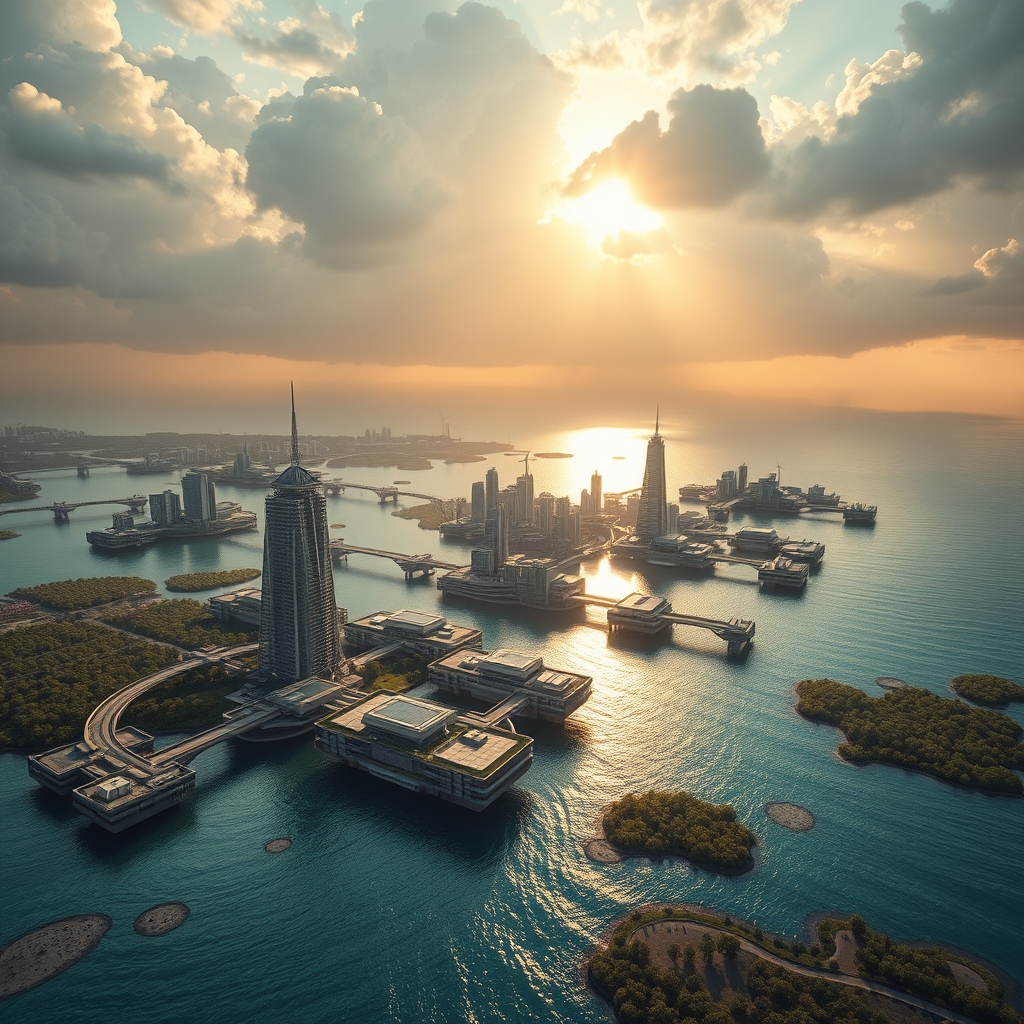
The ocean has long been humanity’s final frontier—a vast, untamed expanse that promises both opportunity and peril. As coastal cities grapple with the dual pressures of urbanization and climate change, the allure of land augmentation has become irresistible. Yet, the rush to reclaim the sea is not merely an engineering challenge; it is a moral and ecological tightrope walk, where every ton of dredged sediment and every reinforced seawall carries consequences that ripple far beyond the shoreline.
The Illusion of Control in a Fluid World
At the heart of land augmentation lies a fundamental paradox: the belief that human ingenuity can outmaneuver the forces of nature. Coastal engineering has evolved from crude landfills to sophisticated deep-sea foundations, yet the ocean remains an unpredictable adversary. The Netherlands, often hailed as the gold standard of reclamation, has spent centuries perfecting its dikes and polders, only to face new threats from rising seas and subsiding land. Similarly, Dubai’s Palm Jumeirah, once a symbol of human audacity, now contends with erosion and the specter of long-term instability. These projects are not failures of engineering but reminders that the sea does not yield easily, nor does it forgive hubris.
The shift toward smart marine cities—urban developments designed with adaptive infrastructure and real-time environmental monitoring—offers a glimmer of hope. These cities leverage AI-driven predictive models to anticipate storm surges, optimize sediment deposition, and even mimic natural ecosystems to enhance resilience. Yet, the question remains: Can technology truly compensate for the ecological debt incurred by altering marine environments? The answer is not a simple yes or no but a nuanced acknowledgment that innovation must be tempered by restraint.
The Ethical Weight of Submerged Land Rights
Reclamation does not occur in a legal vacuum. The concept of submerged land rights has become a battleground where economic ambition clashes with environmental stewardship. In the United States, the Public Trust Doctrine historically protected coastal waters for public use, but modern interpretations have increasingly favored private development. Meanwhile, in Southeast Asia, disputes over artificial islands in the South China Sea have escalated into geopolitical flashpoints, where sovereignty is measured in square kilometers of reclaimed land rather than natural boundaries.
The ethical implications extend beyond borders. Who bears responsibility when a man-made island disrupts migratory fish populations or accelerates coastal erosion in neighboring regions? The legal frameworks governing these questions are often reactive, scrambling to address crises after they emerge rather than preventing them. The result is a patchwork of regulations that vary wildly between jurisdictions, leaving critical gaps in accountability. If smart marine cities are to avoid repeating the mistakes of the past, they must be built on a foundation of equitable and forward-thinking governance.
The Carbon Paradox of Eco-Friendly Reclamation
The term eco-friendly reclamation is a misnomer. No amount of greenwashing can obscure the fact that land augmentation is an energy-intensive endeavor, from the diesel-guzzling dredgers to the carbon footprint of importing construction materials. The irony is stark: projects marketed as solutions to climate change often exacerbate the problem. The Maldives’ Hulhumalé, for instance, was touted as a climate-resilient haven for displaced islanders, yet its construction relied on sand dredged from vulnerable coral reefs, further destabilizing the very ecosystems that protect the archipelago from storm surges.
Emerging alternatives, such as floating real estate and modular marine infrastructure, promise a lighter touch. These designs minimize land disturbance by leveraging buoyancy and adaptability, but they are not without trade-offs. Floating cities, like those proposed by the Seasteading Institute, raise questions about long-term viability, maintenance costs, and the psychological toll of living on a perpetually moving platform. The challenge lies in balancing ambition with pragmatism—recognizing that sustainability is not a binary outcome but a spectrum of compromises.
The Human Cost of Maritime Urbanism
Behind the glossy renderings of waterfront developments and luxury island resorts lies a less glamorous reality: the displacement of coastal communities. Land augmentation often prioritizes economic growth over social equity, pushing out fishermen, indigenous groups, and low-income residents who lack the political clout to resist. In Lagos, Nigeria, the Eko Atlantic project—a $6 billion artificial city designed to shield Victoria Island from erosion—has been criticized for catering to the elite while ignoring the needs of nearby slums. The narrative of progress, it seems, is written by those who stand to profit from it.
Smart marine cities have the potential to rewrite this narrative by integrating affordable housing, public spaces, and community-driven design. Singapore’s Marina Bay, for example, demonstrates how reclamation can be leveraged to create mixed-use developments that serve both residents and tourists. Yet, such examples remain the exception rather than the rule. For maritime urbanism to be truly sustainable, it must prioritize inclusivity as rigorously as it does innovation.
The Unseen Currents of Coastal Resilience
Resilience is not a static achievement but a dynamic process, one that demands constant adaptation. The most successful reclamation projects are those that embrace this fluidity, designing infrastructure that can evolve alongside changing environmental conditions. Rotterdam’s Water Square, a public space that doubles as a flood basin during heavy rains, exemplifies this approach. By treating water as a resource rather than a threat, the city has turned vulnerability into an asset.
Yet, resilience also requires humility—the recognition that some ecosystems cannot be replicated or replaced. Mangrove forests, seagrass beds, and coral reefs provide natural barriers against storms and rising seas, often at a fraction of the cost of engineered solutions. The most forward-thinking smart marine cities are those that incorporate these natural defenses into their blueprints, blurring the line between built and organic environments. The challenge, however, is scaling these solutions without succumbing to the same extractive logic that drives traditional reclamation.
The ocean does not belong to any single generation, nation, or corporation. It is a shared inheritance, one that demands a new paradigm of stewardship—one where ambition is measured not by the square meters of land reclaimed but by the ecosystems preserved, the communities uplifted, and the futures secured. The blueprints of smart marine cities are still being drawn, but their legacy will be determined by the choices made today, in the quiet spaces between innovation and ethics, where the tide of progress meets the weight of responsibility.