Efficient Resource Allocation in Modern Construction: How Lean Practices and Smart Monitoring Are Redefining Project Success
In an era where sustainability and efficiency are no longer optional but essential, the construction industry is undergoing a profound transformation. The shift toward lean construction practices and smart site monitoring is not just about reducing waste—it’s about reimagining how resources are allocated, managed, and optimized throughout the entire building lifecycle. From the initial design phase to the final touches, every decision now carries the weight of environmental responsibility, cost-effectiveness, and long-term viability. But how exactly are these methodologies reshaping the way we build, and what does it mean for the future of construction?
The Foundation of Lean Construction
At its core, lean construction is a philosophy that prioritizes value over volume. Inspired by manufacturing principles, it seeks to eliminate inefficiencies, minimize waste, and maximize productivity by focusing on what truly matters: delivering high-quality results that meet client needs without excess. Unlike traditional construction methods, which often rely on rigid timelines and overproduction, lean practices emphasize flexibility, continuous improvement, and collaboration among all stakeholders.
One of the most significant advantages of lean construction is its ability to reduce material waste. According to the Environmental Protection Agency (EPA), construction and demolition debris account for nearly 600 million tons of waste annually in the United States alone. By adopting just-in-time delivery systems, precise material ordering, and modular building techniques, projects can significantly cut down on excess inventory, reducing both costs and environmental impact. This approach not only conserves resources but also streamlines workflows, allowing teams to focus on quality rather than quantity.
Collaborative Building Design: Breaking Down Silos
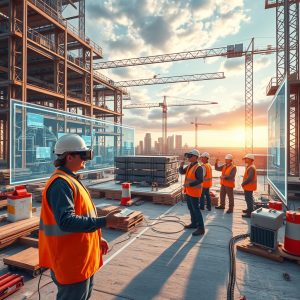
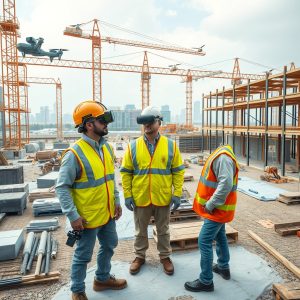
Lean construction doesn’t operate in isolation—it thrives on collaborative building design. In the past, architects, engineers, contractors, and clients often worked in silos, leading to miscommunication, delays, and costly revisions. Today, digital tools like Building Information Modeling (BIM) and immersive construction planning platforms are bridging these gaps, enabling real-time collaboration and transparency.
These technologies allow teams to visualize projects in 3D, simulate construction sequences, and identify potential conflicts before they arise. For example, a clash between structural and mechanical systems can be detected and resolved in the virtual space, saving time and resources that would otherwise be wasted on-site. Moreover, client participatory building approaches ensure that end-users are involved in the design process, resulting in spaces that are not only functional but also aligned with their needs and preferences.
The Role of Smart Site Monitoring in Resource Optimization
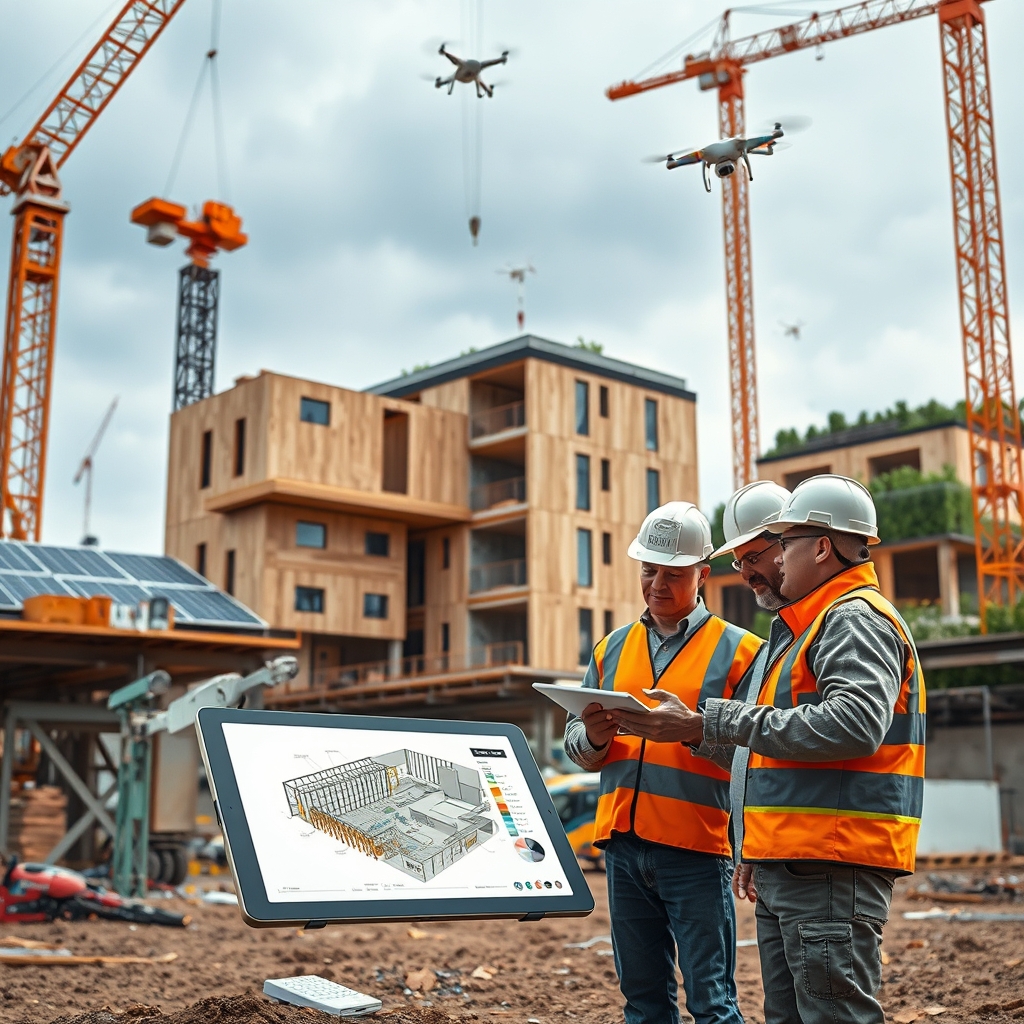
While lean practices lay the groundwork for efficiency, smart site monitoring takes it a step further by providing real-time data and insights. IoT-enabled sensors, drones, and AI-driven analytics are now being deployed to track everything from material usage to worker productivity, enabling project managers to make informed decisions on the fly. This level of precision ensures that resources are allocated where they’re needed most, reducing downtime and preventing costly overruns.
For instance, sensors embedded in concrete can monitor curing times, ensuring that formwork is removed at the optimal moment to avoid delays. Drones equipped with thermal imaging can detect energy leaks in buildings, allowing for immediate corrective action. Meanwhile, AI-powered software can analyze historical data to predict potential bottlenecks, enabling proactive adjustments to schedules and budgets. The result? A construction site that operates like a well-oiled machine, with every resource utilized to its fullest potential.
Eco-Friendly Material Selection: A Game-Changer for Sustainability
No discussion of efficient resource allocation would be complete without addressing eco-friendly material selection. The choices made in this area have far-reaching implications, not just for the environment but also for the long-term performance and cost of a building. Innovations in sustainable materials—such as cross-laminated timber (CLT), recycled steel, and low-carbon concrete—are proving that high performance and environmental responsibility can go hand in hand.
For example, CLT, a mass timber product, offers a renewable alternative to traditional steel and concrete. It sequesters carbon, reduces construction time, and provides excellent thermal insulation. Similarly, recycled steel not only diverts waste from landfills but also requires significantly less energy to produce than virgin steel. By prioritizing these materials, construction projects can achieve lower carbon footprints without compromising on durability or aesthetics.
Real-Time Project Transparency: Building Trust Through Data
Transparency has become a cornerstone of modern construction, and real-time project transparency is making it possible. Cloud-based platforms and digital twin site management systems allow all stakeholders—from investors to subcontractors—to access up-to-date information on project progress, budgets, and timelines. This level of visibility fosters trust, reduces disputes, and ensures that everyone is working toward the same goals.
Digital twins, in particular, are revolutionizing how projects are managed. These virtual replicas of physical sites enable teams to simulate scenarios, test design changes, and optimize workflows before implementation. For example, a digital twin can model the impact of a design modification on energy efficiency, allowing architects to fine-tune their plans for maximum sustainability. This not only enhances decision-making but also minimizes the risk of costly errors during construction.
Modular Building Techniques: Speed Meets Sustainability
Another key player in efficient resource allocation is modular building techniques. By constructing components off-site in controlled environments, projects can achieve faster completion times, reduced material waste, and improved quality control. Modular construction also allows for greater flexibility, as modules can be easily reconfigured or expanded to meet changing needs.
The benefits of modular construction extend beyond efficiency. Because modules are built indoors, weather-related delays are eliminated, and construction schedules become more predictable. Additionally, the precision of factory-based production reduces material waste by up to 30%, according to industry reports. This makes modular techniques an attractive option for projects aiming to balance speed, sustainability, and cost-effectiveness.
The construction industry is at a crossroads, where the demands of sustainability, efficiency, and innovation intersect. By embracing lean practices, smart monitoring, and collaborative design, projects can achieve unprecedented levels of resource optimization. The shift toward eco-friendly materials and modular techniques further underscores the industry’s commitment to reducing its environmental impact while delivering high-quality results. As technology continues to evolve, the possibilities for smarter, more sustainable construction are limitless—ushering in an era where every resource is valued, every decision is data-driven, and every building is a testament to the power of innovation.