Eco-Friendly Material Selection: The Cornerstone of Sustainable and Human-Centric Construction
In an era where environmental consciousness is no longer optional but essential, the construction industry stands at a crossroads. The choices we make today—from the materials we select to the processes we employ—will echo through generations, shaping not only the skyline but the very health of our planet. At the heart of this transformation lies eco-friendly material selection, a practice that transcends mere compliance to become a cornerstone of sustainable, human-centric construction. It’s not just about reducing carbon footprints; it’s about reimagining how we build to create structures that are as kind to the earth as they are to the people who inhabit them.
The Philosophy Behind Eco-Friendly Material Selection
The shift toward sustainable materials is rooted in a fundamental question: How can we construct buildings that minimize harm while maximizing benefit? Traditional construction methods often prioritize cost and speed, relying on materials like concrete and steel, which, while durable, come with significant environmental drawbacks. Concrete alone accounts for nearly 8% of global CO2 emissions, a staggering figure that underscores the urgency of change. Eco-friendly materials, by contrast, are selected based on their life cycle assessment (LCA), a holistic evaluation that considers everything from raw material extraction to disposal or recycling potential.
This philosophy extends beyond environmental metrics. Human-centric design demands that materials contribute to the well-being of occupants—improving indoor air quality, regulating temperature, and even enhancing mental health. For instance, cross-laminated timber (CLT), a engineered wood product, not only sequesters carbon but also creates warm, inviting spaces that foster a sense of connection to nature. Similarly, rammed earth and hempcrete offer natural insulation, reducing the need for energy-intensive heating and cooling systems while providing a tactile, organic aesthetic that resonates with human sensibilities.
Innovative Materials Redefining Sustainable Construction
The palette of eco-friendly materials available to modern builders is expanding rapidly, driven by innovation and a growing demand for sustainability. Some of the most transformative options include:
1. Bio-Based Materials
Materials derived from renewable resources are gaining traction for their low environmental impact and versatility. Mycelium, the root structure of fungi, is being harnessed to create lightweight, compostable insulation and even structural panels. Its ability to grow into custom shapes reduces waste and energy consumption during manufacturing. Another standout is bamboo, which grows rapidly and absorbs CO2 at an impressive rate. When treated properly, bamboo can rival steel in tensile strength, making it an ideal choice for flooring, scaffolding, and even load-bearing structures.
2. Recycled and Upcycled Materials
The mantra “waste not, want not” has never been more relevant. Recycled materials like reclaimed wood, recycled steel, and crushed glass (used in countertops and tiles) divert waste from landfills while reducing the demand for virgin resources. Upcycling takes this a step further by transforming waste into higher-value products. For example, plastic waste is being repurposed into durable bricks and insulation, offering a solution to the global plastic crisis while providing affordable building materials for low-cost housing projects.
3. High-Performance, Low-Impact Composites
Advancements in material science have led to the development of composites that combine sustainability with exceptional performance. Aerogels, for instance, are ultra-lightweight, highly insulating materials made from silica or other substances. Their thermal efficiency can drastically reduce energy consumption in buildings. Meanwhile, self-healing concrete, embedded with bacteria that produce limestone when cracks form, extends the lifespan of structures and reduces maintenance costs. These materials exemplify how innovation can align with sustainability to create buildings that are both resilient and resource-efficient.
Integrating Eco-Friendly Materials into Modern Workflows
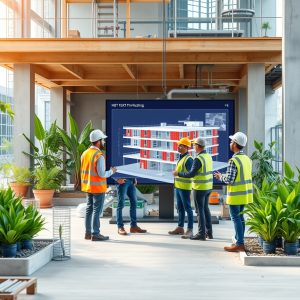
Selecting sustainable materials is only the first step; integrating them into construction workflows requires a rethinking of traditional practices. Lean construction practices and digital twin site management play pivotal roles in this transition. Digital twins—virtual replicas of physical construction sites—allow teams to simulate material usage, optimize logistics, and identify potential waste before it occurs. This level of precision ensures that eco-friendly materials are used efficiently, reducing both costs and environmental impact.
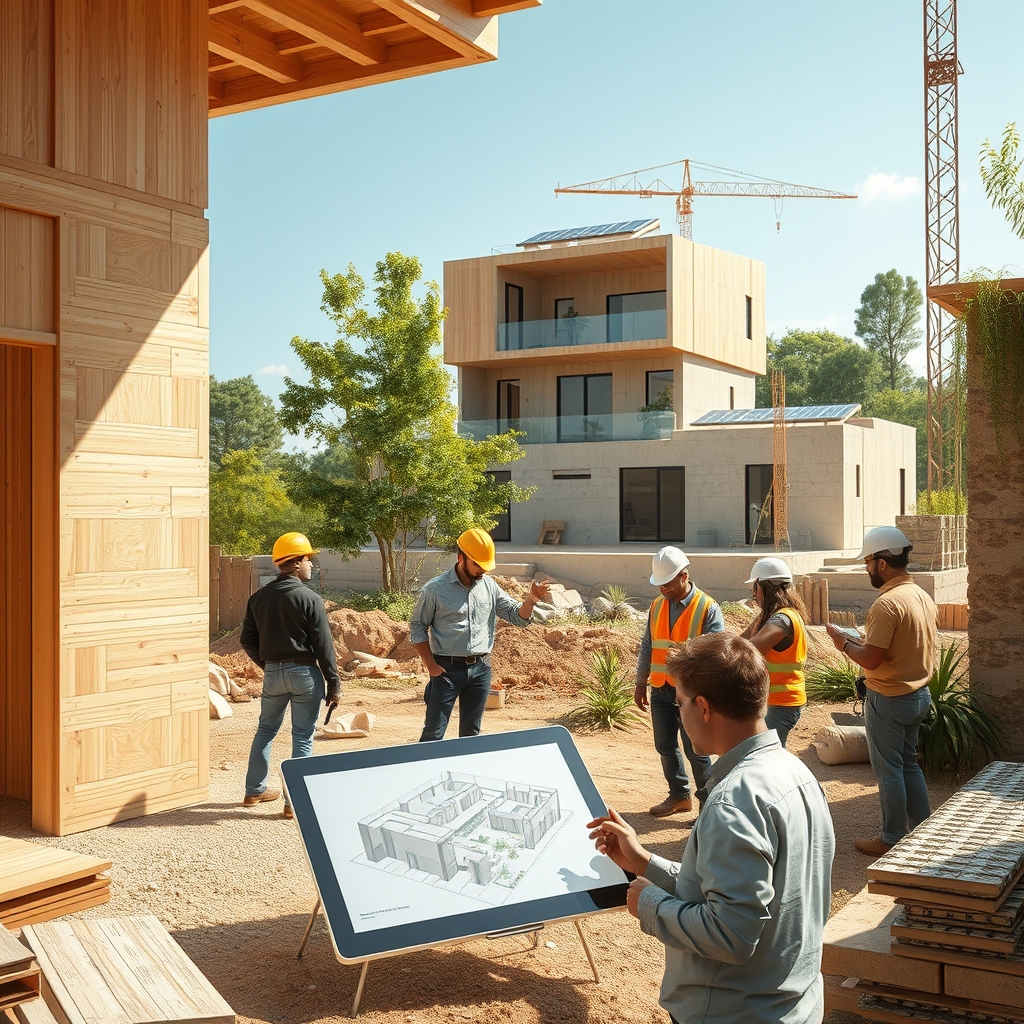
Collaboration is another critical factor. Client participatory building and collaborative building design ensure that stakeholders, from architects to end-users, have a voice in material selection. This approach not only fosters transparency but also encourages the adoption of innovative materials that might otherwise be overlooked. For example, a community-driven project might prioritize locally sourced materials like straw bales or adobe, which reduce transportation emissions and support local economies.
Moreover, modular building techniques are proving to be a game-changer for sustainable material integration. Prefabricated modules can be constructed in controlled environments, minimizing waste and allowing for precise material cuts. This method also facilitates the use of materials like CLT and recycled steel, which can be pre-assembled off-site and transported for quick, efficient installation. The result is a streamlined process that aligns with the principles of efficient resource allocation and quality-focused construction.
Overcoming Challenges and Embracing Opportunities
Despite the clear benefits, the adoption of eco-friendly materials is not without challenges. Cost remains a significant barrier, as sustainable materials often come with higher upfront prices compared to conventional options. However, this perspective overlooks the long-term savings in energy costs, maintenance, and even health benefits. For instance, buildings constructed with non-toxic materials can reduce healthcare costs associated with poor indoor air quality, a hidden but substantial economic advantage.
Another challenge is the lack of awareness and expertise. Many construction professionals are accustomed to traditional materials and may be hesitant to adopt new ones. This is where tech-integrated site supervision and immersive construction planning can bridge the gap. Virtual reality (VR) and augmented reality (AR) tools allow teams to visualize the performance of eco-friendly materials in real-world scenarios, building confidence and competence in their use.
Regulatory frameworks also play a crucial role. Governments and industry bodies must incentivize sustainable practices through green building certifications like LEED, BREEAM, and WELL. These certifications not only validate the use of eco-friendly materials but also provide a roadmap for builders to follow. As demand for certified buildings grows, so too will the market for sustainable materials, driving down costs and increasing accessibility.
The Role of Technology in Material Innovation
Technology is accelerating the development and adoption of eco-friendly materials in ways previously unimaginable. 3D printing, for example, is enabling the creation of complex, waste-free structures using materials like recycled plastics and earth-based composites. This technology allows for on-site fabrication, reducing transportation emissions and enabling custom designs that optimize material usage.
Artificial intelligence (AI) is another powerful tool, capable of analyzing vast datasets to identify the most sustainable materials for a given project. AI can predict the environmental impact of different material combinations, helping designers make informed decisions that align with their sustainability goals. When combined with real-time project transparency tools, AI ensures that every stakeholder—from suppliers to clients—is aligned in their commitment to eco-friendly construction.
The construction industry is on the cusp of a revolution, one where the materials we choose reflect our values and aspirations. Eco-friendly material selection is not just a trend; it’s a fundamental shift toward a future where buildings are in harmony with the environment and the people who inhabit them. As technology advances and awareness grows, the barriers to sustainable construction will continue to crumble, paving the way for a built environment that is resilient, regenerative, and deeply human-centric. The choices we make today will determine the legacy we leave behind—one where every brick, beam, and panel tells a story of innovation, responsibility, and hope.