Crafting the Future: How Immersive Tech and Lean Practices Are Redefining Sustainable Construction
In the ever-evolving landscape of construction, the integration of immersive technology and lean practices is heralding a new era of sustainable building. These innovations are not merely changing the way we construct buildings; they are redefining the very essence of sustainable construction, making it more efficient, transparent, and human-centric.
Immersive Construction Planning
Immersive construction planning is a game-changer in the industry. By leveraging virtual reality (VR) and augmented reality (AR), construction professionals can now visualize and plan projects in a three-dimensional, immersive environment. This technology allows for a more comprehensive understanding of the project’s scope, potential challenges, and solutions. It’s like stepping into the future of the project before a single brick is laid. This not only enhances decision-making but also fosters a deeper appreciation for the project’s environmental impact.
Digital Twin Site Management
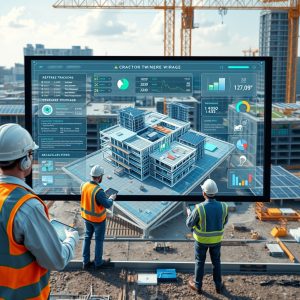
Digital twin site management takes immersive construction planning a step further. A digital twin is a virtual replica of a physical object or system. In construction, it’s a digital model of the entire project, from the initial design to the final construction. This model is updated in real-time with data from various sensors and sources, providing a comprehensive view of the project’s progress and performance. It’s like having a crystal ball that shows the project’s past, present, and future.
Lean Construction Practices
Lean construction practices, inspired by the Toyota Production System, aim to eliminate waste and maximize value in the construction process. This involves a focus on quality, efficiency, and continuous improvement. By identifying and eliminating waste, lean practices can significantly reduce project costs and timelines. Moreover, they encourage a culture of collaboration and continuous learning, which is crucial for sustainable construction.
Collaborative Building Design
Collaborative building design is another key aspect of lean construction. It involves bringing together all stakeholders, including architects, engineers, contractors, and clients, in the design process. This fosters a shared understanding of the project’s goals and constraints, leading to more innovative and sustainable solutions. It’s like building a bridge between different disciplines and perspectives, resulting in a more holistic and integrated design.
Experiential Construction Workflow
An experiential construction workflow is a holistic approach to project management that integrates people, processes, and technology. It’s about creating a seamless and efficient construction process that maximizes productivity and minimizes waste. This involves a focus on continuous improvement, risk management, and stakeholder engagement. By creating an experiential workflow, construction professionals can deliver projects that are not only sustainable but also meet the needs and expectations of all stakeholders.
Smart Site Monitoring
Smart site monitoring is a critical component of an experiential construction workflow. It involves the use of sensors, drones, and other technologies to monitor the project’s progress and performance in real-time. This provides a comprehensive view of the project’s status, allowing for timely decision-making and risk management. It’s like having a team of eyes and ears on the project, ensuring that everything is running smoothly and efficiently.
In the end, the integration of immersive technology and lean practices is not just about building structures; it’s about building a sustainable future. By leveraging these innovations, construction professionals can create buildings that are not only functional and aesthetically pleasing but also environmentally responsible and socially inclusive. It’s a future where technology and human ingenuity come together to create spaces that enhance our lives and preserve our planet.