The Reclaimed Horizon: How Smart Marine Cities Are Betting on the Ocean’s Forgiveness
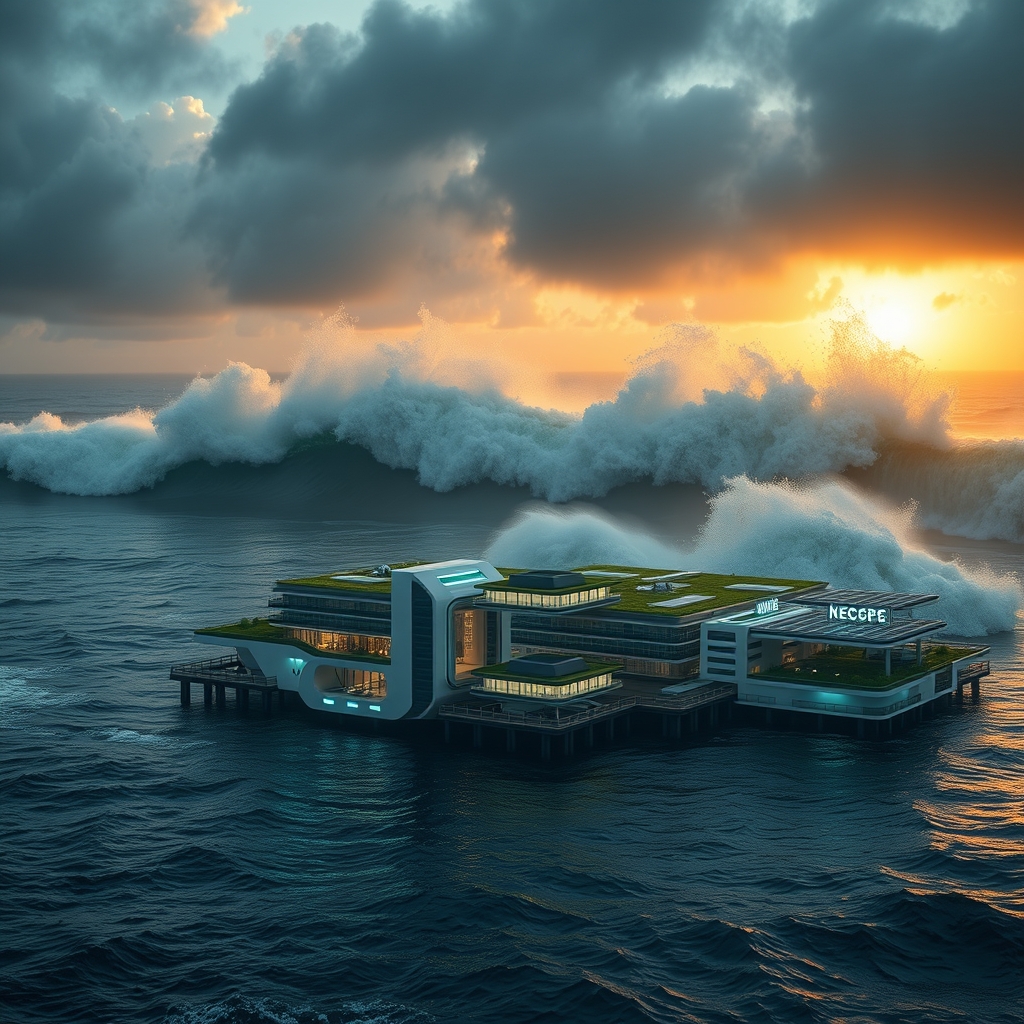
The ocean does not forgive. It absorbs, adapts, and eventually reclaims. Yet, as coastal cities strain under the weight of urban expansion and rising sea levels, the allure of land augmentation has become irresistible. The promise of artificial archipelagos, floating real estate, and smart marine cities is seductive: infinite space, untapped economic potential, and the illusion of control over nature’s most unpredictable force. But beneath the glossy renderings of luxury island resorts and eco-friendly reclamation lies a fundamental miscalculation—one that assumes the ocean will remain a passive partner in humanity’s grand designs.
The Myth of Permanent Solutions
Coastal engineering has long operated under the assumption that human ingenuity can outpace natural forces. Dredging, landfill, and deep-sea foundations are presented as triumphs of modern technology, yet they are, at best, temporary victories. The Netherlands, often cited as the gold standard for reclamation, spends billions annually to maintain its polders against the relentless pressure of the North Sea. The Palm Jumeirah in Dubai, a marvel of artificial island construction, requires constant dredging to combat erosion. These projects are not permanent solutions; they are high-stakes gambles with nature’s patience.
The problem is not just technical but philosophical. Reclamation projects treat the ocean as a blank canvas, a resource to be molded rather than a dynamic system to be respected. This mindset ignores the ocean’s memory—its ability to remember every grain of sand displaced, every ton of sediment dredged. The result is a fragile equilibrium, where the slightest miscalculation—a storm surge, a shift in currents, or a rise in sea levels—can unravel decades of work. The question is not whether these projects will fail, but when.
The Illusion of Eco-Friendly Reclamation
In response to criticism, developers have rebranded reclamation as “sustainable” and “eco-friendly.” Floating cities, designed with green roofs and renewable energy, are marketed as the future of coastal resilience. Yet, these projects often serve as little more than greenwashing for the same old practices. The carbon footprint of constructing a man-made island—from dredging to concrete production—far outweighs the benefits of solar panels and rainwater harvesting. Moreover, the ecological disruption caused by reclamation is irreversible. Coral reefs, mangroves, and marine habitats are destroyed in the process, and their loss is rarely, if ever, fully mitigated.
Take the case of Eko Atlantic in Lagos, Nigeria, a $6 billion project billed as a solution to coastal erosion and flooding. While it promises to protect the city from the ocean’s wrath, it does so by displacing that wrath onto neighboring communities. The project’s sea wall, touted as a marvel of engineering, has already altered local currents, exacerbating erosion in nearby areas. This is the paradox of eco-friendly reclamation: it creates resilience for some while increasing vulnerability for others.
The Legal and Ethical Quagmire
Reclamation projects also operate in a legal gray area. Submerged land rights, maritime borders, and environmental regulations are often ill-defined, leaving room for exploitation. The South China Sea, where artificial islands have been built atop contested reefs, is a prime example. These projects are not just about land; they are about sovereignty, power, and the rewriting of international law. The ocean, once a shared resource, is being carved up into exclusive economic zones, with little regard for the communities and ecosystems that depend on it.
Even in less contentious regions, the legal framework for reclamation is woefully inadequate. Who owns the land once it’s reclaimed? Who is responsible when a man-made island fails? These questions remain unanswered, leaving developers and governments to operate with impunity. The result is a system where the risks are socialized—borne by taxpayers and coastal communities—while the rewards are privatized, flowing to developers and investors.
The Future of Maritime Urbanism
Despite these challenges, the demand for coastal expansion shows no signs of slowing. The global population is projected to reach 10 billion by 2050, with nearly 70% living in urban areas. Many of these cities will be coastal, and the pressure to expand into the ocean will only grow. The question, then, is not whether reclamation will continue, but how it can be done responsibly.
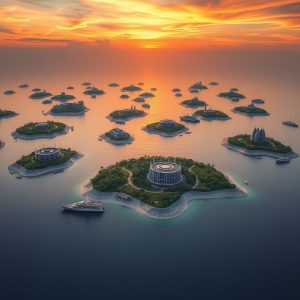
Smart marine cities offer a glimmer of hope. By integrating real-time data, adaptive infrastructure, and ecological design, these projects could minimize their impact on the ocean. Floating neighborhoods, like those proposed in the Maldives, could reduce the need for landfill while providing resilience against sea-level rise. But these solutions require a shift in mindset—from domination to coexistence, from short-term gains to long-term sustainability.
Yet, even the most innovative designs cannot escape the fundamental truth: the ocean is not a resource to be exploited, but a force to be reckoned with. The most successful reclamation projects will be those that acknowledge this reality, that treat the ocean not as a passive partner but as an active participant in the future of coastal living. The alternative—continuing to build on borrowed time—is a gamble humanity cannot afford to lose.
The horizon of reclaimed land is not a testament to human ingenuity, but a reminder of its limits. The ocean will always have the final say, and the cities that endure will be those that learn to listen before they build.