The Ethical Tightrope of Smart Marine Cities: Balancing Innovation with the Hidden Costs of Reclamation
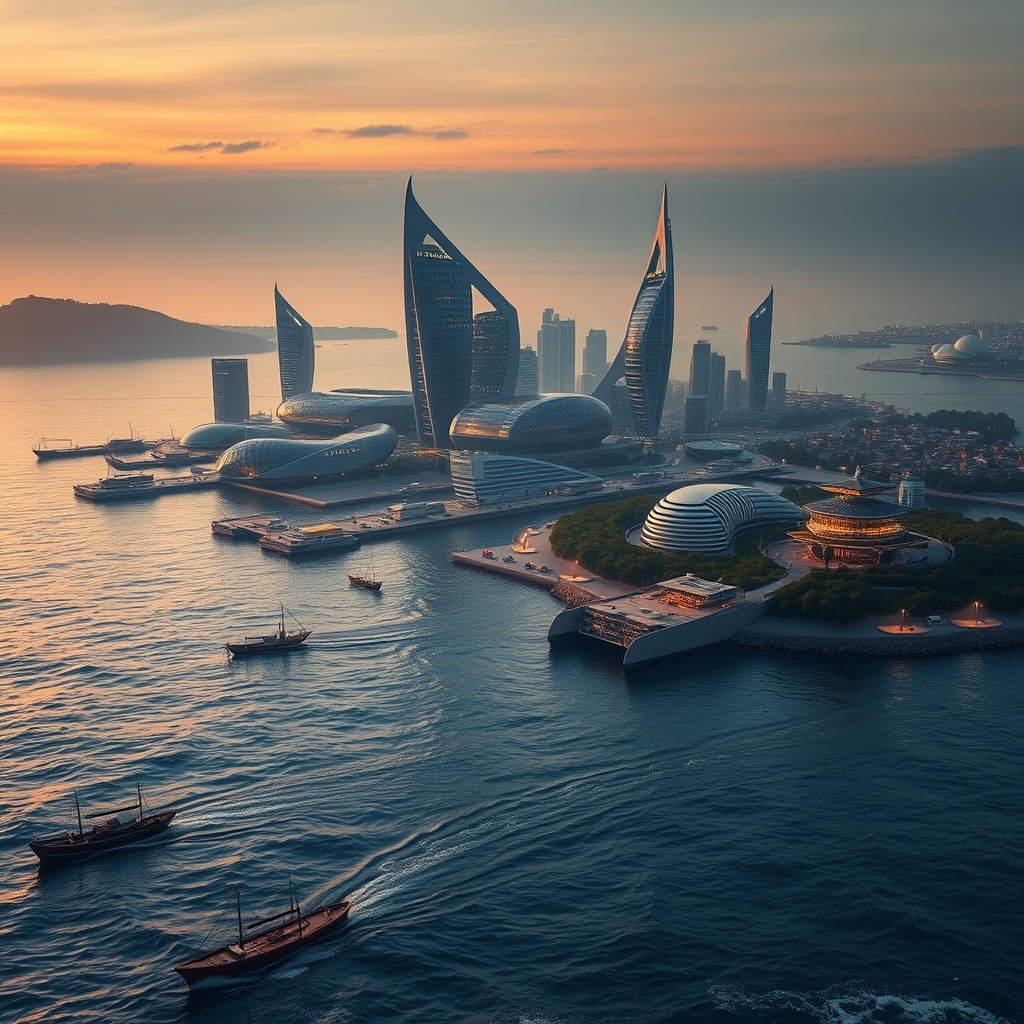
The ocean has long been humanity’s last frontier—a vast, untamed expanse that beckons with the promise of expansion, wealth, and untold possibilities. Yet, as coastal cities strain under the weight of urbanization and climate change, the allure of reclaiming land from the sea has evolved from a desperate measure into a full-fledged engineering obsession. Smart marine cities, with their sleek designs and promises of sustainability, represent the pinnacle of this ambition. But beneath the glossy renderings and lofty rhetoric lies a question that refuses to be silenced: at what cost does this progress come?
The Illusion of Control in a Liquid World
For decades, land reclamation was a brute-force endeavor—dredging, dumping, and displacing with little regard for the ecological or social consequences. Today, the narrative has shifted. Terms like “eco-friendly reclamation” and “coastal resilience” are bandied about with the confidence of inevitability, as if the mere act of labeling a project “smart” absolves it of its inherent contradictions. The reality, however, is far more nuanced. Smart marine cities are not immune to the laws of physics or ecology; they are merely better at disguising their impacts.
Take, for instance, the concept of deep-sea foundations. These marvels of engineering allow developers to anchor structures to the ocean floor, creating the illusion of stability in an environment that is anything but. Yet, the process of installing these foundations disrupts marine ecosystems, alters sediment flows, and introduces foreign materials into delicate underwater habitats. The irony is palpable: in our quest to build resilient cities, we are often undermining the very systems that make resilience possible. The ocean does not forgive ignorance, and no amount of technological sophistication can erase the fact that we are still guests in its domain.
The Mirage of Sustainability
Sustainability has become the buzzword du jour in maritime urban planning, a shield wielded by developers to deflect criticism and justify expansion. But what does “sustainable” truly mean in the context of land reclamation? Is it the use of recycled materials in construction? The integration of renewable energy sources? Or perhaps the creation of artificial wetlands to offset habitat loss? While these measures are commendable, they often serve as little more than greenwashing—a thin veneer of environmentalism applied to projects that are, at their core, extractive.
The truth is that no amount of solar panels or mangrove forests can compensate for the fundamental reality of land reclamation: it is an act of defiance against nature. Every square meter of reclaimed land represents a disruption to coastal currents, a loss of marine biodiversity, and a potential exacerbation of erosion elsewhere. Smart marine cities may be more efficient in their resource use, but efficiency does not equate to sustainability. It merely delays the reckoning.
The Legal Labyrinth of Submerged Land Rights
If the ecological costs of reclamation are complex, the legal implications are even more so. The concept of submerged land rights is a legal and ethical minefield, one that pits nations, corporations, and local communities against one another in a battle for control over the ocean’s resources. Who owns the seabed? Who has the right to alter it? And what happens when reclamation projects encroach on traditional fishing grounds or sacred sites?
These questions are not hypothetical. In the South China Sea, artificial archipelagos have become flashpoints for geopolitical tension, with nations staking claims to reclaimed land in a high-stakes game of maritime chess. Meanwhile, in places like Dubai and Singapore, luxury island resorts have displaced local fishermen and disrupted centuries-old ways of life. The law, it seems, is struggling to keep pace with ambition. International conventions like the United Nations Convention on the Law of the Sea (UNCLOS) provide a framework, but enforcement is inconsistent, and loopholes abound. The result is a patchwork of regulations that often favor the powerful, leaving marginalized communities to bear the brunt of progress.
The Human Cost of Paradise
Behind every glossy brochure for a luxury island resort or a floating real estate development lies a human story—one of displacement, disruption, and often, resistance. Coastal communities, particularly in the Global South, are frequently sidelined in the rush to build the cities of the future. Their knowledge of the sea, honed over generations, is dismissed as irrelevant in the face of modern engineering. Their livelihoods are sacrificed on the altar of progress, with promises of compensation that rarely materialize.
Consider the case of Jakarta, where ambitious reclamation projects have exacerbated flooding and forced thousands of residents from their homes. Or the Maldives, where luxury resorts built on reclaimed land have altered coastal dynamics, leaving nearby islands more vulnerable to erosion. These are not isolated incidents; they are the predictable outcomes of a development model that prioritizes profit over people. Smart marine cities may be technologically advanced, but they are not immune to the ethical failings of their predecessors.
The Uncomfortable Truth About Coastal Resilience
Resilience is the holy grail of coastal engineering—a quality that promises to protect cities from the ravages of climate change. Yet, the pursuit of resilience often reveals a fundamental misunderstanding of the problem. Building higher sea walls, constructing artificial barriers, and reclaiming land may provide short-term protection, but they do little to address the root causes of vulnerability. In fact, they can exacerbate the problem by creating a false sense of security, encouraging further development in high-risk areas.
True resilience requires a shift in mindset—one that acknowledges the limits of human control and embraces the dynamic nature of coastal systems. It means designing cities that can adapt to rising sea levels, rather than attempting to hold back the tide. It means prioritizing the restoration of natural barriers like mangroves and coral reefs, which provide far more effective protection than any man-made structure. And it means recognizing that some areas may need to be abandoned, rather than endlessly fortified.
Smart marine cities have the potential to lead this shift, but only if they are willing to confront their own contradictions. The technology exists to build more sustainably, but the will to do so often lags behind. The question is not whether we can reclaim land from the sea, but whether we should—and if so, under what conditions. The ocean is not a blank canvas for human ambition; it is a living, breathing entity that demands respect. To ignore this reality is to court disaster, no matter how smart our cities claim to be.
The allure of smart marine cities lies in their promise of a future where humanity and nature coexist in harmony. Yet, this vision remains elusive, tangled in a web of ecological, legal, and ethical dilemmas. The challenge is not merely to build better, but to rethink what progress means in a world where the boundaries between land and sea are no longer fixed. The ocean does not care for our ambitions; it responds only to our actions. The question is whether we will listen before it is too late.