The Geopolitical Undertow: How Artificial Archipelagos Are Redrawing Maritime Borders and Sovereignty
The construction of artificial archipelagos is no longer merely an exercise in coastal engineering or luxury real estate development—it is a geopolitical maneuver, a silent assertion of territorial ambition in an era where the ocean is the last unclaimed frontier. Nations and corporations alike are leveraging land augmentation not just to expand urban footprints or create exclusive retreats, but to redraw the very boundaries of sovereignty, often with little regard for the ecological or legal ramifications that ripple beneath the surface.
The Strategic Imperative of Man-Made Islands
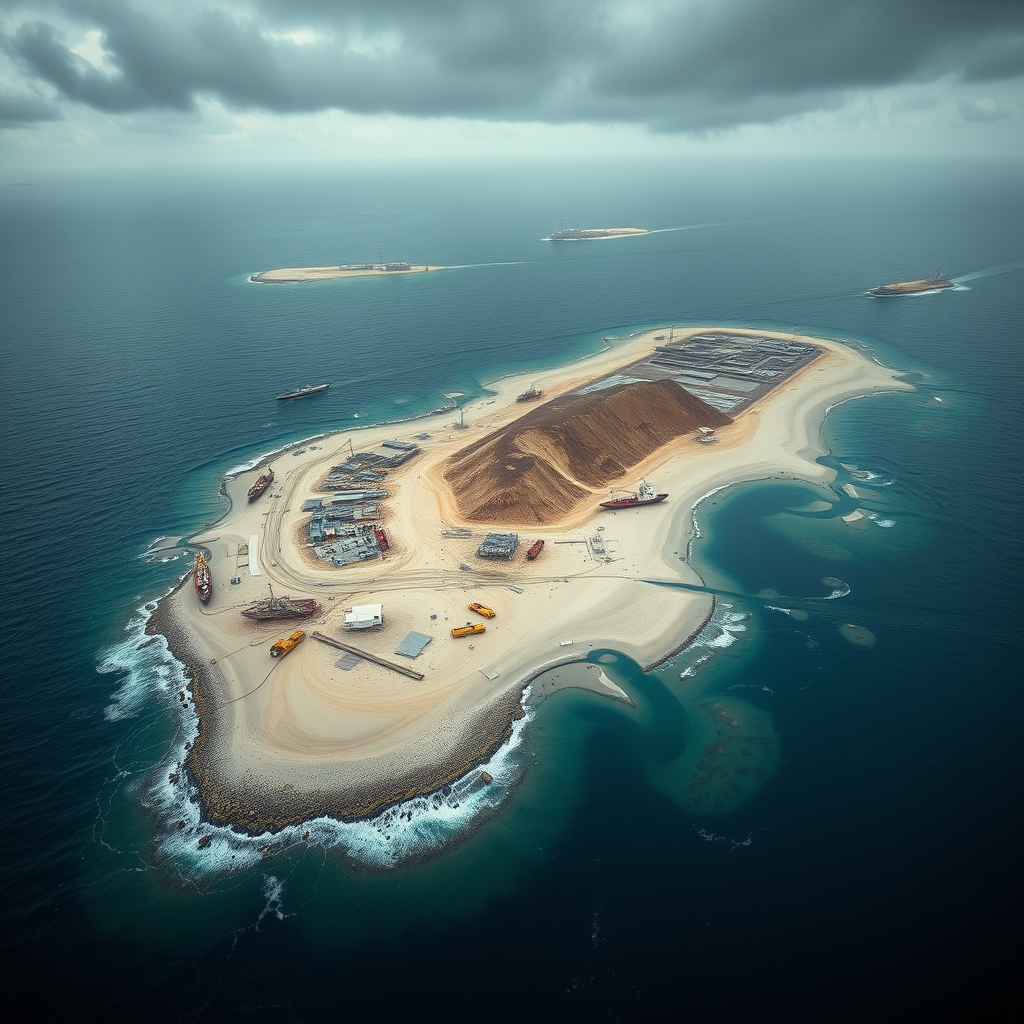
In the South China Sea, the Spratly Islands—once little more than contested atolls—have been transformed into fortified outposts, complete with airstrips, military installations, and deep-sea ports. China’s land reclamation efforts in the region are not merely about resource extraction or military dominance; they are a deliberate strategy to assert control over one of the world’s most critical maritime corridors. The message is clear: in the 21st century, sovereignty is not just claimed—it is constructed, one dredged cubic meter at a time.
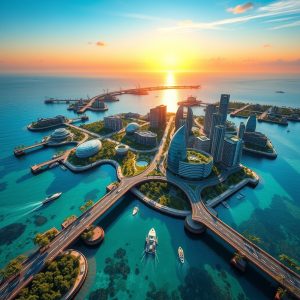
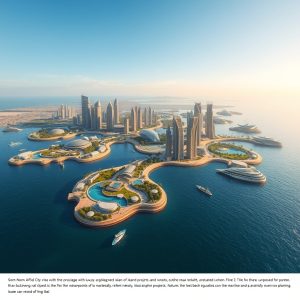
This phenomenon is not isolated. The United Arab Emirates’ Palm Jumeirah and The World archipelago, while ostensibly luxury developments, serve a dual purpose: they project economic power while subtly reinforcing the UAE’s territorial claims in the Persian Gulf. Even smaller nations, like the Maldives, are exploring artificial island projects not just for tourism, but as a hedge against rising sea levels—a survival strategy that doubles as a geopolitical statement. The ocean, once a neutral expanse, is now a chessboard where land is manufactured to secure influence.
The Legal Vacuum of Submerged Land Rights
The international legal framework governing submerged land rights is woefully inadequate for the era of artificial archipelagos. The United Nations Convention on the Law of the Sea (UNCLOS) was drafted in an age when land reclamation was a marginal practice, not a geopolitical tool. Today, nations exploit its ambiguities to justify expansive claims. China’s “nine-dash line” in the South China Sea, for instance, is a legal fiction that gains credibility through the physical presence of reclaimed land—a presence that, once established, becomes nearly impossible to reverse.
This legal gray area extends beyond military and economic zones. The question of whether artificial islands confer exclusive economic rights to surrounding waters—or even territorial sea status—remains contentious. The Hague’s 2016 ruling against China’s claims in the South China Sea was a rare attempt to impose order, but enforcement remains elusive. Meanwhile, corporations and nations continue to exploit the ambiguity, treating the ocean as a blank canvas for territorial expansion, with little accountability for the ecological or diplomatic fallout.
The Ecological Cost of Geopolitical Ambition
The environmental consequences of these projects are as vast as the ambitions behind them. Dredging and landfill operations disrupt marine ecosystems, smothering coral reefs and altering sediment flows that have shaped coastlines for millennia. The Spratly Islands reclamation, for example, has destroyed over 1,000 hectares of coral reef—a loss that reverberates through marine biodiversity and local fisheries. Yet, in the calculus of geopolitical strategy, these costs are treated as collateral damage, a necessary sacrifice for the greater goal of territorial control.
Even ostensibly “eco-friendly” reclamation projects, such as the Netherlands’ Marker Wadden, come with trade-offs. While these initiatives may restore wetlands or create new habitats, they are often designed with human utility in mind—flood control, urban expansion, or economic development—rather than ecological restoration for its own sake. The line between sustainable land augmentation and geopolitical land-grabbing is increasingly blurred, with environmental justifications serving as convenient cover for more cynical motives.
The Future of Maritime Sovereignty: A Zero-Sum Game?
As sea levels rise and coastal cities face existential threats, the temptation to reclaim land will only grow. But the geopolitical implications of these projects extend far beyond their immediate surroundings. Artificial archipelagos are not just physical structures; they are declarations of intent, tools for reshaping the balance of power in an era of climate uncertainty. The question is whether the international community can develop a framework to govern these projects before they escalate into full-blown conflicts.
For now, the trend is toward unilateral action. Nations and corporations are moving faster than regulators, exploiting legal loopholes and technological advancements to stake their claims. The result is a maritime landscape that is as fragmented as it is contested—a patchwork of artificial islands, each a monument to the unchecked ambition of those who see the ocean not as a shared resource, but as a frontier to be conquered. The challenge for the future will be to reconcile the need for coastal resilience and urban expansion with the realities of geopolitical competition, before the tides of ambition erase the last remnants of a rules-based maritime order.
The ocean has always been a space of possibility, but in the age of artificial archipelagos, it is also a space of conflict. The question is not whether we can build these islands, but whether we can afford the cost—ecological, legal, and geopolitical—of doing so. The answer will shape the contours of sovereignty for generations to come, long after the last cubic meter of sand has been dredged from the seafloor.