Beneath the Surface: The Legal and Ecological Labyrinth of Submerged Land Rights in Reclamation Projects
The ocean has long been a frontier for human ambition, a vast canvas upon which we project our desires for expansion, luxury, and resilience. Yet, as coastal cities strain under the pressures of urbanization and climate change, the race to reclaim land from the sea has exposed a tangled web of legal, ecological, and ethical dilemmas. At the heart of this complexity lies a deceptively simple question: who owns the seabed, and what rights do nations—or corporations—hold over the submerged lands they seek to transform?
The Legal Quagmire of Submerged Land Rights
The United Nations Convention on the Law of the Sea (UNCLOS) established a framework for maritime boundaries, granting coastal states sovereign rights over their continental shelves and exclusive economic zones (EEZs). Yet, the application of these rights to land reclamation projects remains fraught with ambiguity. For instance, when China constructed its artificial islands in the South China Sea, it did so under the guise of “historic rights,” a claim vehemently contested by neighboring nations. The legal battles that followed underscored a critical gap in international law: while UNCLOS governs resource extraction and navigation, it offers little clarity on the ownership of reclaimed land itself.
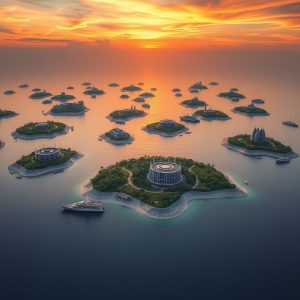
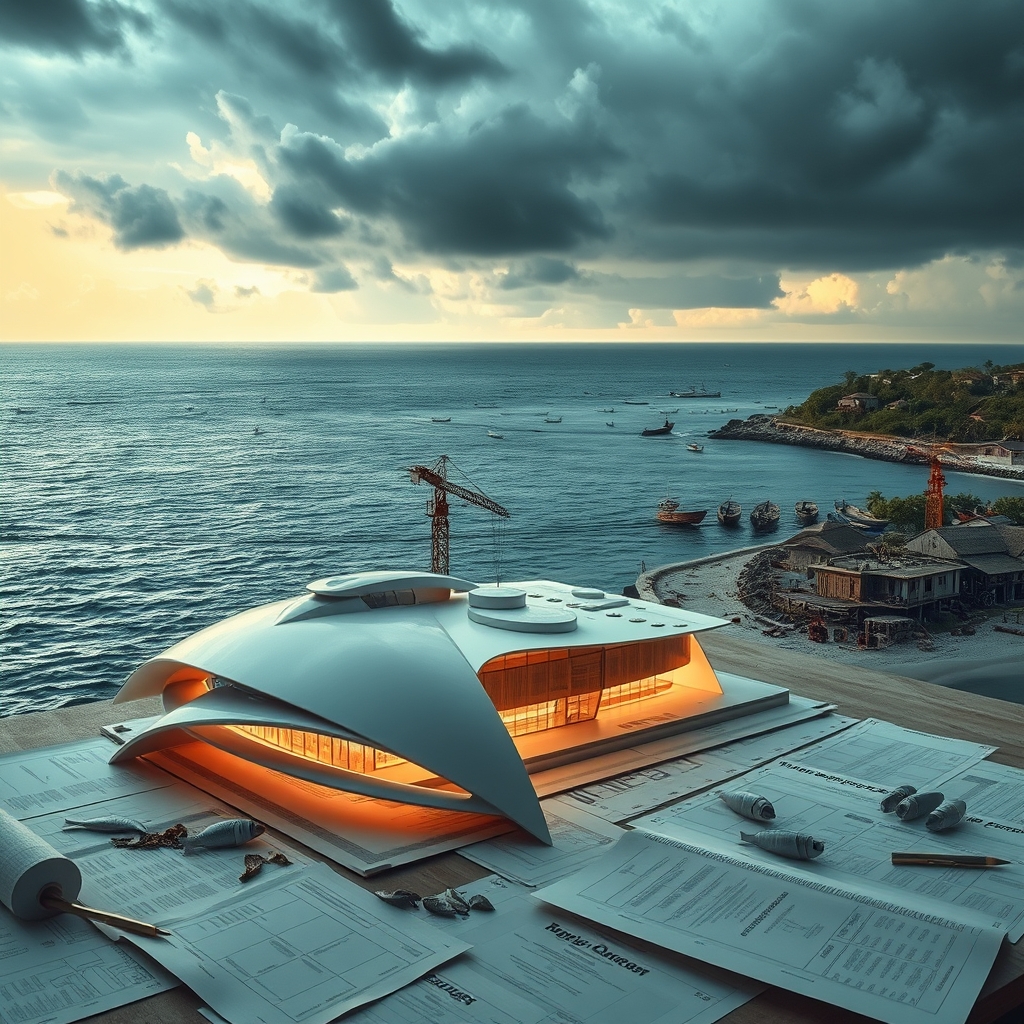
This ambiguity extends to private enterprises. Developers of luxury island resorts, such as Dubai’s Palm Jumeirah or the Maldives’ floating city projects, often operate under long-term leases or concessions granted by host governments. But what happens when these projects encroach on traditional fishing grounds or disrupt marine ecosystems? The absence of a unified legal framework leaves communities vulnerable to displacement and environmental degradation, with little recourse for justice. The case of the Eko Atlantic project in Lagos, Nigeria, serves as a cautionary tale. Marketed as a climate-resilient city, the development has been criticized for exacerbating coastal erosion and displacing local fishermen, all while operating under a legal gray area that prioritizes economic gains over ecological and social equity.
The Ecological Cost of Rewriting the Coastline
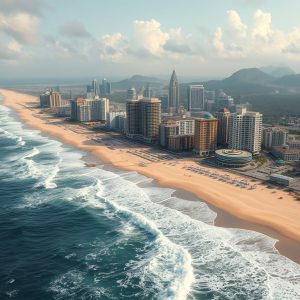
Land reclamation is not merely an engineering feat; it is an ecological disruption of monumental proportions. The process of dredging and filling alters sediment flows, destroys marine habitats, and often leads to the permanent loss of biodiversity. The construction of Hong Kong International Airport on reclaimed land, for example, decimated vital wetlands and disrupted the migration patterns of the endangered black-faced spoonbill. Similarly, Singapore’s aggressive land augmentation strategies—expanding its territory by over 20% since independence—have come at the cost of coral reefs and seagrass beds, which act as natural barriers against storm surges.
Yet, the ecological impact of reclamation extends beyond immediate habitat destruction. The alteration of coastal hydrodynamics can lead to unintended consequences, such as increased erosion in adjacent areas or the creation of “dead zones” where oxygen levels plummet. The Gulf of Mexico’s infamous dead zone, exacerbated by sediment runoff from the Mississippi River, offers a grim preview of what could unfold on a global scale if reclamation projects proceed without rigorous environmental safeguards. The challenge, then, is not just to reclaim land, but to do so in a way that respects the delicate balance of marine ecosystems—a balance that is already under siege from climate change.
The Illusion of Eco-Friendly Reclamation
In response to growing criticism, many reclamation projects now tout their “eco-friendly” credentials. Techniques such as “soft engineering,” which uses natural materials like sand and vegetation to stabilize reclaimed land, are presented as sustainable alternatives to traditional dredging. The Netherlands’ Sand Motor project, a massive artificial sandbank designed to replenish eroding beaches, is often cited as a model for climate-adaptive coastal engineering. Similarly, the proposed Oceanix City in Busan, South Korea, promises a floating metropolis built on modular, carbon-neutral platforms.
But these projects raise a fundamental question: can land reclamation ever truly be sustainable, or is it merely a form of greenwashing that masks the underlying extraction of resources from the sea? The Sand Motor, for all its innovation, still relies on the large-scale displacement of sand, a finite resource that is increasingly scarce. Meanwhile, floating cities like Oceanix City may reduce land-based emissions, but they introduce new risks, such as the potential for plastic pollution or the disruption of marine life beneath their platforms. The reality is that no reclamation project is entirely benign. The best we can hope for is a mitigation of harm, not its elimination.
Maritime Urban Planning: A Path Forward?
The future of coastal development may lie not in the wholesale transformation of the seabed, but in a more nuanced approach to maritime urban planning. This involves integrating reclamation projects with existing coastal ecosystems, rather than treating the ocean as a blank slate for human ambition. For example, the concept of “waterfront urbanism”—which emphasizes mixed-use developments that blend residential, commercial, and recreational spaces with natural water features—offers a more holistic alternative to traditional land augmentation. Cities like Copenhagen, with its harbor baths and flood-adaptive architecture, demonstrate how urban spaces can coexist with rising sea levels without resorting to large-scale reclamation.
Another promising avenue is the development of “smart marine cities” that leverage technology to enhance coastal resilience. These cities could use real-time data to monitor sediment flows, predict erosion patterns, and adapt to changing sea levels. The European Union’s Horizon 2020 program has funded projects like BRIDGE, which explores the use of artificial intelligence to optimize coastal infrastructure. Such initiatives suggest that the future of marine urbanism may lie in adaptability, rather than expansion.
The allure of land reclamation is undeniable. It promises a solution to the twin crises of urban overcrowding and climate change, offering a tantalizing vision of human ingenuity triumphing over natural constraints. Yet, the legal and ecological labyrinths that accompany these projects serve as a stark reminder of their inherent risks. The ocean is not a resource to be endlessly exploited, nor a frontier to be conquered. It is a dynamic, interconnected system that demands respect and restraint. As we stand on the brink of a new era of coastal development, the choices we make today will determine whether we build a future of resilience—or one of reckless extraction. The tide is rising, and with it, the stakes of our ambition.