The Floating Dilemma: How Smart Marine Cities Are Navigating the Moral Depths of Land Reclamation
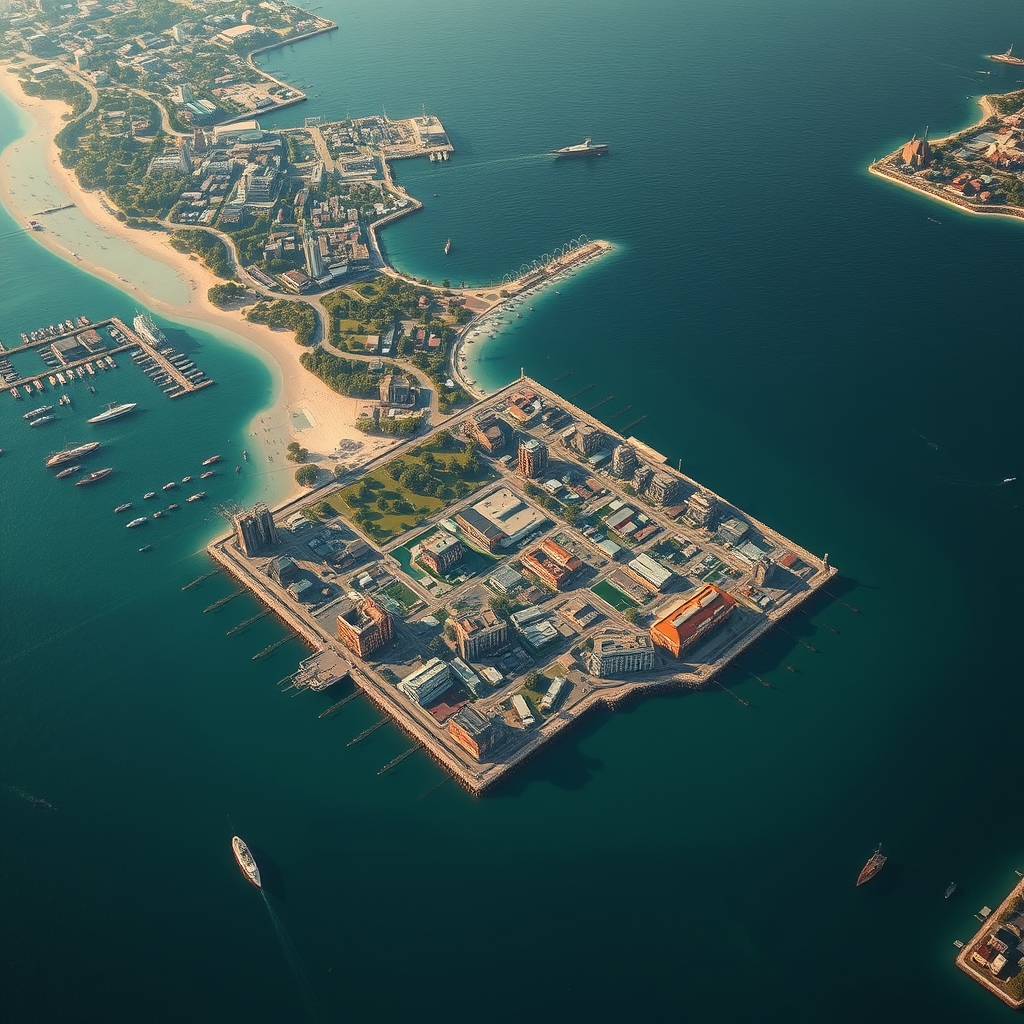
The ocean has long been humanity’s last frontier—a vast, untamed expanse that promises both opportunity and oblivion. Yet as coastal cities strain under the weight of urban sprawl and rising sea levels, the allure of reclaiming land from the sea has evolved from a desperate gamble into a calculated, almost inevitable strategy. The rise of smart marine cities and floating real estate is not merely an architectural marvel but a moral reckoning, forcing societies to confront the ethical and ecological consequences of their ambition. The question is no longer whether we can build these synthetic shorelines, but whether we should—and at what cost.
The Illusion of Infinite Expansion
For decades, the narrative of land augmentation has been one of unbridled optimism. Dubai’s Palm Islands, China’s massive coastal reclamation projects, and the Netherlands’ centuries-old battle against the sea have all reinforced the idea that human ingenuity can outmatch nature’s constraints. Yet these projects often obscure a harsh reality: the ocean is not a passive canvas. It is a dynamic, living system that resists domination. The sinking of Jakarta’s reclaimed districts, the erosion of Hong Kong’s artificial islands, and the ecological devastation wrought by dredging in the South China Sea serve as cautionary tales. The illusion of infinite expansion is just that—an illusion, propped up by short-term gains and long-term denial.
Smart marine cities, with their promises of coastal resilience and sustainable reclamation, attempt to reconcile this tension. By integrating advanced materials, real-time environmental monitoring, and adaptive infrastructure, they present a vision of harmony between human development and marine ecosystems. But beneath the glossy renderings lies a fundamental paradox: can a city truly be sustainable if its very existence depends on altering the natural order? The answer is not a simple yes or no, but a spectrum of compromises, each with its own ethical and ecological trade-offs.
The Ethical Weight of Deep Sea Foundations
At the heart of this dilemma lies the engineering feat of deep sea foundations. Unlike traditional land reclamation, which relies on piling sand and sediment onto shallow seabeds, smart marine cities often require anchoring structures to the ocean floor at depths where pressure, corrosion, and biological activity pose unprecedented challenges. The deeper the foundation, the greater the disruption to benthic ecosystems—home to fragile coral reefs, hydrothermal vents, and species yet to be discovered. The ethical implications are profound: do we sacrifice unknown marine biodiversity for the sake of urban expansion?
Proponents argue that deep sea foundations can be designed to minimize harm, using techniques like eco-friendly piling and artificial reef integration. Yet these solutions are not without their own controversies. Artificial reefs, for instance, may create new habitats, but they also risk introducing invasive species or disrupting existing ecological balances. The line between mitigation and manipulation blurs, raising uncomfortable questions about humanity’s role as stewards—or conquerors—of the sea.
The Legal Labyrinth of Submerged Land Rights
If the ecological challenges of smart marine cities are daunting, the legal complexities are equally fraught. Submerged land rights have long been a contentious issue in maritime law, with nations clashing over territorial claims, resource extraction, and environmental regulations. The emergence of floating cities and artificial archipelagos adds another layer of ambiguity. Who owns the seabed beneath a man-made island? Can a floating structure claim sovereignty, or is it merely an extension of its host nation’s territory? The United Nations Convention on the Law of the Sea (UNCLOS) provides a framework, but its interpretations are often murky, leaving room for exploitation and conflict.
Consider the case of the Seasteading Institute, which advocates for autonomous floating communities beyond the jurisdiction of any single government. While its vision of libertarian utopias on the high seas captures the imagination, it also exposes the legal vacuum surrounding blue economy infrastructure. Without clear regulations, floating cities risk becoming lawless enclaves, vulnerable to corporate exploitation, environmental neglect, or geopolitical tensions. The absence of a cohesive legal framework is not just a bureaucratic hurdle—it is a ticking time bomb for the future of marine urbanism.
The Carbon Paradox of Luxury Island Resorts
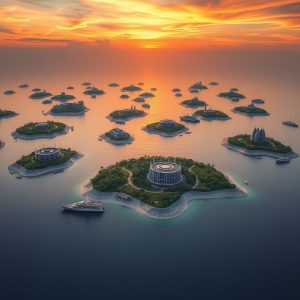
No discussion of smart marine cities would be complete without addressing the elephant in the room: luxury island resorts. These playgrounds for the ultra-wealthy epitomize the contradictions of eco-friendly reclamation. On one hand, they tout sustainability through solar panels, desalination plants, and carbon-neutral construction. On the other, they cater to a clientele whose very presence—via private jets, yachts, and extravagant consumption—undermines any environmental claims. The carbon footprint of a single luxury resort can negate the benefits of a dozen sustainable reclamation projects.
Yet the problem runs deeper than hypocrisy. Luxury resorts often serve as the vanguard for larger reclamation projects, normalizing the idea of the ocean as a commodity to be bought, sold, and developed. The Maldives, for example, has embraced artificial islands not just for tourism but as a survival strategy against rising sea levels. But at what point does adaptation become exploitation? When does resilience cross into recklessness? The answers are not straightforward, but they demand scrutiny, especially as climate change accelerates and the pressure to