The Blueprints of Vulnerability: How Smart Marine Cities Expose the Illusion of Coastal Mastery
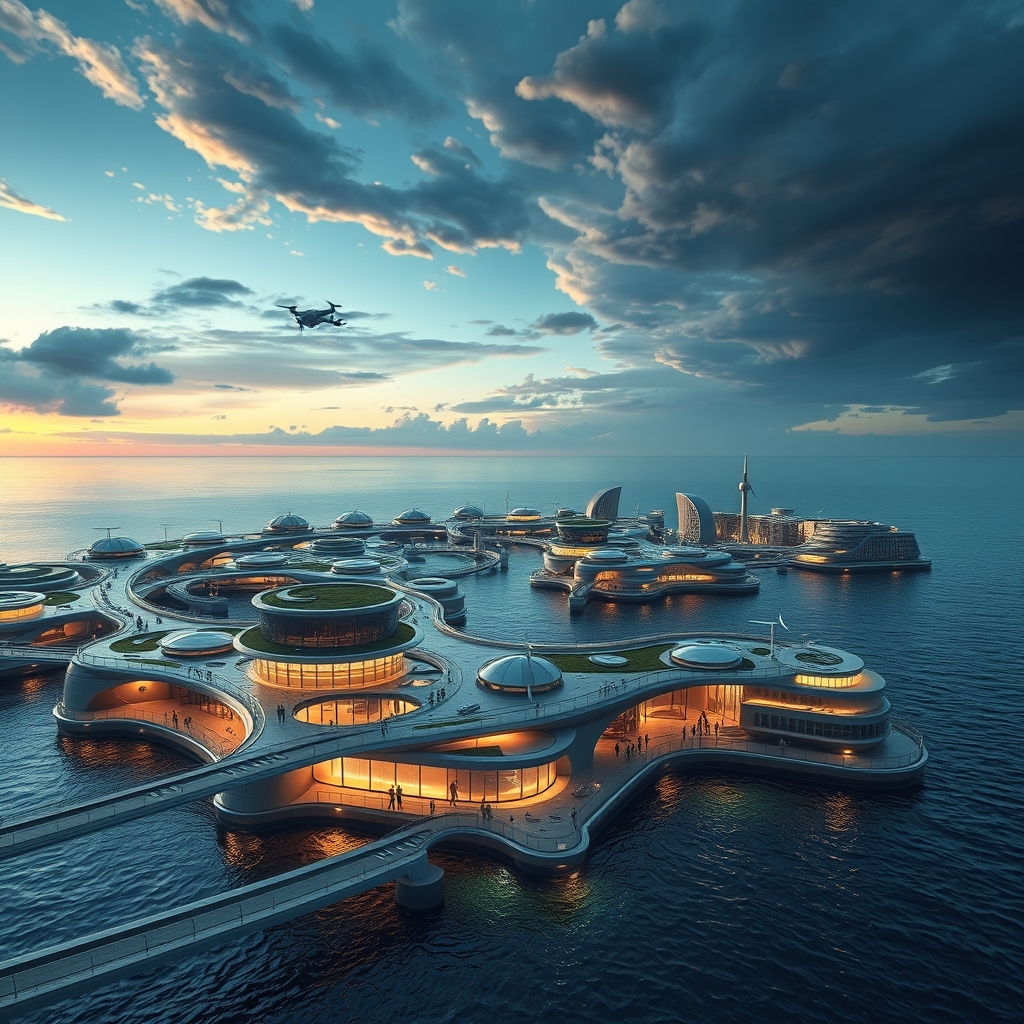
The ocean has always been a frontier of human ambition, a vast and seemingly limitless canvas for expansion. Yet, as the tide of urbanization rises, so too does the fragility of our coastal constructs. Smart marine cities, once hailed as the pinnacle of sustainable land augmentation, are now revealing the cracks in our mastery over the sea. These engineered marvels, designed to harmonize with the rhythms of the ocean, are instead exposing the precarious balance between innovation and hubris.
The Myth of Infinite Expansion
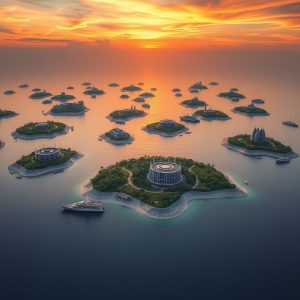
For decades, the narrative of progress has been intertwined with the idea of boundless growth. Man-made islands and artificial archipelagos were sold as the ultimate solution to urban sprawl, a way to reclaim space from the sea without consequence. But the reality is far more complex. The very act of land reclamation disrupts ecosystems, alters sediment flows, and accelerates coastal erosion. Smart marine cities, with their advanced sensors and adaptive infrastructure, may mitigate some of these effects, but they cannot erase them entirely. The illusion of infinite expansion is just that—an illusion, one that crumbles under the weight of ecological and geological realities.
The Paradox of Resilience
Coastal resilience is often framed as a technical challenge, a problem to be solved with better engineering and smarter design. Yet, the more we attempt to fortify our shorelines, the more we reveal their inherent vulnerability. Floating real estate and submerged foundations may offer temporary solutions, but they are not immune to the forces of nature. Storm surges, rising sea levels, and shifting currents remind us that the ocean is not a passive recipient of human ambition. It is an active, dynamic force, one that demands respect rather than domination. The paradox of resilience lies in the fact that the harder we try to control the coast, the more we expose its unpredictability.
The Ethical Dilemma of Submerged Sovereignty
As nations vie for control over submerged land rights, the legal and ethical implications of marine infrastructure become increasingly contentious. Who owns the seabed? Who is responsible for its preservation? These questions are not merely academic; they strike at the heart of the blue economy’s sustainability. The rush to exploit underwater resources—whether for luxury resorts, deep-sea foundations, or floating cities—ignores the long-term consequences of such actions. Submerged land rights are not just a matter of legal jurisdiction; they are a test of our commitment to stewardship over exploitation. The ocean does not recognize borders, and neither should our sense of responsibility.
The False Promise of Eco-Friendly Reclamation
Eco-friendly reclamation is often touted as the answer to the environmental costs of land augmentation. Yet, the term itself is a misnomer. No amount of sustainable design can fully offset the disruption caused by altering natural coastlines. The carbon footprint of dredging, the loss of marine habitats, and the displacement of local communities are not mere externalities—they are fundamental challenges to the viability of reclamation projects. Smart marine cities may incorporate green technologies, but they cannot escape the fact that they are built on borrowed time. The sea will always reclaim what was taken from it, and our efforts to delay that inevitability are, at best, a temporary reprieve.
The Human Cost of Maritime Urbanism
Behind the glossy renderings of luxury island resorts and floating neighborhoods lies a darker reality: the human cost of maritime urbanism. Coastal communities, often marginalized and displaced by large-scale reclamation projects, bear the brunt of our ambition. The promise of economic growth and urban renewal rarely trickles down to those whose lives are upended by the construction of artificial archipelagos. The blue economy, with its focus on innovation and investment, too often overlooks the social fabric that sustains coastal regions. Smart marine cities may be technologically advanced, but they are not immune to the inequalities that plague traditional urban development.
The ocean does not care for our blueprints. It does not bend to our will, nor does it reward our hubris. Smart marine cities, for all their sophistication, are still experiments—fragile constructs perched on the edge of an unpredictable frontier. The challenge is not to conquer the coast, but to coexist with it. The future of land augmentation lies not in domination, but in humility, in recognizing that the sea is not a resource to be exploited, but a partner to be respected. The tide will rise, the storms will come, and the only true resilience is the one that acknowledges the limits of our control.