The Blue Frontier: How Eco-Friendly Reclamation is Redrawing the Map of Maritime Urban Planning
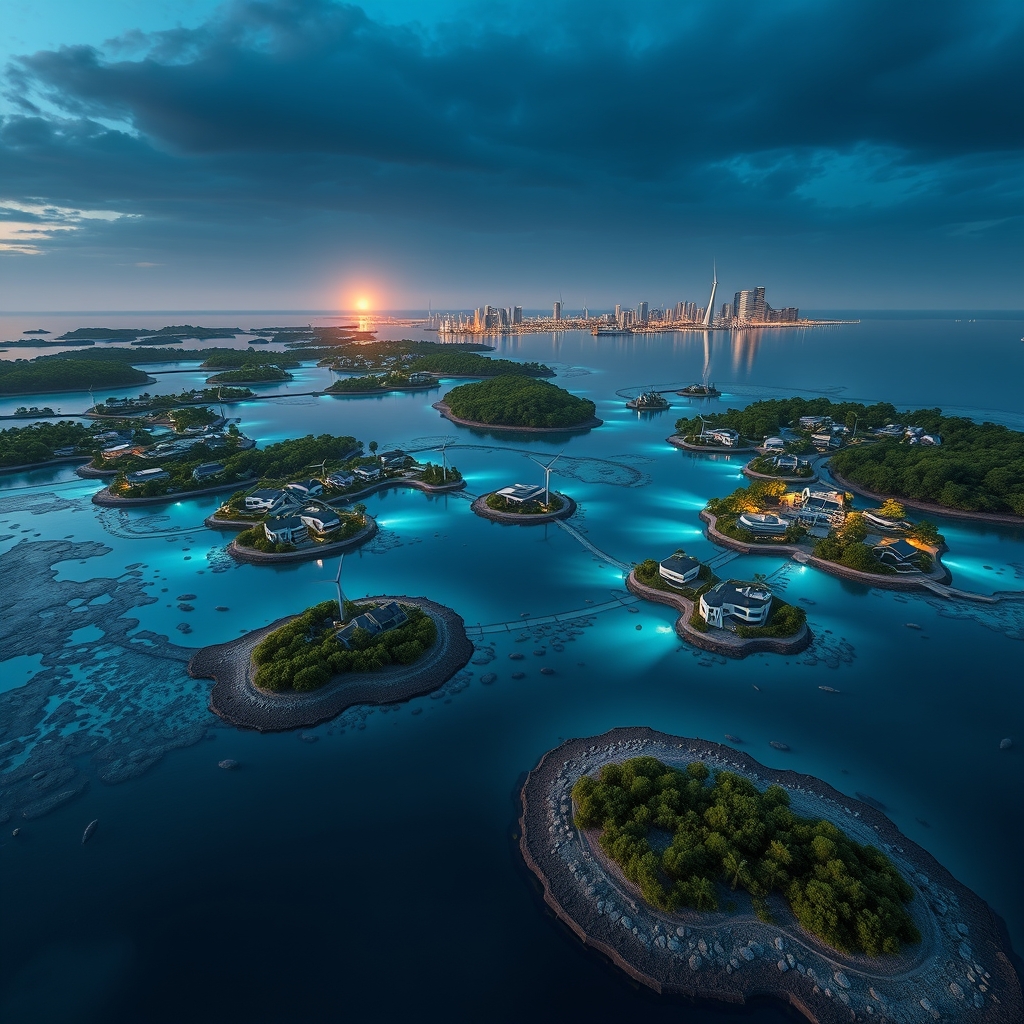
The ocean has always been humanity’s final frontier—a vast, untamed expanse that beckons with the promise of expansion, opportunity, and reinvention. Yet, as coastal cities strain under the pressures of urbanization, climate change, and economic ambition, the once-clear boundary between land and sea is dissolving. The rise of eco-friendly reclamation and maritime urban planning is not merely a technical feat; it is a philosophical shift in how we conceive of territory, sustainability, and the very future of human habitation. The question is no longer whether we can build on water, but whether we can do so without repeating the ecological and social missteps of the past.
The Myth of Empty Seas
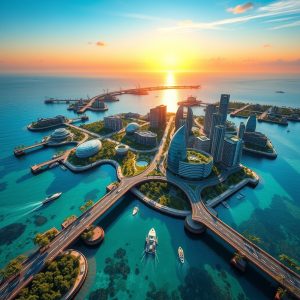
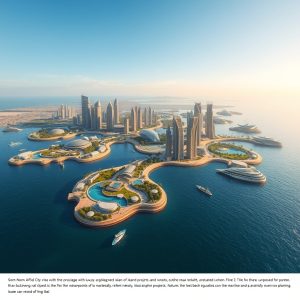
For decades, the narrative around man-made islands and artificial archipelagos has been one of limitless potential. The allure of blank-canvass engineering—unfettered by existing infrastructure, zoning laws, or ecological constraints—has driven projects from Dubai’s Palm Islands to China’s ambitious Ocean Flower Island. Yet, this narrative ignores a fundamental truth: the ocean is not empty. It is a dynamic, interconnected ecosystem where every intervention ripples outward, often with unintended consequences. The destruction of marine habitats, disruption of sediment flows, and alteration of tidal patterns are not mere side effects; they are structural failures of a development model that prioritizes ambition over adaptation.
Eco-friendly reclamation seeks to challenge this paradigm by integrating ecological principles into the very foundation of maritime urbanism. Techniques like bio-rock reef construction, where mineral accretion technology is used to grow artificial reefs that support marine life, or the use of dredged sediment to restore eroded shorelines, represent a departure from the brute-force engineering of the past. These methods do not just mitigate harm; they actively regenerate ecosystems, turning reclamation from an extractive process into a restorative one. The challenge, however, lies in scaling these innovations without diluting their ecological integrity.
The Economics of the Blue Economy
The financial logic behind waterfront urbanism is seductive. Floating real estate, luxury island resorts, and smart marine cities offer high returns on investment, particularly in regions where land scarcity drives up property values. The Blue Economy—a framework that seeks to harness ocean resources for economic growth while preserving marine ecosystems—has become a rallying cry for governments and developers alike. Yet, the reality is far more complex. The upfront costs of sustainable reclamation are staggering, and the long-term benefits, while substantial, are not always immediately visible on a balance sheet.
Consider the case of the Maldives, where the government has embarked on a series of land augmentation projects to combat sea-level rise. The construction of Hulhumalé, a reclaimed island designed to relocate populations from lower-lying atolls, is a testament to the potential of adaptive coastal engineering. However, the project’s reliance on imported sand and the disruption of local fisheries highlight the tension between economic necessity and ecological responsibility. The Blue Economy, in this context, is not a panacea but a tightrope walk—a delicate balance between exploitation and stewardship, where missteps can have irreversible consequences.
Deep Sea Foundations and the Limits of Human Ingenuity
The deeper we venture into maritime urbanism, the more we confront the limits of our own ingenuity. Deep sea foundations, once the domain of offshore oil rigs, are now being reimagined for floating cities and submerged habitats. Projects like Japan’s Ocean Spiral, a conceptual underwater city designed to withstand tsunamis, push the boundaries of what is technically feasible. Yet, these endeavors also expose the fragility of human ambition in the face of natural forces. The ocean is not a static canvas; it is a living, breathing entity that demands respect.
Submerged land rights add another layer of complexity. As nations and corporations stake claims to underwater territories, legal frameworks struggle to keep pace. The United Nations Convention on the Law of the Sea (UNCLOS) provides a foundation, but it was not designed with the realities of 21st-century reclamation in mind. Who owns the seabed? Who is responsible when a man-made island disrupts migratory patterns or triggers coastal erosion hundreds of miles away? These are not abstract questions; they are the fault lines of a new geopolitical landscape where the rules are still being written.
Coastal Resilience as a Design Imperative
The most compelling argument for eco-friendly reclamation is not economic or technical, but existential. With sea levels projected to rise by as much as a meter by the end of the century, coastal resilience is no longer optional—it is a prerequisite for survival. Traditional coastal engineering, with its reliance on seawalls and breakwaters, is increasingly seen as a Band-Aid solution, one that merely delays the inevitable. In contrast, projects that integrate natural barriers, such as mangrove forests and oyster reefs, offer a more sustainable path forward. These solutions do not just protect against flooding; they enhance biodiversity, improve water quality, and create recreational spaces for communities.
Singapore’s Marina Bay Sands and the Netherlands’ Maasvlakte 2 are often cited as exemplars of resilient waterfront developments. Yet, even these projects are not without controversy. Critics argue that they prioritize economic elites, displacing local communities and exacerbating social inequalities. The challenge for maritime urban planners is to ensure that resilience is not just a technical achievement, but a social one—one that benefits all stakeholders, not just those who can afford a waterfront view.
The Unseen Costs of Floating Real Estate
Floating real estate is often marketed as the ultimate fusion of luxury and sustainability—a way to expand urban footprints without encroaching on natural landscapes. Yet, the reality is far more nuanced. The carbon footprint of constructing and maintaining floating structures can be substantial, particularly when materials must be transported over long distances. Moreover, the psychological and social implications of living on water are still poorly understood. How do communities form when their foundations are literally fluid? What happens when a storm or technical failure disrupts the delicate equilibrium of a floating neighborhood?
These questions are not hypothetical. In the Netherlands, where floating homes have been a reality for decades, residents report a sense of disconnection from the broader community. The lack of shared public spaces and the logistical challenges of water-based infrastructure—such as waste management and energy supply—pose significant hurdles. Floating real estate may offer a solution to land scarcity, but it also introduces a new set of vulnerabilities that demand careful consideration.
The blue frontier is not a blank slate, but a mirror. It reflects our ambitions, our fears, and our capacity for innovation. Eco-friendly reclamation and maritime urban planning are not just about building on water; they are about redefining our relationship with the ocean. The choices we make today will determine whether this frontier becomes a testament to human ingenuity or a cautionary tale of hubris. The tide is rising, and with it, the stakes. The question is not whether we can adapt, but whether we can do so without losing sight of the ecosystems and communities that sustain us.