The Sedimentary Illusion: How Land Augmentation is Redefining the Ethics of Coastal Sovereignty
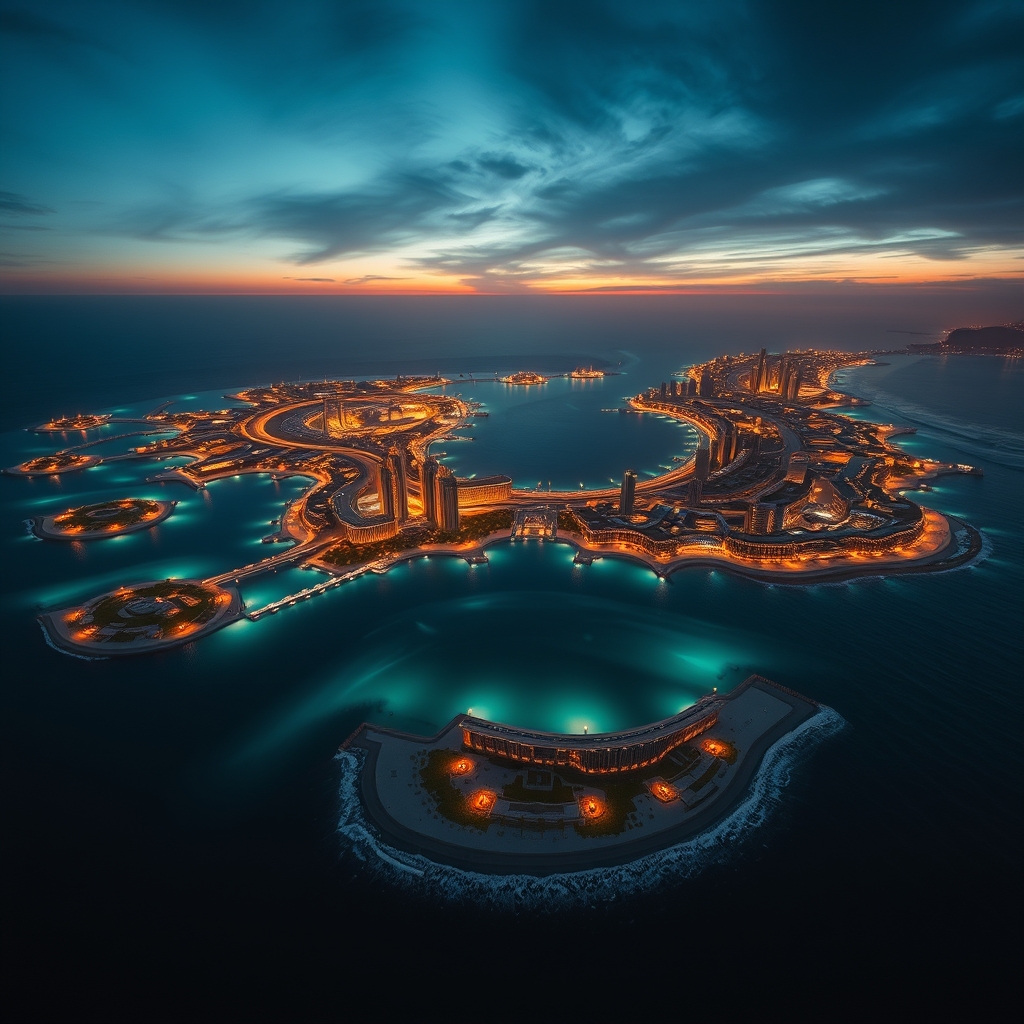
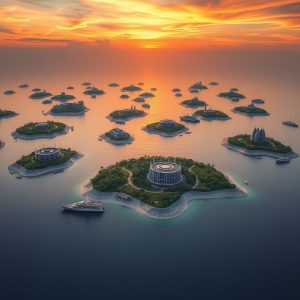
The relentless expansion of human ambition into the marine frontier has given rise to a new era of coastal engineering, one where the boundaries between land and sea are not just blurred but actively redefined. Land augmentation, once a fringe concept in maritime urban planning, has now become a cornerstone of modern waterfront urbanism. Yet, as artificial archipelagos and man-made islands proliferate, they bring with them a host of ethical and ecological dilemmas that challenge the very notion of coastal sovereignty.
The Geopolitical Ripple Effect of Synthetic Shorelines
The creation of artificial landmasses is not merely an exercise in engineering; it is a geopolitical statement. Nations like China, the United Arab Emirates, and the Netherlands have transformed their coastlines into laboratories of ambition, where every reclaimed hectare is a bid for economic dominance, strategic advantage, or simply the illusion of control over nature. The South China Sea, for instance, has become a flashpoint not just for territorial disputes but for the very definition of what constitutes sovereign territory. When a nation constructs an island atop a submerged reef, does it inherit the rights of the sea floor beneath it? The answer is far from clear, and the legal ambiguities surrounding submerged land rights have turned these projects into high-stakes gambles with international law.
This ambiguity is not accidental. The 1982 United Nations Convention on the Law of the Sea (UNCLOS) was drafted in an era when land augmentation was a novelty, not a norm. Its provisions on artificial islands were designed to prevent military encroachment, not to govern the commercial and residential sprawl that now defines modern maritime urbanism. As a result, nations are left to interpret—or exploit—these legal gray areas, often at the expense of smaller states that lack the resources to compete in this new frontier.
The Ecological Cost of the Blue Economy’s Expansion
Beneath the glossy renderings of luxury island resorts and smart marine cities lies a less palatable truth: land augmentation is an inherently disruptive process. The dredging of seabeds, the displacement of marine ecosystems, and the alteration of coastal currents are not mere side effects—they are the foundation upon which these projects are built. The environmental impact of such endeavors is often downplayed in the name of progress, with terms like “eco-friendly reclamation” and “sustainable land reclamation” used as fig leaves to obscure the reality of ecological degradation.
Take, for example, the Palm Jumeirah in Dubai, a marvel of modern engineering that has become a symbol of human ingenuity. Yet, studies have shown that its construction has led to significant erosion along the natural coastline, altered sediment flow, and disrupted local marine life. The irony is stark: a project designed to showcase humanity’s mastery over nature has instead exposed its fragility. Similar patterns emerge in Singapore’s land reclamation efforts, where the relentless pursuit of urban expansion has led to the loss of critical coral reefs and mangrove habitats, ecosystems that serve as natural buffers against rising sea levels.
The Myth of Coastal Resilience in the Age of Land Augmentation
Proponents of land augmentation often tout coastal resilience as a key benefit, arguing that artificial landmasses can act as barriers against storm surges and rising sea levels. Yet, this narrative is built on a fundamental misconception: that human-engineered solutions can outpace the forces of nature. The reality is far more complex. While man-made islands may provide temporary protection, they are not immune to the long-term consequences of climate change. In fact, their very existence can exacerbate vulnerabilities by altering natural water flows and increasing erosion in adjacent areas.
Consider the case of the Maldives, where the government has embarked on an ambitious project to construct artificial islands as a means of combating sea-level rise. While these efforts may offer short-term relief, they do little to address the root cause of the problem: the warming of the planet and the melting of polar ice. Moreover, the reliance on land augmentation as a solution risks creating a false sense of security, diverting attention and resources away from more sustainable adaptation strategies, such as the restoration of natural coastal defenses like mangroves and wetlands.
The Ethical Dilemma of Floating Real Estate
The rise of floating real estate has added another layer of complexity to the ethics of land augmentation. Projects like Oceanix City, a proposed floating metropolis designed to house climate refugees, promise a utopian vision of sustainable living on the water. Yet, they also raise uncomfortable questions about equity and access. Who gets to live in these futuristic enclaves? Will they become exclusive havens for the wealthy, while the most vulnerable populations are left to fend for themselves on increasingly uninhabitable coastlines?
The commodification of the sea is not a new phenomenon, but the scale and ambition of modern floating developments have taken it to unprecedented levels. In Monaco, for instance, the construction of offshore extensions has become a lucrative business, with luxury apartments selling for millions of euros. Meanwhile, in countries like Bangladesh, where rising sea levels threaten to displace millions, the focus remains on survival rather than innovation. The disparity is glaring, and it underscores the ethical quandaries at the heart of land augmentation: is it a tool for progress or a privilege of the few?
The Future of Maritime Urban Planning: A Delicate Balance
The challenges posed by land augmentation are not insurmountable, but they demand a fundamental shift in how we approach maritime urban planning. The key lies in striking a balance between ambition and sustainability, between innovation and ecological stewardship. This requires a move away from the traditional top-down approach to coastal engineering, where decisions are made by governments and developers with little input from local communities or environmental experts. Instead, a more collaborative model is needed, one that integrates the principles of the blue economy with the realities of climate change.
One promising avenue is the concept of “living shorelines,” which combines natural and engineered solutions to enhance coastal resilience. By using materials like oyster reefs, seagrass beds, and mangroves alongside traditional infrastructure, these projects can provide protection against erosion and storm surges while also supporting marine biodiversity. Similarly, the development of smart marine cities, equipped with sensors and adaptive technologies, can help mitigate the environmental impact of land augmentation by monitoring water quality, sediment flow, and ecosystem health in real time.
The allure of land augmentation is undeniable. It offers a tantalizing vision of a future where humanity’s footprint extends beyond the shoreline, where cities rise from the sea, and where the boundaries of possibility are limited only by our imagination. Yet, this vision comes with a price, one that is paid in ecological disruption, geopolitical tension, and ethical compromise. The question is not whether we can continue to push the limits of coastal engineering, but whether we should. The answer will determine not just the future of our coastlines, but the very sustainability of our relationship with the sea.