The Hydrological Gamble: How Coastal Resilience is Being Redesigned by Reclamation’s Unseen Consequences
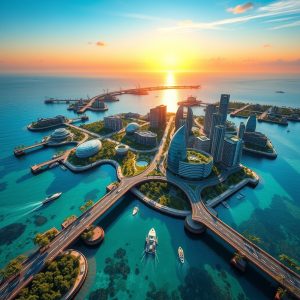
The ocean does not yield its territory without resistance. For centuries, humanity has treated the coastline as a malleable frontier, bending it to the will of urban expansion and economic ambition. Yet, the modern era of land reclamation—once hailed as the pinnacle of coastal engineering—has revealed itself to be less a triumph of human ingenuity and more a high-stakes negotiation with natural forces. The rise of artificial archipelagos, floating real estate, and smart marine cities is not merely an architectural marvel; it is a hydrological gamble, one where the stakes are measured in rising tides, eroding foundations, and the slow unraveling of ecological balance.
The Myth of Permanence in Man-Made Landscapes
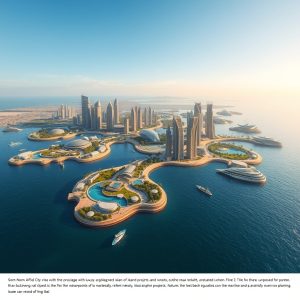
The allure of land augmentation lies in its promise of permanence—a fixed, unyielding expansion of territory where once there was only water. Yet, the reality is far more fluid. The foundations of man-made islands, whether built on dredged sediment or deep-sea pilings, are subject to the relentless pressures of erosion, subsidence, and sea-level rise. The Palm Jumeirah, Dubai’s iconic artificial archipelago, has already required billions in maintenance to counteract sinking and saltwater intrusion. Similarly, China’s ambitious reclamation projects in the South China Sea have faced criticism not only for geopolitical tensions but for their long-term viability in an era of accelerating climate change.
The problem is not merely structural; it is philosophical. Reclamation projects operate under the assumption that land, once created, remains static. But coastlines are dynamic systems, shaped by currents, storms, and the slow creep of the ocean. The deeper the foundations, the more they disrupt natural sediment flows, creating unintended consequences—siltation in shipping lanes, altered marine habitats, and even the acceleration of erosion in adjacent areas. The very act of claiming land from the sea alters the hydrological equilibrium, often in ways that are only understood after the damage is done.
The Illusion of Eco-Friendly Reclamation
In response to growing criticism, developers have pivoted toward the language of sustainability. Terms like “eco-friendly reclamation” and “blue economy infrastructure” now dominate project proposals, promising minimal environmental disruption. Yet, the reality is far more complex. Even the most meticulously planned reclamation projects involve dredging, which stirs up toxins buried in seabeds, smothers marine life, and disrupts migratory patterns. The construction of artificial islands in the Maldives, for instance, has been marketed as a climate-resilient solution for a nation facing existential threats from rising seas. But the environmental cost—destruction of coral reefs, loss of fisheries, and increased vulnerability to storm surges—has been largely downplayed.
Sustainability in reclamation is not an absolute; it is a spectrum. Some projects, like Singapore’s Pulau Semakau landfill, have successfully integrated waste management with habitat restoration. Others, however, are little more than greenwashed ventures, where the label of “eco-friendly” serves as a fig leaf for business-as-usual development. The challenge lies in distinguishing between genuine innovation and performative environmentalism—a task made harder by the lack of standardized metrics for measuring the long-term ecological impact of reclamation.
The Legal Quagmire of Submerged Land Rights
Beyond the environmental and engineering challenges, reclamation projects exist in a legal gray area. The question of who owns the seabed—and by extension, the land reclaimed from it—has sparked international disputes. The United Nations Convention on the Law of the Sea (UNCLOS) provides a framework, but enforcement is inconsistent. China’s Nine-Dash Line claims in the South China Sea, for example, have been repeatedly challenged by neighboring nations, yet reclamation continues unabated. Meanwhile, in domestic contexts, submerged land rights often favor developers over indigenous communities, whose traditional fishing grounds are displaced without compensation.
The legal ambiguities extend to liability. If a reclaimed island fails—whether through subsidence, erosion, or storm damage—who bears responsibility? The developer? The government? The investors? The absence of clear legal precedents leaves these questions unanswered, creating a precarious environment for long-term planning. As reclamation projects proliferate, the need for robust international and domestic legal frameworks becomes increasingly urgent.
Smart Marine Cities: A Technological Fix or a New Frontier of Risk?
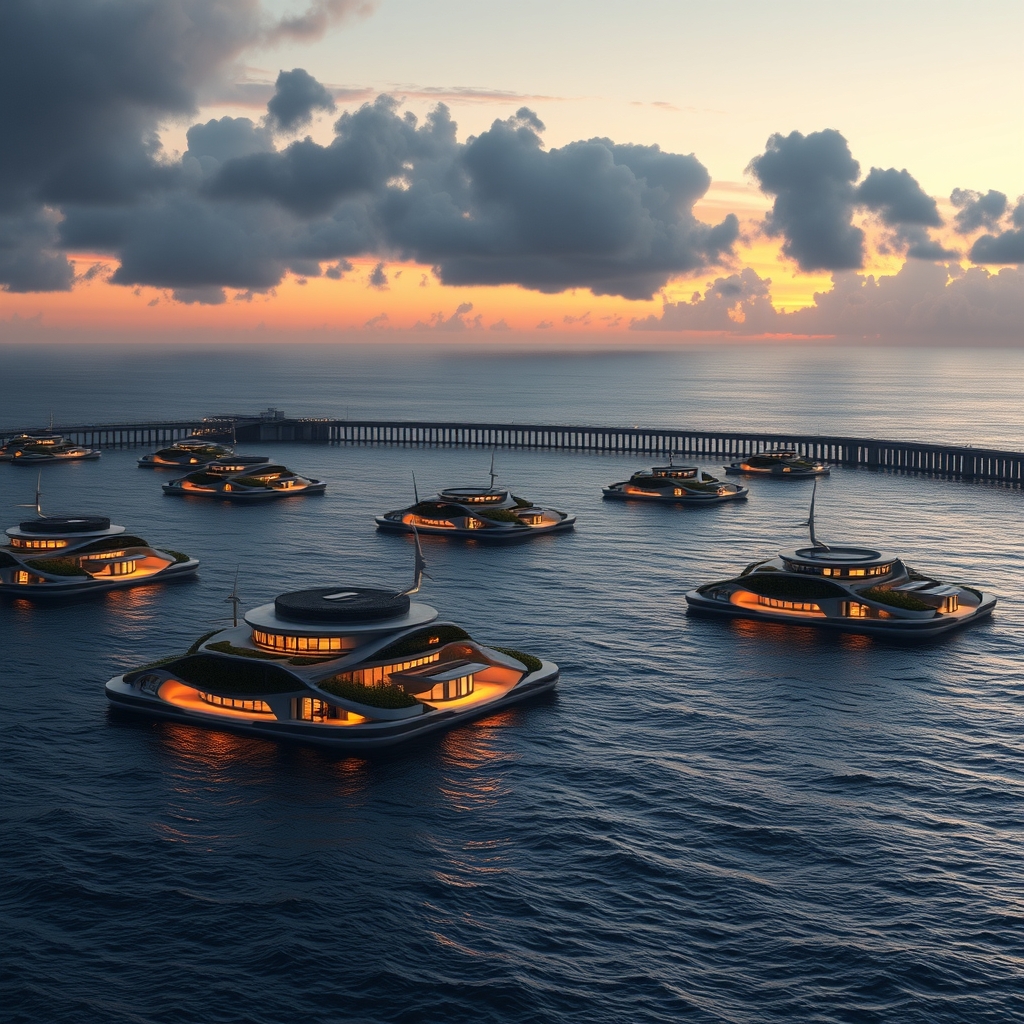
The latest evolution in reclamation is the rise of “smart marine cities”—high-tech urban developments designed to float, adapt, and even self-repair in response to environmental changes. Projects like Oceanix City, a proposed floating metropolis backed by the United Nations, promise a future where urban expansion no longer comes at the expense of the ocean. These cities are touted as the ultimate fusion of sustainability and innovation, with modular designs, renewable energy integration, and AI-driven climate adaptation.
Yet, the technological optimism obscures a fundamental question: Are smart marine cities a solution, or merely the next iteration of the same gamble? Floating infrastructure is not immune to the forces of nature. Storms, corrosion, and biofouling (the accumulation of marine organisms on submerged surfaces) pose persistent challenges. Moreover, the energy and resource demands of maintaining such cities—particularly in remote or deep-sea locations—could outweigh their environmental benefits. The risk is that smart marine cities become yet another example of technological solutionism, where the promise of innovation distracts from the need for systemic change.
The Unseen Costs of Waterfront Urbanism
At its core, reclamation is an exercise in control—an attempt to impose human order on a chaotic, ever-changing environment. But the ocean does not conform to blueprints. The history of land augmentation is littered with projects that have failed, not because of poor engineering, but because they underestimated the power of natural systems. The Netherlands, often cited as a model for sustainable reclamation, has spent centuries perfecting its dike systems, yet even it is now grappling with the limits of its approach as sea levels rise.
The future of coastal resilience lies not in the illusion of mastery, but in humility. Reclamation will continue, driven by economic necessity and the relentless pressure of urbanization. But its success—or failure—will depend on whether it can move beyond the paradigm of domination and toward one of coexistence. The ocean is not a frontier to be conquered; it is a partner in survival. The question is whether humanity will learn to negotiate with it before the tides rewrite the terms of the agreement.