The Vanishing Divide: How Floating Real Estate is Eroding the Boundaries Between Land and Sea
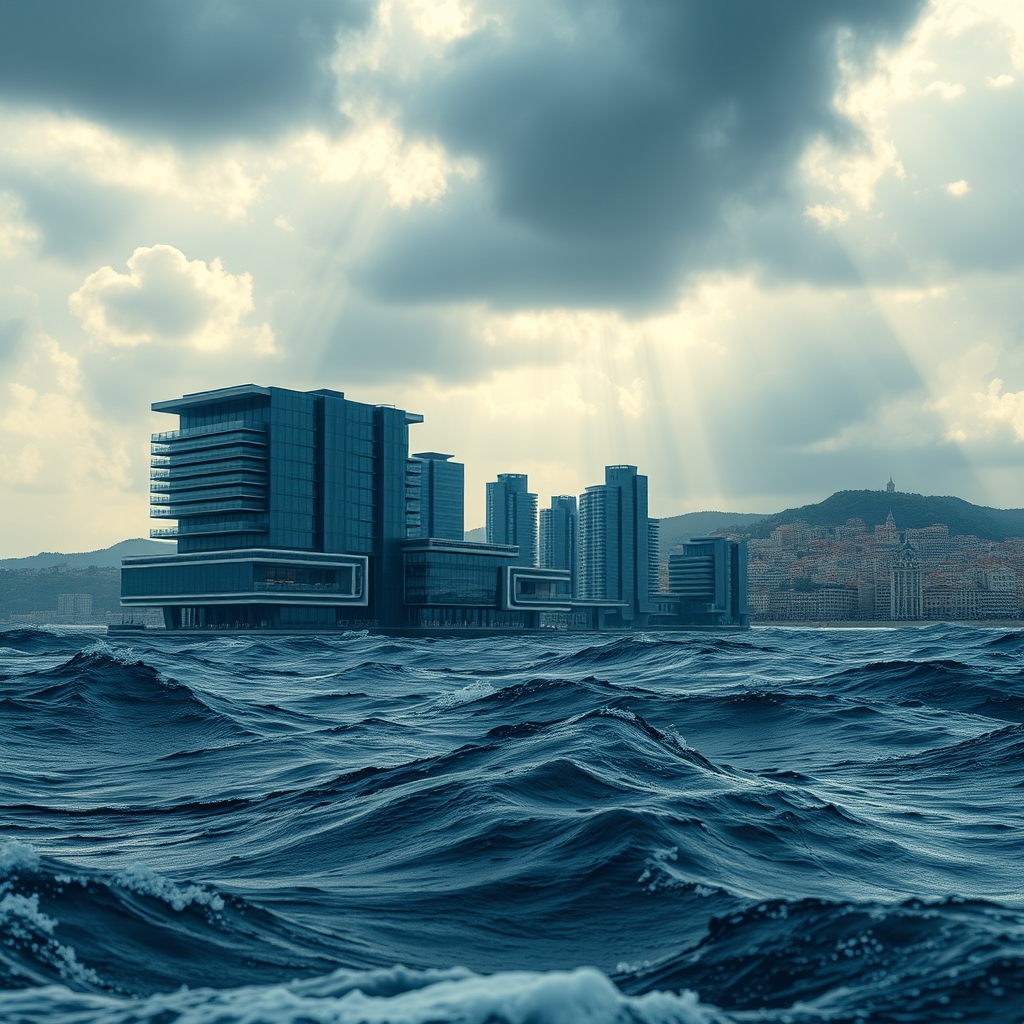
The ocean has long been humanity’s final frontier—a vast, untamed expanse that has both inspired and intimidated. Yet, as coastal cities strain under the weight of urbanization and climate change tightens its grip, the sea is no longer a barrier but a canvas for ambition. Floating real estate, once a speculative novelty, has evolved into a serious contender in the race to redefine urban expansion. But beneath the sleek renderings and lofty promises lies a fundamental question: Are we building the future or merely delaying the inevitable reckoning with the limits of our ingenuity?
The Illusion of Permanence
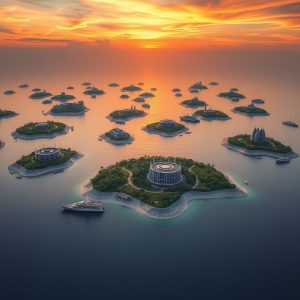
Floating developments—from modular homes to entire neighborhoods—promise a solution to rising sea levels and land scarcity. Proponents argue that these structures, unshackled from the seabed, offer a dynamic form of resilience, capable of adapting to shifting tides and storm surges. The logic is seductive: if the water rises, so too can the city. Yet, this narrative glosses over a critical flaw. Permanence, the very foundation of urban stability, is antithetical to the concept of floating infrastructure. Cities are not meant to drift; they are anchors of culture, commerce, and community. The moment we accept impermanence as a feature rather than a bug, we risk normalizing a future where entire districts are at the mercy of the elements, their fate dictated by the whims of wind and wave.
The Cost of Displacement
Floating real estate is often marketed as a panacea for climate displacement, a way to keep coastal populations in place even as the shoreline retreats. But this framing ignores the economic and social realities of such projects. Who, exactly, can afford to live on water? The answer is painfully predictable. Luxury floating villas in Dubai’s man-made lagoons or Amsterdam’s experimental floating neighborhoods are not designed for the displaced; they are playgrounds for the affluent. The irony is stark: the very technology touted as a solution to climate inequality is, in practice, exacerbating it. Meanwhile, the communities most vulnerable to sea-level rise—those in informal settlements or low-lying island nations—are left watching from the shore as the wealthy claim the sea as their new domain.
Engineering Hubris and the Myth of Control
The allure of floating real estate is rooted in the same hubris that has long defined coastal engineering: the belief that we can outsmart nature. Breakwaters, seawalls, and now floating platforms—each generation of solutions assumes that the ocean can be tamed, its rhythms bent to human will. But the sea is not a passive adversary; it is a dynamic, living system. The 2011 Tōhoku tsunami and Hurricane Katrina were not anomalies but reminders that nature operates on scales beyond our comprehension. Floating structures may mitigate some risks, but they cannot eliminate them. The deeper question is whether we are prepared to accept the consequences when our calculations fail—and they will.
The Legal and Ecological Quagmire
Floating real estate does not exist in a vacuum. It occupies space, disrupts ecosystems, and raises thorny legal questions about jurisdiction and ownership. Who governs a city that floats? How are submerged land rights reconciled with the rights of those who live above the waves? The legal frameworks for maritime urbanism are woefully inadequate, cobbled together from centuries-old admiralty laws and patchwork coastal regulations. Meanwhile, the ecological impact of these developments is often an afterthought. Floating platforms alter water currents, block sunlight from reaching marine life, and introduce pollutants into delicate ecosystems. The promise of eco-friendly reclamation rings hollow when the very act of building on water disrupts the balance that makes coastal environments resilient in the first place.
The Blue Economy’s Faustian Bargain
The rise of floating real estate is inextricably linked to the broader expansion of the blue economy—an economic model that seeks to monetize every inch of the ocean. From aquaculture to deep-sea mining, the sea is being carved up into profit centers, each vying for dominance in a new frontier of capital. Floating cities are the most visible manifestation of this shift, a fusion of real estate speculation and maritime ambition. Yet, the blue economy is built on a paradox: it depends on the health of the ocean even as it degrades it. Floating developments, for all their innovation, are still part of this extractive mindset. They do not ask whether we should build on water, but rather how quickly we can scale the model before the environmental costs become impossible to ignore.
The Unanswered Question of Legacy
Cities are not just collections of buildings; they are repositories of history, memory, and identity. What happens to these intangible qualities when the ground beneath them is no longer solid? Floating real estate offers no answers, only the vague promise of adaptability. But adaptability is not a substitute for stability. The most successful coastal cities—Venice, Amsterdam, New Orleans—have thrived not because they defied the sea, but because they learned to coexist with it. Their resilience is cultural as much as it is structural, rooted in traditions of stewardship and compromise. Floating developments, by contrast, are ahistorical. They exist in a perpetual present, untethered from the past and uncertain of the future. This is not progress; it is a form of collective amnesia, a forgetting of what it means to build a city that endures.
As the boundaries between land and sea blur, we are left with a disquieting truth: the ocean is not ours to conquer. It is a force far greater than any engineering feat, a reminder of our fragility in the face of nature’s indifference. Floating real estate may offer a temporary reprieve from the pressures of urbanization and climate change, but it is not a solution. It is a gamble—a bet that we can outrun the consequences of our own hubris. The question is not whether we can build on water, but whether we should. And if we do, what will we have lost in the process?