The Paradox of Progress: How Man-Made Islands Are Reshaping Coastal Futures Without a Blueprint for Sustainability
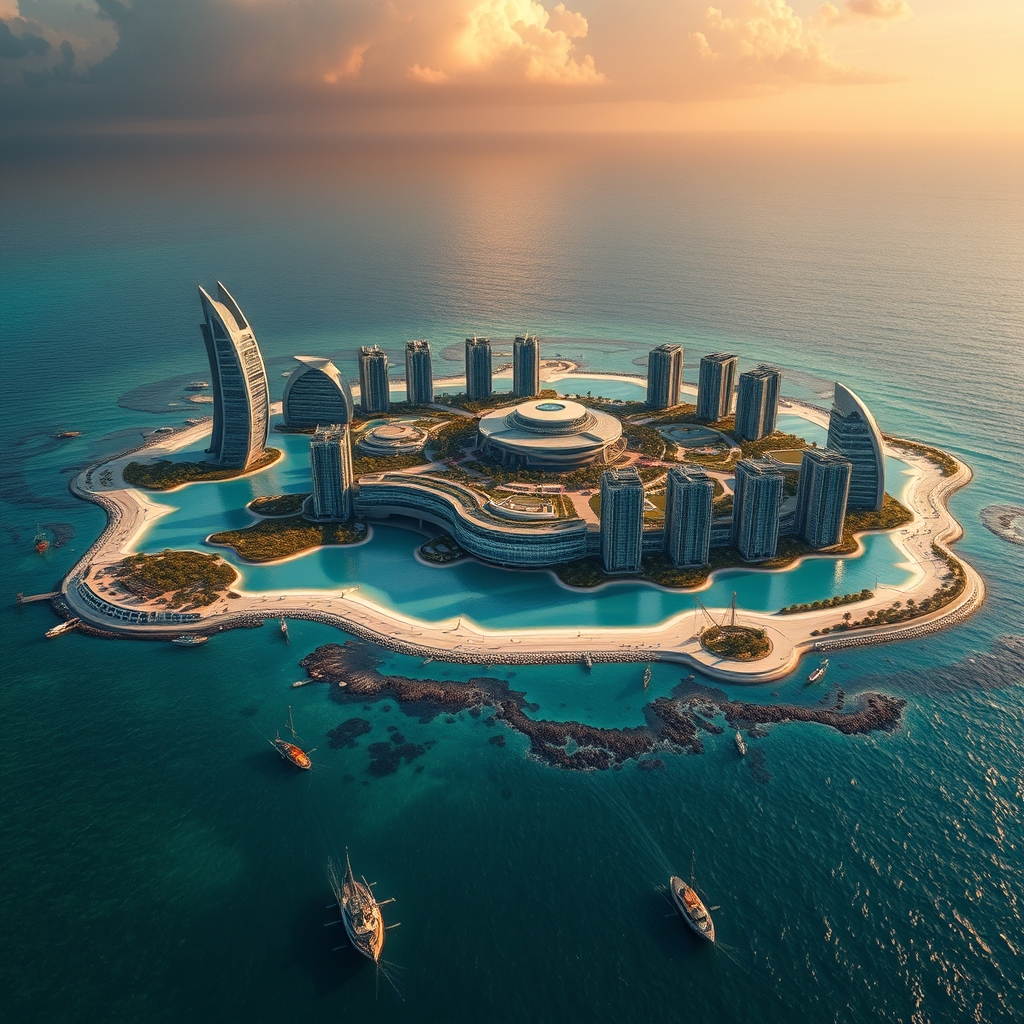
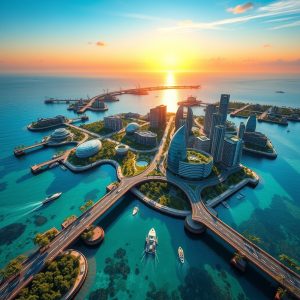
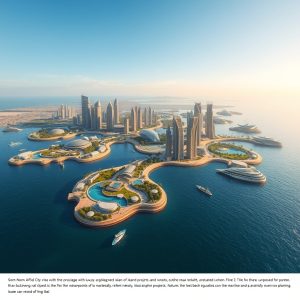
The relentless expansion of urban frontiers into the ocean is no longer the stuff of speculative fiction—it is an engineering reality, a financial gold rush, and an ecological gamble all at once. Man-made islands, once dismissed as vanity projects for oil-rich emirates or tropical oligarchs, have evolved into a global phenomenon, touted as solutions for housing crises, economic diversification, and even climate adaptation. Yet beneath the glossy renderings of glass towers rising from the sea lies a fundamental contradiction: these projects are redefining coastal resilience while simultaneously undermining it.
The Illusion of Infinite Space
For cities hemmed in by geography—whether by mountains, deserts, or rival nations—the ocean presents an irresistible frontier. Dubai’s Palm Jumeirah, China’s Forest City, and the Maldives’ Hulhumalé are not merely luxury enclaves; they are testaments to the belief that land scarcity can be engineered away. The logic is seductive: if urban sprawl cannot expand horizontally, it will simply extend into the vertical and the aquatic. But this assumption ignores a critical truth: the ocean is not an empty canvas. It is a dynamic, living system with its own currents, sediment flows, and ecological thresholds.
Land augmentation through reclamation disrupts these systems in ways that are often irreversible. Dredging and landfill operations alter seabed topography, smothering benthic habitats and triggering erosion downcurrent. In Singapore, where nearly a quarter of the city-state’s land area has been reclaimed, coastal erosion has become a persistent problem, requiring ever-more aggressive (and expensive) mitigation efforts. The irony is stark: projects designed to secure land for future generations may instead accelerate its loss.
The Mirage of Eco-Friendly Reclamation
Developers have responded to criticism with a new lexicon of sustainability. Terms like “blue economy infrastructure” and “eco-friendly reclamation” now adorn project proposals, accompanied by promises of artificial reefs, mangrove nurseries, and carbon-neutral construction. The reality, however, is far more ambiguous. While some innovations—such as the use of geotextile tubes to stabilize fill material or the integration of tidal lagoons to mimic natural water flow—show promise, they remain exceptions rather than standards.
Take the case of Eko Atlantic in Lagos, Nigeria, billed as a climate-resilient city that will protect the coastline from erosion. Its proponents tout its Great Wall of Lagos, a 8.5-kilometer sea barrier, as a marvel of coastal engineering. Yet independent studies suggest the wall may exacerbate flooding in adjacent areas by disrupting sediment transport. Meanwhile, the project’s luxury housing and commercial spaces cater to a wealthy elite, doing little to address the needs of the millions of Lagosians living in informal settlements vulnerable to rising seas. Sustainability, it seems, is a malleable concept when profit is at stake.
The Legal and Ethical Void of Submerged Land Rights
Man-made islands also expose gaping holes in maritime law. Who owns the seabed? Who is liable when reclamation projects cause environmental harm beyond national borders? The United Nations Convention on the Law of the Sea (UNCLOS) provides a framework, but enforcement is weak, and many nations exploit loopholes to assert sovereignty over reclaimed land. China’s militarized artificial islands in the South China Sea are the most egregious example, but the issue extends to commercial projects as well.
In the Maldives, the government has leased entire reclaimed islands to foreign developers, often with minimal oversight. Local communities, whose livelihoods depend on fishing and tourism, are rarely consulted. When disputes arise—such as over the destruction of coral reefs or the diversion of fish stocks—there are few legal avenues for recourse. The result is a form of marine colonialism, where the ocean’s resources are commodified and its stewards sidelined.
Floating Real Estate: A Band-Aid or a Blueprint?
As sea levels rise, floating architecture has emerged as an alternative to traditional reclamation. Projects like the Netherlands’ Schoonschip and the Oceanix City proposal for Busan, South Korea, suggest that cities could adapt to water rather than resist it. These designs often incorporate renewable energy, closed-loop water systems, and modular construction, offering a glimpse of what truly resilient urbanism might look like.
Yet floating real estate remains a niche market, constrained by high costs and regulatory hurdles. Most developers still prefer the permanence (and profitability) of fixed land, even if it means battling the ocean with concrete and steel. The question is whether this preference is rooted in engineering pragmatism or a refusal to accept the ocean’s terms. After all, floating cities require a radical rethinking of property rights, infrastructure, and even governance—concepts that challenge the very foundations of terrestrial urbanism.
The Unanswered Question of Deep Sea Foundations
Even the most ambitious man-made islands rely on a precarious assumption: that the seabed can bear the weight of human ambition. Deep sea foundations are a black box of geotechnical uncertainty. In the North Sea, where offshore wind farms have proliferated, engineers have encountered unexpected soil liquefaction and subsidence. These issues are magnified in tropical regions, where soft sediments and active tectonic plates create a volatile substrate.
The 2018 collapse of a section of Hong Kong’s third runway, built on reclaimed land, serves as a cautionary tale. The failure, attributed to inadequate soil compaction, delayed the project by years and added billions to its cost. Such incidents underscore the hubris of assuming that human ingenuity can outpace geological reality. The ocean does not yield easily, and its resistance often comes at a price.
As coastal cities grapple with the dual pressures of urbanization and climate change, the allure of man-made islands is unlikely to fade. They offer a tantalizing vision of control—over nature, over scarcity, over the future itself. But control is an illusion when the systems being manipulated are as vast and unpredictable as the ocean. The real test of these projects will not be their architectural grandeur or their economic returns, but their ability to coexist with the forces they seek to dominate. The alternative is a future where the land we reclaim today becomes the liability we drown in tomorrow.