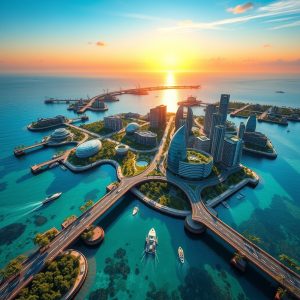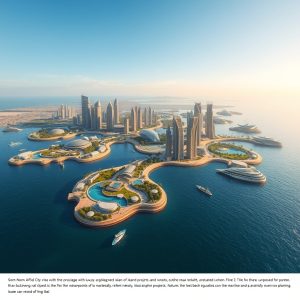
The Uncharted Depths: How Deep Sea Foundations Are Redefining the Ethics of Land Reclamation Beyond the Shoreline
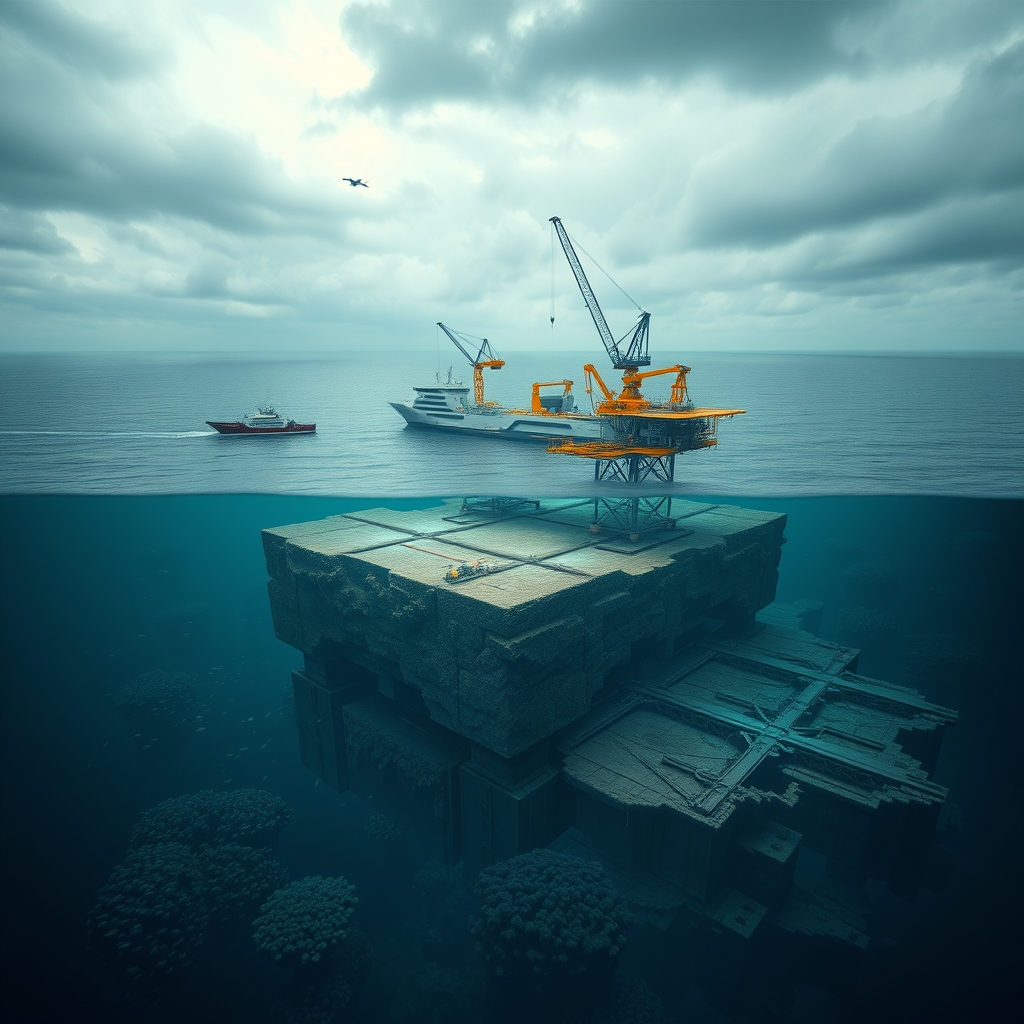
The ocean has long been a frontier of human ambition, a vast and seemingly limitless canvas for expansion. Yet, as coastal cities strain under the pressures of urbanization and climate change, the race to reclaim land from the sea has accelerated into uncharted territory—literally. The latest frontier in this endeavor is not the shallow waters of bays or estuaries, but the abyssal depths, where deep sea foundations are emerging as the next frontier of land augmentation. This shift is not merely a technical evolution; it is a profound ethical and ecological reckoning, one that forces us to confront the consequences of our relentless pursuit of dominion over nature.
The Engineering Marvel and the Ecological Gamble
Deep sea foundations represent a quantum leap in coastal engineering, enabling the construction of artificial islands and marine infrastructure in waters once deemed too deep or unstable for reclamation. Traditional landfill methods, which rely on dredging and piling sand onto shallow seabeds, are increasingly untenable in the face of rising sea levels and environmental regulations. Deep sea foundations, by contrast, utilize advanced techniques such as suction piles, gravity-based structures, and dynamic positioning systems to anchor platforms and islands to the ocean floor, sometimes at depths exceeding 100 meters. The Palm Jumeirah in Dubai, once the poster child of shallow-water reclamation, now looks quaint compared to projects like Malaysia’s Forest City or China’s Nansha Islands, which are pushing the boundaries of what is possible in deeper waters.
Yet, the engineering prowess behind these projects is matched only by their ecological ambiguity. The deep sea is not a barren wasteland; it is a fragile ecosystem teeming with biodiversity, much of which remains undiscovered. The installation of foundations, pipelines, and cables disrupts benthic habitats, stirs up sediment plumes that smother marine life, and introduces noise pollution that can disorient or harm deep-sea species. The long-term effects of these disturbances are poorly understood, largely because the deep sea remains one of the least explored regions on Earth. What we do know is that recovery from such disruptions can take decades, if not centuries, and that some species may never return once displaced.
The Legal Void: Who Owns the Abyss?
If the ecological risks are profound, the legal challenges are equally daunting. The deep sea exists in a regulatory gray area, governed by a patchwork of international treaties, national laws, and maritime conventions that were never designed to address the complexities of large-scale land reclamation. The United Nations Convention on the Law of the Sea (UNCLOS) establishes exclusive economic zones (EEZs) and continental shelf rights, but these frameworks are ill-equipped to handle disputes over submerged land rights, especially when projects span multiple jurisdictions or encroach on international waters. Who, for instance, is responsible when a deep-sea foundation in the South China Sea disrupts migratory routes for species that traverse the EEZs of multiple nations? The answer is as murky as the waters themselves.
Compounding the issue is the lack of clarity around liability. If a deep-sea foundation fails—whether due to structural flaws, seismic activity, or extreme weather—who bears the cost of the environmental damage? Current legal frameworks often absolve developers of long-term responsibility, leaving governments and taxpayers to foot the bill for remediation. This legal vacuum incentivizes risk-taking, as corporations can externalize the ecological and financial costs of their projects. The result is a system where the rewards of deep-sea reclamation are privatized, while the risks are socialized.
The Illusion of Sustainability
Proponents of deep-sea reclamation often tout these projects as sustainable solutions to urban sprawl, framing them as a way to relieve pressure on overcrowded coastal cities while minimizing environmental impact. The reality, however, is far more nuanced. While deep-sea foundations may reduce the need for shallow-water dredging, they introduce a new set of environmental trade-offs. For example, the energy required to transport materials to deep-sea sites, combined with the carbon footprint of construction and maintenance, can offset any gains in sustainability. Moreover, the deep sea’s role in carbon sequestration—acting as a sink for atmospheric CO2—means that disturbing these ecosystems could inadvertently accelerate climate change.
There is also the question of whether these projects truly address the root causes of urban expansion. Artificial islands and deep-sea cities are often marketed as utopian solutions, but they risk becoming enclaves for the wealthy, exacerbating social inequality rather than alleviating it. The Palm Jumeirah, for instance, has been criticized for its lack of affordable housing and its role in deepening the divide between Dubai’s elite and its migrant workforce. If deep-sea reclamation follows the same trajectory, it could become yet another tool for urban segregation, where the benefits of coastal living are reserved for those who can afford them.
The Ethical Imperative: Rethinking Our Relationship with the Ocean
The rush to colonize the deep sea reflects a broader cultural mindset—one that views the ocean as a resource to be exploited rather than a partner to be respected. This mindset is not sustainable, nor is it ethical. The deep sea is not a blank slate for human ambition; it is a dynamic, interconnected system that sustains life on Earth in ways we are only beginning to understand. To treat it as a construction site is to repeat the mistakes of the past, where short-term gains were prioritized over long-term stewardship.
What is needed is a paradigm shift in how we approach land reclamation. This does not mean abandoning innovation, but rather embedding ethical and ecological considerations into the design process from the outset. Projects like the Netherlands’ Sand Motor—a nature-based solution that uses natural sediment transport to replenish beaches—offer a glimpse of what this might look like. By working with, rather than against, natural processes, we can create resilient coastal infrastructure that benefits both people and the planet. The deep sea, with its vast potential and equally vast unknowns, demands an even greater level of humility and foresight. The question is not whether we can build there, but whether we should—and if so, how we can do it without repeating the mistakes of the past.
The ocean has always been a mirror, reflecting humanity’s greatest aspirations and its deepest flaws. As we venture further into its depths, we must ask ourselves what kind of legacy we want to leave. The choices we make today will determine whether the deep sea becomes a testament to our ingenuity or a monument to our hubris. The tide is turning, and the time to decide is now.