The Invisible Currents: How Smart Marine Cities Are Rewriting the Rules of Coastal Resilience
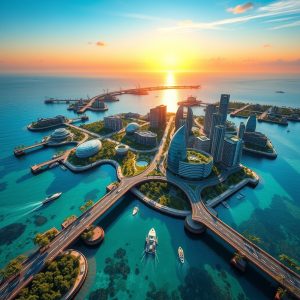
The ocean does not negotiate. It does not yield to ambition, nor does it forgive miscalculation. Yet, for decades, humanity has treated coastal expansion as a transaction—one where sand, steel, and concrete could outmaneuver the relentless logic of tides and storms. The rise of smart marine cities, however, signals a shift not just in engineering, but in philosophy. These are not merely fortified shorelines or elevated platforms; they are living systems designed to adapt, predict, and coexist with the marine environment. The question is no longer whether we can build on water, but whether we can do so without repeating the mistakes of the past.
The Myth of Static Solutions
Traditional coastal engineering has long operated under the assumption that resilience is a fixed target. Breakwaters, seawalls, and land reclamation projects were conceived as immutable barriers—defenses against an adversary that could be held at bay indefinitely. The failure of this approach is now writ large across the globe. In Miami, rising seas lap at the foundations of billion-dollar condominiums. In Jakarta, subsidence has turned reclaimed land into a sinking liability. The lesson is clear: static infrastructure is no match for dynamic forces. Smart marine cities, by contrast, treat resilience as a process, not a product. They integrate real-time data, adaptive materials, and modular designs to respond to environmental changes as they occur. The distinction is fundamental—one is a fortress; the other, a dialogue.
The Data-Driven Shoreline
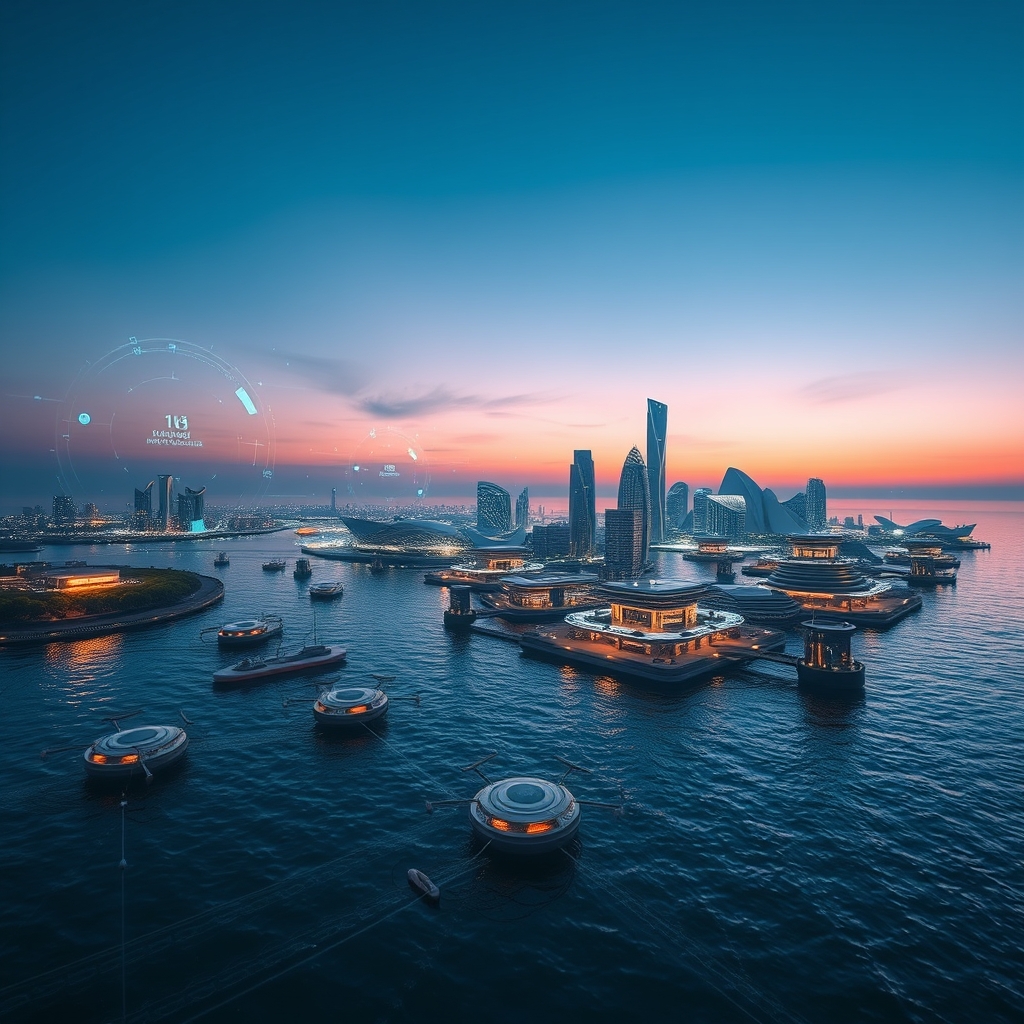
At the heart of this evolution is the fusion of marine infrastructure with artificial intelligence. Sensors embedded in seawalls and floating platforms monitor everything from wave patterns to salinity levels, feeding data into algorithms that predict erosion, storm surges, and even the long-term viability of foundations. In Singapore’s Marina Bay, for instance, a network of smart buoys and underwater drones provides a continuous stream of environmental intelligence, allowing engineers to adjust drainage systems and flood barriers in real time. This is not just automation; it is anticipation. The city’s waterfront is no longer a passive recipient of nature’s whims but an active participant in its own survival. Yet, the reliance on data introduces its own vulnerabilities. Cybersecurity threats, sensor failures, and the sheer complexity of integrating disparate systems could turn these high-tech havens into high-stakes liabilities. The promise of smart resilience is only as strong as the weakest link in its digital chain.
The Illusion of Eco-Friendly Reclamation
Proponents of smart marine cities often tout their environmental credentials, and with good reason. Unlike traditional reclamation, which bulldozes ecosystems in the name of progress, these projects frequently incorporate artificial reefs, mangrove buffers, and even floating wetlands to mitigate ecological damage. The Maldives’ Hulhumalé, for example, was designed with a lagoon that doubles as a marine habitat, while Amsterdam’s Schoonschip neighborhood uses floating solar panels to offset energy demands. But these innovations risk becoming a form of greenwashing if they obscure the larger truth: no amount of technological sophistication can fully compensate for the fact that we are building on borrowed time. The ocean will reclaim what we take, whether through erosion, storm surges, or the slow creep of rising seas. The most sustainable reclamation may be the one that acknowledges this inevitability—designing for retreat as much as for expansion.
The Human Factor: Urbanism Beyond the Shoreline
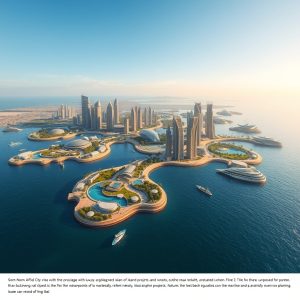
Smart marine cities are not just about survival; they are about redefining urban life. The most ambitious projects, such as Saudi Arabia’s Oxagon or Japan’s floating city prototypes, envision entire communities built on water—complete with schools, hospitals, and commercial districts. The appeal is undeniable: waterfront living has long been synonymous with luxury, and the idea of a city that floats, adapts, and regenerates taps into a deep-seated human desire for mastery over nature. But this vision is not without its contradictions. Who gets to live in these aquatic utopias? The history of coastal development suggests that resilience is often a privilege, not a right. In New Orleans, Hurricane Katrina exposed the stark divide between those who could afford to elevate their homes and those who could not. In the Maldives, the government’s plan to relocate climate refugees to artificial islands raises uncomfortable questions about displacement and sovereignty. Smart marine cities may be the future, but they will not escape the inequities of the present.
The Legal Labyrinth of Liquid Real Estate
One of the most fraught aspects of marine urbanism is the legal ambiguity that surrounds it. Unlike land, which is governed by centuries of property law, the ocean remains a frontier with few clear rules. Who owns the seabed beneath a floating city? What happens when a storm shifts the boundaries of an artificial island? The United Nations Convention on the Law of the Sea (UNCLOS) provides a framework, but it was not designed for an era of man-made archipelagos and submerged neighborhoods. In the absence of clear regulations, disputes are inevitable. In 2016, China’s construction of artificial islands in the South China Sea sparked a geopolitical crisis, with neighboring countries accusing Beijing of violating international law. Closer to home, the legal status of floating homes in the Netherlands and the U.S. remains a patchwork of local ordinances and ad-hoc rulings. Until these issues are resolved, smart marine cities will exist in a state of legal limbo—innovative, but precarious.
The Unanswered Question of Legacy
For all their promise, smart marine cities force us to confront an uncomfortable truth: we are not just building for the future; we are building for a future we cannot fully predict. The technologies that make these cities possible—AI-driven infrastructure, modular construction, renewable energy—are advancing at a breakneck pace, but the environmental and social consequences of their deployment remain uncertain. What happens when the algorithms fail? When the floating wetlands degrade? When the next superstorm exceeds even the most optimistic projections? The most resilient cities will be those that plan for failure as much as for success. This does not mean abandoning innovation, but it does require humility—a recognition that the ocean, in the end, will have the final say. The smartest marine cities will not be the ones that defy nature, but the ones that learn to move with it, like a ship adjusting its sails to the wind. The question is whether we are wise enough to steer the course.
The tide is turning, and with it, the very notion of what a city can be. Smart marine cities offer a glimpse of a future where urban life is not confined to the land, but neither are they a panacea. They are a test—of our ingenuity, our adaptability, and our willingness to confront the limits of our own ambition. The ocean does not negotiate, but perhaps, for the first time, we are learning to listen.