Building the Future: Advanced Materials and Smart Technologies in Sustainable Construction
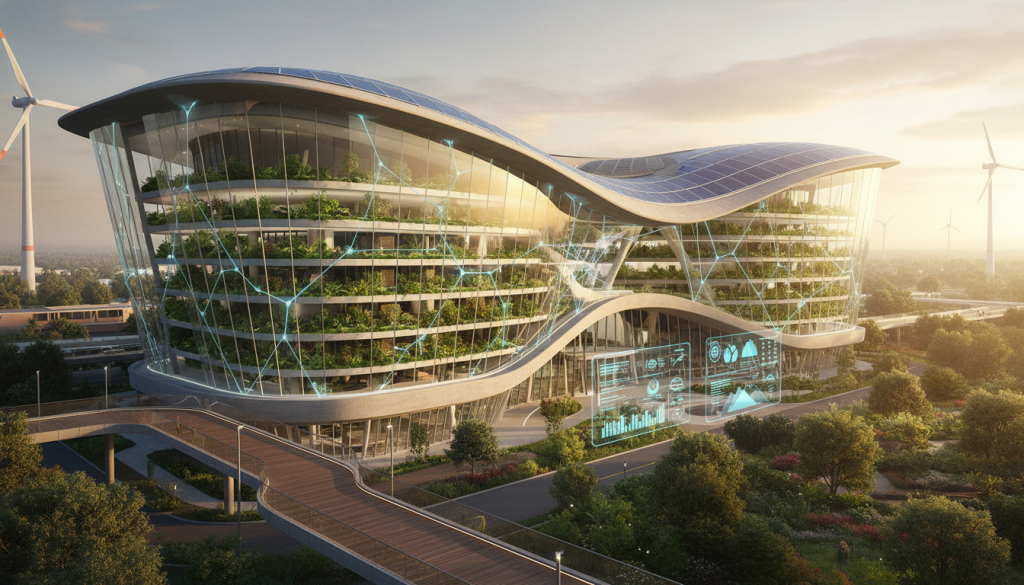
The construction industry stands at a pivotal crossroads, tasked with not only meeting the escalating demands of a growing global population but also with a profound responsibility to mitigate its environmental impact. Fortunately, innovation is rapidly transforming the landscape, offering powerful solutions through advanced materials and the integration of smart building technology. This evolution is moving us beyond traditional methods towards a future where buildings are not just structures, but intelligent, sustainable ecosystems.
The Rise of Advanced Building Materials
For decades, concrete, steel, and timber have formed the backbone of construction. While these remain vital, a new generation of advanced building materials is emerging, promising enhanced performance, reduced environmental footprints, and novel design possibilities. Among these, self-healing concrete, infused with bacteria that can repair cracks, offers unprecedented durability and longevity, significantly reducing maintenance needs and extending building lifespans. Similarly, advanced composites, such as carbon fiber reinforced polymers (CFRPs), provide exceptional strength-to-weight ratios, enabling lighter, more resilient structures that require less material and are easier to transport and assemble. These materials are not only stronger and lighter but often possess superior insulating properties, contributing directly to energy efficiency goals.
Furthermore, the focus on sustainability has spurred the development of bio-based materials. Mycelium, the root structure of fungi, can be grown into custom shapes and offers excellent insulation and fire-retardant properties, all while being fully biodegradable. Bamboo, a rapidly renewable resource, is being engineered into strong, versatile construction components that can rival traditional timber and even steel in certain applications. These materials align perfectly with the principles of eco-friendly architecture, reducing reliance on energy-intensive manufacturing processes and sequestering carbon during their growth.
Smart Building Technology: The Intelligent Layer
Beyond the physical materials, the integration of smart building technology is revolutionizing how buildings operate and interact with their occupants and the environment. Building Information Modeling (BIM) has moved from a design tool to a comprehensive lifecycle management system. BIM allows for detailed digital representation of a building, facilitating better planning, clash detection, and resource management during construction, and providing a framework for ongoing operational efficiency. This digital twin concept extends into the operational phase, where sensors and IoT devices collect real-time data on everything from energy consumption and air quality to occupancy patterns and structural integrity.
The data generated by these smart systems allows for dynamic building management. Energy-efficient design principles are amplified through intelligent HVAC and lighting systems that adjust automatically based on occupancy and external conditions. Smart glass, for instance, can dynamically alter its tint to control solar heat gain and glare, reducing the need for artificial lighting and cooling. Predictive maintenance, powered by AI analyzing sensor data, can identify potential issues before they become critical failures, minimizing downtime and costly repairs. This interconnectedness not only enhances comfort and productivity for occupants but also significantly reduces operational costs and environmental impact.
Modular Construction and Prefabricated Systems: Efficiency and Sustainability
The drive for efficiency and reduced waste has propelled modular construction trends and prefabricated home systems to the forefront. By constructing building components or entire modules off-site in controlled factory environments, construction timelines are drastically shortened, and quality control is significantly improved. This method also leads to a substantial reduction in on-site waste, as materials can be optimized and recycled more effectively in a factory setting. Prefabricated concrete solutions, for example, offer precision, speed, and durability, allowing for rapid assembly of complex structures.
Modular construction is particularly well-suited for various sectors, from residential building contractor projects and low-cost housing initiatives to commercial property construction and even elements of high-rise construction. It allows for greater design flexibility than often assumed, with advanced techniques enabling complex architectural forms to be realized through modular components. This approach inherently supports sustainable construction methods by minimizing site disruption, reducing transportation emissions, and ensuring a higher quality, more durable end product.
The Path to Zero Carbon Buildings
The ultimate goal for many in the industry is the realization of zero carbon buildings. This ambitious objective is achievable through a synergistic approach, combining the use of advanced, low-embodied-carbon materials with highly efficient, smart building technologies and construction processes that minimize waste. Energy-efficient design is paramount, incorporating passive strategies alongside active systems optimized by smart technology. Renewable energy generation, integrated into the building’s design or supplied through smart grids, further closes the carbon loop. The lifecycle assessment of materials, from extraction to disposal, becomes critical, favoring those with low environmental impact and high recyclability. Modern steel structures, when produced using sustainable methods and designed for deconstruction, can also play a role. The commitment to construction site safety remains a non-negotiable element, ensuring that these advancements are implemented responsibly and ethically, protecting the workforce and the communities impacted by development.
As we look towards the future, the integration of these cutting-edge materials, intelligent systems, and efficient construction methodologies is not merely an option but a necessity. It represents a fundamental shift in how we conceive, build, and operate our built environment, paving the way for structures that are not only resilient and functional but also harmonious with the planet. The continuous pursuit of innovation in materials science and digital technology will undoubtedly unlock even greater potential, enabling us to construct a more sustainable and prosperous world, one building at a time.