The Silent Tide: How Smart Marine Cities Are Outpacing Traditional Coastal Engineering in the Race for Resilience
The ocean has always been a frontier of human ambition, but the methods we use to claim its edges reveal more about our priorities than our ingenuity. Traditional coastal engineering—dikes, seawalls, and land reclamation—has long been the default response to urban expansion and rising seas. Yet, as climate projections grow more dire, the limitations of these approaches are becoming impossible to ignore. The question is no longer whether we can build into the sea, but whether we can do so without repeating the mistakes of the past. Smart marine cities, with their adaptive infrastructure and integrated ecosystems, are emerging as a compelling alternative, but their success hinges on a fundamental shift in how we conceptualize resilience.
The Flaws in the Foundation
Land augmentation through reclamation has been a cornerstone of urban development for centuries, from the polders of the Netherlands to the artificial islands of Dubai. These projects are often framed as triumphs of human ingenuity, but their environmental and economic costs are frequently downplayed. Dredging and landfill disrupt marine ecosystems, alter sediment flows, and exacerbate erosion elsewhere. The Palm Jumeirah, for instance, has been linked to increased coastal erosion and the degradation of nearby coral reefs. Meanwhile, the deep-sea foundations required for such projects are not only expensive but also vulnerable to subsidence and seismic activity. The irony is stark: the very techniques meant to secure coastal futures are often accelerating their decline.
Coastal resilience, in its traditional form, has relied on static defenses—barriers designed to keep the sea at bay. Yet, as sea levels rise and storm surges intensify, these rigid structures are increasingly inadequate. The Netherlands, a global leader in coastal engineering, has already begun transitioning from hard defenses to more flexible, nature-based solutions. This shift underscores a critical realization: resilience is not about resisting change but adapting to it. The challenge, then, is to design systems that can evolve alongside the ocean, rather than in opposition to it.
The Rise of Smart Marine Cities
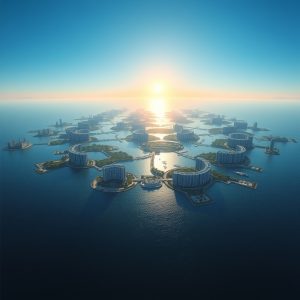
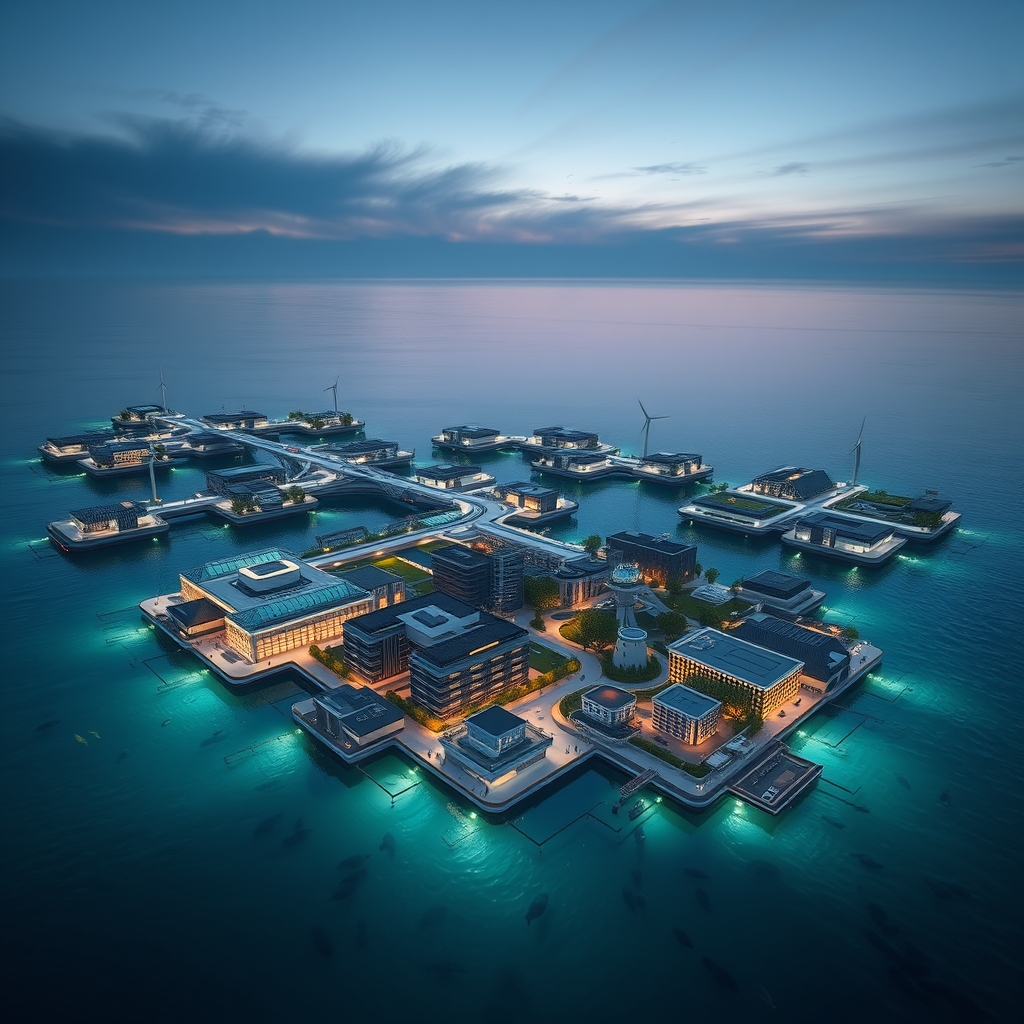
Enter smart marine cities—urban developments that integrate technology, ecology, and adaptive design to create living systems rather than static structures. These projects prioritize modularity, allowing infrastructure to be reconfigured as conditions change. Floating neighborhoods, like those proposed in the Maldives or the Netherlands’ Floating Pavilion in Rotterdam, exemplify this approach. By rising and falling with the tides, they eliminate the need for costly and ecologically disruptive landfill. Similarly, artificial archipelagos designed as interconnected ecosystems—rather than isolated landmasses—can mitigate environmental harm while providing new spaces for habitation and commerce.
What sets smart marine cities apart is their emphasis on coastal intelligence. Sensors embedded in seawalls and floating platforms monitor water quality, sediment movement, and structural integrity in real time, enabling proactive responses to environmental shifts. This data-driven approach extends to urban planning, where AI models simulate the impacts of rising seas and extreme weather, allowing cities to test resilience strategies before implementation. The result is a form of urbanism that is not just reactive but predictive, capable of anticipating challenges rather than merely enduring them.
The Blue Economy as a Catalyst
The economic case for smart marine cities is equally compelling. The blue economy—encompassing industries like renewable energy, aquaculture, and maritime tourism—is projected to be worth $3 trillion by 2030. Traditional land reclamation often treats the ocean as a blank canvas for development, but smart marine cities recognize it as a dynamic resource to be harnessed sustainably. Floating solar farms, offshore wind turbines, and submerged data centers are just a few examples of how marine infrastructure can generate value without depleting ecosystems. Moreover, by integrating these industries into urban design, smart marine cities create synergies that reduce costs and environmental footprints. A floating resort, for instance, could double as a research hub for marine conservation, turning luxury into a tool for ecological stewardship.
The Legal and Ethical Tides
Yet, the transition to smart marine cities is not without its complications. Submerged land rights remain a contentious issue, with nations and corporations vying for control over increasingly valuable underwater real estate. The United Nations Convention on the Law of the Sea (UNCLOS) provides a framework, but enforcement is inconsistent, and disputes over territorial claims are on the rise. Meanwhile, the ethical implications of oceanfront developments cannot be ignored. Who benefits from these projects? Are they accessible to all, or do they cater exclusively to the wealthy, creating a new form of maritime gentrification? The Maldives’ floating city, for example, is marketed as a climate refuge, but its $1 billion price tag raises questions about equity in an era of displacement.
There is also the matter of accountability. Traditional coastal engineering projects are often evaluated based on their immediate economic returns, with long-term environmental impacts treated as externalities. Smart marine cities, by contrast, require a holistic approach that considers ecological, social, and economic outcomes. This demands not only technological innovation but also regulatory frameworks that prioritize sustainability over short-term gains. Without such safeguards, even the most advanced marine cities risk becoming little more than high-tech versions of the same old mistakes.
The Uncharted Waters Ahead
The shift from land reclamation to smart marine cities is not just a technological evolution but a philosophical one. It requires moving away from the idea of the ocean as a frontier to be conquered and toward a vision of it as a partner in resilience. This is not to say that traditional coastal engineering has no role to play—there will always be a need for seawalls and dikes in certain contexts. But the future of coastal urbanism lies in hybrid approaches that combine the best of both worlds: the adaptability of smart marine cities and the proven reliability of conventional engineering.
The stakes could not be higher. By 2050, coastal flooding is expected to affect nearly 1 billion people worldwide, with economic losses reaching $14 trillion annually. The choices we make today will determine whether these challenges become crises or opportunities. Smart marine cities offer a path forward, but only if we are willing to rethink our relationship with the sea. The ocean is not a passive resource to be exploited or a threat to be contained; it is a dynamic force that demands respect, innovation, and humility. The cities that thrive in the coming decades will be those that recognize this truth and design accordingly, not as conquerors of the coast but as stewards of the tide.