The Illusion of Infinite Shores: How Floating Real Estate is Redefining Urban Expansion at Sea
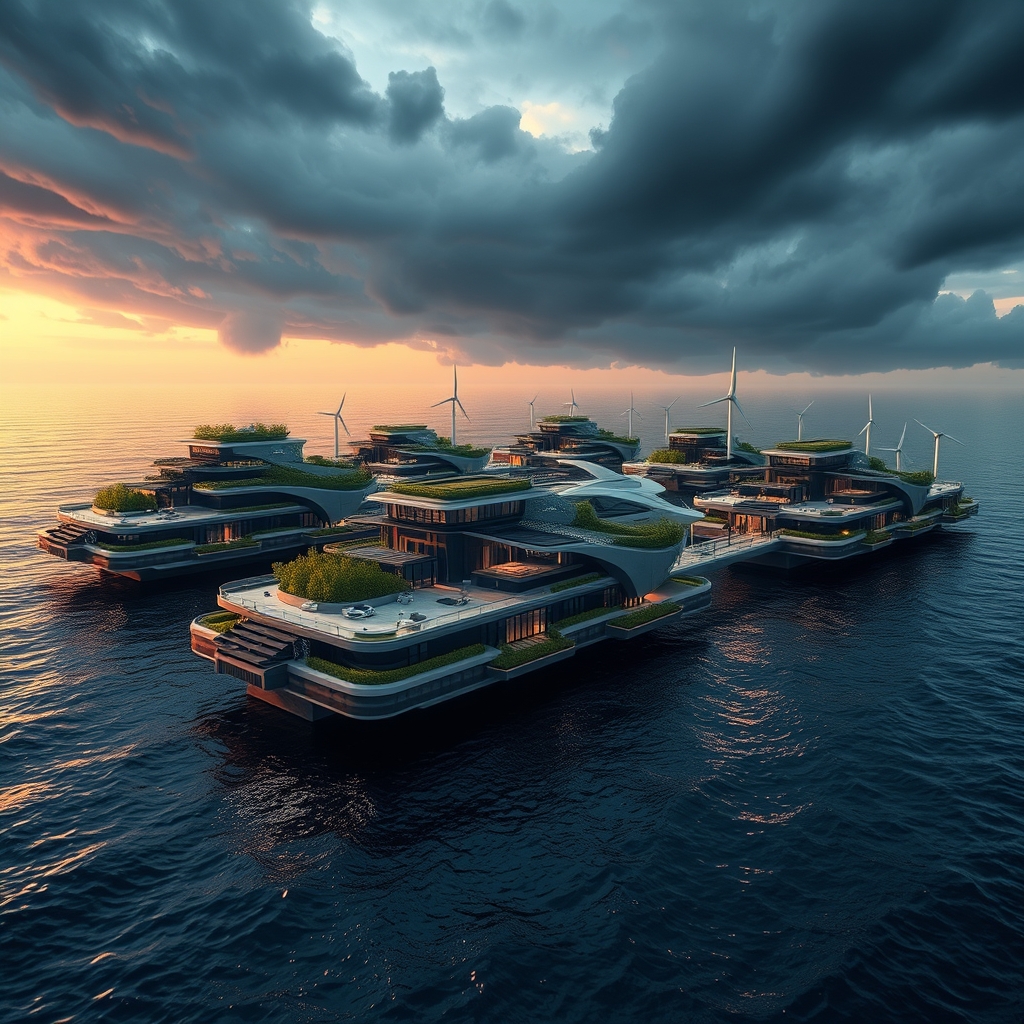
The ocean has long been a frontier for human ambition, but the modern era has transformed it into a speculative canvas for urban expansion. No longer content with reclaiming land from the sea, developers and governments are now engineering entire ecosystems—floating real estate, artificial archipelagos, and submerged infrastructure—that promise to redefine coastal resilience while raising unsettling questions about sustainability, equity, and the very nature of urbanism. The shift from land reclamation to aquatic urbanism is not merely a technical evolution; it is a philosophical one, challenging our understanding of territory, ownership, and the limits of human ingenuity.
The Allure of the Aquatic Metropolis
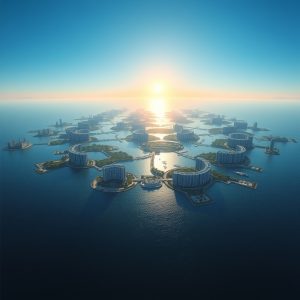
The appeal of floating cities and man-made islands is undeniable. With coastal megacities facing unprecedented population pressures and rising sea levels, the ocean offers a seemingly boundless alternative to terrestrial sprawl. Projects like Malaysia’s Forest City, China’s Ocean Flower Island, and the Maldives’ floating city prototype are marketed as utopian solutions—self-sustaining, climate-resilient, and luxuriously exclusive. Yet beneath the glossy renderings lies a more complicated reality. These developments are not just about solving housing shortages or mitigating climate risks; they are about creating controlled environments where wealth and power can operate beyond the constraints of traditional governance.
Floating real estate, in particular, represents a radical departure from conventional urban planning. Unlike land reclamation, which at least nominally integrates with existing coastal ecosystems, floating developments exist in a legal and ecological limbo. They are neither fully terrestrial nor entirely marine, complicating everything from property rights to environmental regulations. The Blue Economy framework, often invoked to justify these projects, emphasizes sustainable marine resource use, but the reality is far more ambiguous. Many floating developments prioritize luxury tourism and high-end residential spaces over public infrastructure or ecological restoration, raising concerns about who truly benefits from this new frontier.
Coastal Resilience or Corporate Escape?
Proponents argue that floating cities and artificial islands are a necessary adaptation to climate change, offering a way to retreat from vulnerable coastlines while maintaining economic vitality. The Netherlands, a pioneer in land reclamation, has already experimented with floating neighborhoods like Schoonschip in Amsterdam, demonstrating that aquatic urbanism can be both functional and sustainable. However, these small-scale, community-driven projects stand in stark contrast to the grandiose, top-down developments emerging in the Global South, where governments and corporations often collaborate to create enclaves of privilege.
The Maldives’ floating city, for instance, is touted as a climate refuge for the nation’s elite, but it does little to address the existential threat facing the country’s poorer populations. Similarly, Dubai’s Palm Islands and The World archipelago were conceived as playgrounds for the ultra-wealthy, with scant regard for their long-term ecological impact. The question is not whether floating cities can be built, but whether they should be—especially when their primary function is to insulate the rich from the consequences of climate change rather than mitigate its causes.
The Engineering Mirage
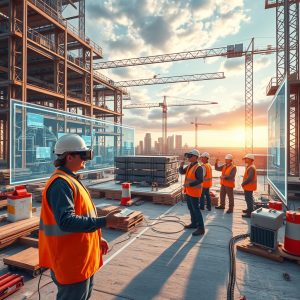
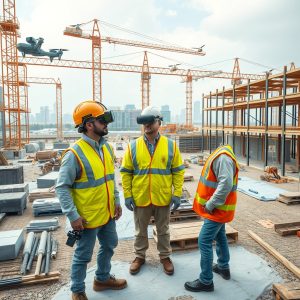
The technical challenges of building on water are formidable, but they are not insurmountable. Deep-sea foundations, modular construction, and advanced marine infrastructure have made it possible to create stable, habitable platforms. Yet the illusion of permanence is precisely that—an illusion. Floating cities are vulnerable to storms, corrosion, and the slow but inevitable rise of sea levels. Even the most robust designs, like Japan’s proposed floating airport or Saudi Arabia’s Oxagon industrial city, rely on unproven technologies and optimistic assumptions about future climate conditions.
Moreover, the environmental cost of these projects is often downplayed. Dredging, landfill, and the disruption of marine ecosystems can have devastating consequences for biodiversity, fisheries, and coastal communities. The eco-friendly reclamation narrative is frequently used to justify these impacts, but the reality is that most floating developments are resource-intensive and carbon-heavy, contradicting their own sustainability claims. The irony is palpable: in the name of climate resilience, we are creating new forms of environmental degradation.
Submerged Land Rights and the New Colonialism
One of the most contentious aspects of aquatic urbanism is the legal ambiguity surrounding submerged land rights. Unlike terrestrial property, which is governed by centuries of legal precedent, the ownership and governance of floating or reclaimed spaces are still evolving. International maritime law, such as the United Nations Convention on the Law of the Sea (UNCLOS), provides a framework for territorial waters, but it was never designed to address the complexities of artificial islands or floating cities. This legal vacuum has led to disputes over jurisdiction, taxation, and environmental responsibility, with corporations and governments often exploiting the lack of regulation to their advantage.
The result is a form of maritime urban planning that mirrors the worst excesses of colonialism. Wealthy nations and investors are effectively carving out new territories in the ocean, displacing local communities and asserting control over marine resources. The Maldives’ floating city, for example, is being developed in partnership with a Dutch company, raising concerns about neocolonial exploitation. Similarly, China’s artificial islands in the South China Sea serve as military outposts, blurring the line between urban expansion and geopolitical dominance. The ocean, once a global commons, is becoming another frontier for privatization and power struggles.
The Future of Waterfront Urbanism: A Choice Between Hubris and Humility
The rise of floating real estate and artificial archipelagos is a testament to human ingenuity, but it is also a warning. The same technologies that allow us to build cities on water could just as easily become tools of exclusion, environmental destruction, and geopolitical conflict. The challenge is not just to engineer these spaces, but to govern them in a way that prioritizes equity, sustainability, and long-term resilience. This requires more than just technical innovation; it demands a fundamental rethinking of how we conceive of urban expansion, property rights, and our relationship with the ocean.
There are glimmers of hope. Projects like Rotterdam’s floating pavilions or Singapore’s Marina Bay Sands demonstrate that aquatic urbanism can be integrated into existing cities in ways that enhance, rather than disrupt, coastal ecosystems. These developments are not isolated enclaves but extensions of the urban fabric, designed to coexist with the natural environment. The key difference lies in their scale, intent, and governance. Small, community-driven projects that prioritize public access and ecological restoration offer a counterpoint to the grandiose, profit-driven megaprojects that dominate the discourse.
The ocean is not an empty canvas waiting to be filled with human ambition. It is a dynamic, fragile ecosystem that sustains life on this planet. The choice before us is whether to treat it as a resource to be exploited or a partner in our collective survival. Floating cities and artificial islands may well be part of the future, but only if they are built with humility, foresight, and a commitment to the common good. The alternative—a world where the wealthy retreat behind seawalls while the rest are left to drown—is not a future worth engineering.