The New Urban Ecosystem: Merging Digital Precision with Ecological Design
As global populations surge toward urban centers, the architectural and engineering sectors face an unprecedented challenge: housing and supporting billions without accelerating environmental degradation. The concrete jungles of the past, notorious for their massive carbon footprints and resource-heavy maintenance, are rapidly becoming obsolete. In their place, a new paradigm is emerging—one that marries cutting-edge technology with deep ecological sensitivity. This transformation is not just a trend; it is a fundamental reimagining of how we conceive, design, and assemble the spaces where we live, work, and play.
At the heart of this revolution is a commitment to sustainable construction methods. Developers and architects are no longer viewing ecological impact as an afterthought or a mere checklist for achieving a green building certification. Instead, environmental harmony is the foundational blueprint. By rethinking the entire lifecycle of a structure, the industry is proving that rapid urban expansion does not have to come at the expense of the natural world.
The Dawn of the Zero-Emission Skyline
The push toward zero carbon buildings is perhaps the most ambitious and crucial movement in modern architecture. These structures are designed to generate as much energy as they consume over the course of a year, effectively neutralizing their carbon footprint. Achieving this requires a holistic approach to energy efficient design, blending passive architectural strategies—such as optimized solar orientation and natural ventilation—with active renewable energy generation like building-integrated photovoltaics.
Harnessing Advanced Building Materials
Reaching absolute carbon neutrality relies heavily on the integration of advanced building materials. Traditional concrete and steel, while structurally formidable, are notoriously carbon-intensive to produce. Today, eco friendly architecture is pivoting toward alternatives like cross-laminated timber (CLT), recycled metal alloys, and carbon-sequestering concrete. Furthermore, the advent of smart glass installation is revolutionizing building envelopes. These dynamic glazing systems automatically adjust their tint based on the sun’s angle and intensity, drastically reducing the thermal load on HVAC systems and slashing energy consumption in commercial property construction.
Efficiency Through Off-Site Innovation
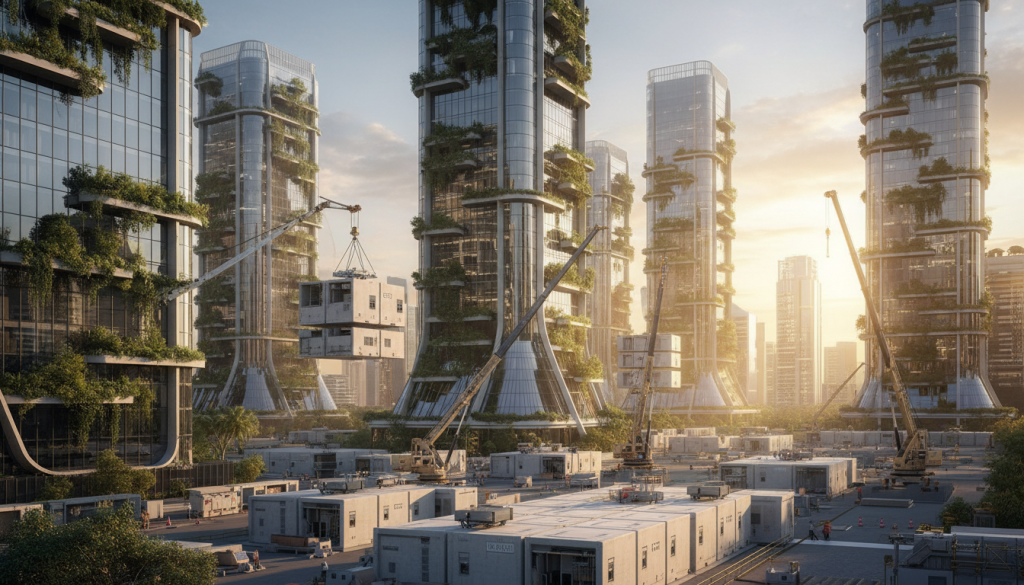
Beyond the materials themselves, the very process of building is undergoing a radical shift. Modular construction trends are dominating discussions in both residential and commercial sectors. By shifting the bulk of the building process to controlled factory environments, developers can significantly reduce material waste, mitigate weather-related delays, and ensure a higher quality of construction.
The Power of Precast and Prefabrication
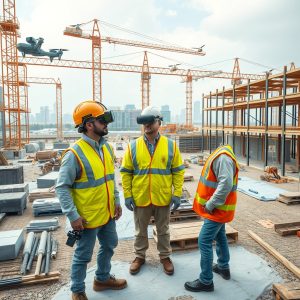
Within this off-site revolution, precast concrete solutions and prefabricated home systems are proving invaluable. Components are manufactured to exact specifications, transported to the site, and assembled with unprecedented speed. This method not only accelerates project timelines but also dramatically improves construction site safety by minimizing the time workers spend performing high-risk tasks at elevation. From low cost housing technology aimed at solving the urban residential crisis to complex industrial property development, prefabrication is delivering scalable, efficient, and highly durable results.
Digital Precision in the Modern Age
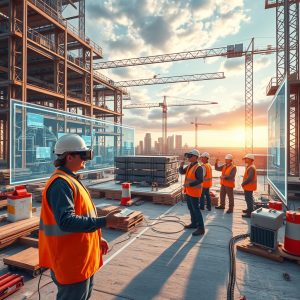
None of these physical advancements would be possible without the digital frameworks that guide them. Building Information Modeling (BIM) has become the central nervous system of modern urban infrastructure projects. BIM goes far beyond traditional 3D modeling; it creates a comprehensive digital twin of a building, incorporating data on every single component, from the modern steel structure framework to the intricate electrical and plumbing routing.
This level of digital precision allows architects, engineers, and residential building contractors to collaborate seamlessly in a virtual space before a single shovel hits the dirt. Potential clashes are identified and resolved computationally, material quantities are calculated down to the last screw, and the building’s future energy performance is simulated under various environmental conditions. By the time high rise construction begins, the project has already been built and optimized virtually, ensuring that the physical execution is as flawless and resource-efficient as possible.
Scaling the Solutions for Future Cities
The true test of these innovations lies in their scalability. While bespoke eco-villas and flagship corporate headquarters serve as excellent testing grounds for smart building technology, the ultimate goal is widespread implementation. Urban infrastructure must adapt to integrate these technologies at a macro level. We are beginning to see entire districts planned with shared energy grids, centralized waste-to-energy systems, and interconnected smart transit hubs.
As we look toward the horizon, the dichotomy between the built environment and the natural world is slowly dissolving. The buildings of tomorrow will no longer be static consumers of resources, but active, contributing participants in their local ecosystems. Through the meticulous application of intelligent materials, off-site manufacturing, and visionary digital planning, the cities we are constructing today will stand as resilient, self-sustaining habitats, breathing and evolving in perfect rhythm with the planet they occupy.