The Architectural Mirage: How Artificial Archipelagos Are Exploiting the Illusion of Infinite Space

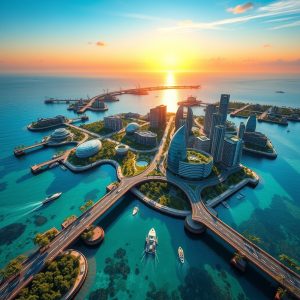
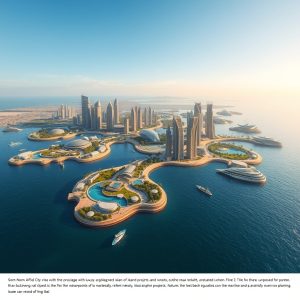
The 21st century has witnessed an unprecedented surge in the construction of artificial archipelagos, a phenomenon that promises to redefine the boundaries of urban expansion and maritime ambition. Yet, beneath the glossy renderings and grand promises of these man-made marvels lies a stark reality: the illusion of infinite space is not just a marketing ploy but a fundamental miscalculation of ecological and economic sustainability. These projects, often touted as the pinnacle of coastal engineering, are increasingly revealing themselves as high-stakes gambles with the planet’s fragile coastal ecosystems.
The Mirage of Mastery Over Nature
Artificial archipelagos, from Dubai’s Palm Islands to Malaysia’s Forest City, are frequently presented as triumphs of human ingenuity—a testament to our ability to bend nature to our will. The narrative is seductive: why limit urban growth to overcrowded mainland cities when we can simply create new land from the sea? This logic, however, ignores the intricate web of ecological dependencies that sustain coastal environments. The construction of these islands disrupts sediment flow, alters tidal patterns, and devastates marine habitats, often with irreversible consequences. The very act of land reclamation, once seen as a solution to urban sprawl, is now exposing the hubris of assuming we can out-engineer nature’s complexities.
The Cost of Coastal Resilience
Coastal resilience is not merely a buzzword but a critical framework for evaluating the long-term viability of artificial archipelagos. These projects are often marketed as bastions of sustainability, designed to withstand rising sea levels and extreme weather events. Yet, the reality is far more precarious. Many of these islands rely on outdated coastal engineering techniques that prioritize short-term stability over adaptive resilience. For instance, the use of hard infrastructure like seawalls and breakwaters may provide immediate protection but often exacerbates erosion and disrupts natural sediment deposition. The result is a fragile equilibrium, where the very structures meant to safeguard these islands become their Achilles’ heel in the face of climate change.
The Blue Economy’s Faustian Bargain
The blue economy—an economic model centered on the sustainable use of ocean resources—has been invoked as a justification for artificial archipelagos. Proponents argue that these projects can catalyze economic growth, create jobs, and foster innovation in maritime industries. However, the blue economy’s promise is often predicated on a Faustian bargain: the exploitation of marine resources in the name of progress. Luxury island resorts, for example, may generate revenue, but they also accelerate the privatization of coastal spaces, displacing local communities and marginalizing traditional livelihoods. The economic benefits, it turns out, are rarely distributed equitably, and the environmental costs are borne by future generations.
The Legal Labyrinth of Submerged Land Rights
One of the most contentious aspects of artificial archipelagos is the legal ambiguity surrounding submerged land rights. Unlike traditional land reclamation, which often occurs within a nation’s territorial waters, artificial archipelagos frequently extend into international waters or disputed maritime zones. This legal gray area creates a breeding ground for geopolitical tensions and exploitation. Countries with lax regulations or corrupt governance structures may auction off submerged land to the highest bidder, disregarding environmental protections or the rights of indigenous communities. The result is a patchwork of legal frameworks that fail to address the ethical and ecological implications of land augmentation on such a massive scale.
The Illusion of Eco-Friendly Reclamation
In response to growing criticism, developers of artificial archipelagos have begun touting eco-friendly reclamation techniques as a panacea for their environmental impact. These methods, which include the use of dredged sand from sustainable sources and the creation of artificial reefs, are presented as evidence of a new era of responsible coastal engineering. Yet, the reality is far more nuanced. While these techniques may mitigate some environmental harm, they do not address the fundamental issue: the unsustainable consumption of finite marine resources. The notion of eco-friendly reclamation is, at best, a Band-Aid solution—a way to assuage public concern without confronting the deeper systemic flaws in how we conceptualize and execute land augmentation projects.
The Future of Maritime Urban Planning
As artificial archipelagos continue to proliferate, the field of maritime urban planning faces an existential question: can these projects ever be truly sustainable, or are they inherently flawed endeavors? The answer lies not in abandoning innovation but in redefining its parameters. Sustainable land reclamation must prioritize adaptive design, community engagement, and ecological restoration over grandiose visions of human dominance. Smart marine cities, for instance, offer a glimpse of what is possible when technology and nature coexist harmoniously. By integrating renewable energy, green infrastructure, and climate-resilient design, these cities can serve as models for a new era of coastal development—one that acknowledges the limits of human ambition and the fragility of the natural world.
The allure of artificial archipelagos is undeniable, but their legacy will ultimately be defined not by their architectural grandeur or economic potential, but by their ability to coexist with the ecosystems they seek to replace. The illusion of infinite space is a dangerous fantasy, one that risks repeating the mistakes of the past under the guise of progress. The challenge ahead is not to conquer the sea but to learn from it—to build not just for today, but for a future where the boundaries between land and water are not erased, but respected.