The Alchemy of Sand and Salt: How Deep Sea Foundations Are Redefining the Ethics of Land Augmentation
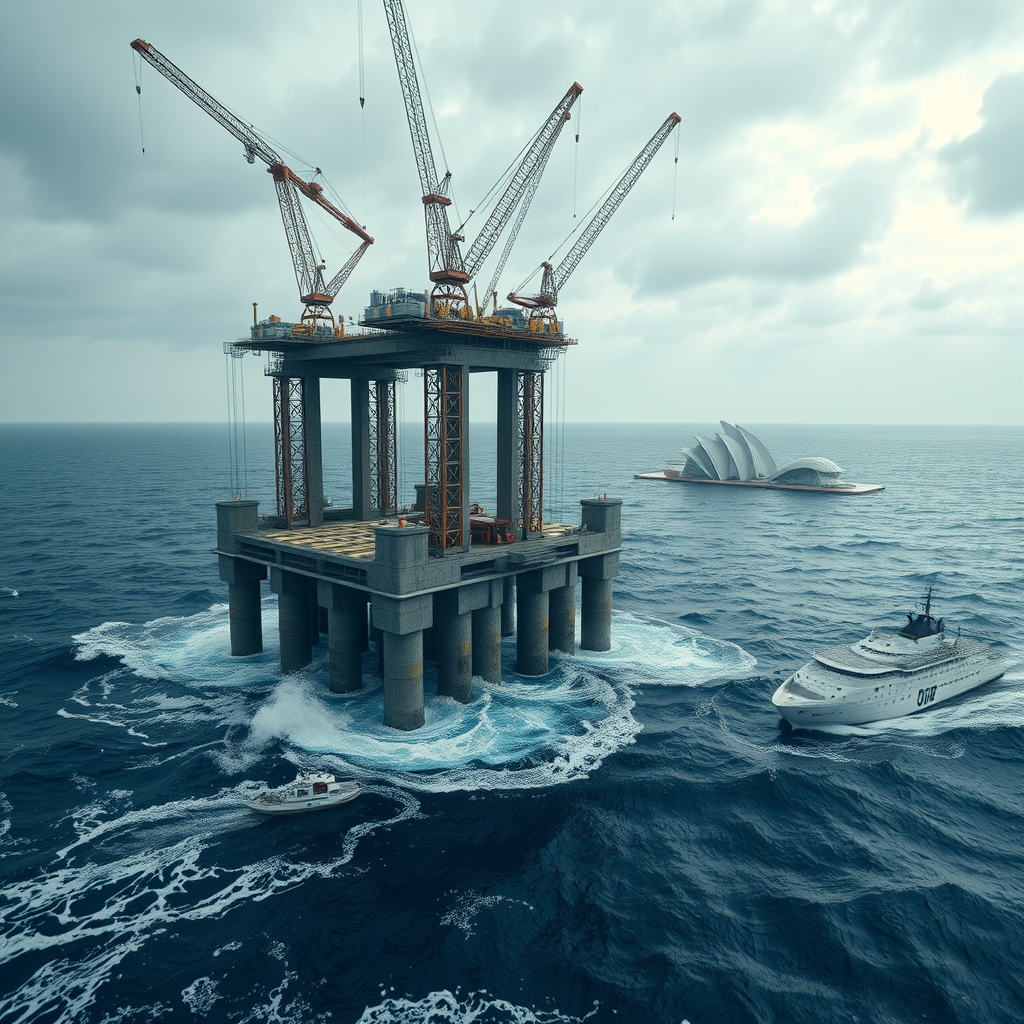
The ocean has always been a frontier of human ambition, but never has its conquest been as audacious—or as fraught—as in the era of deep sea foundations. The shift from shallow-water reclamation to engineering land atop the abyssal plain is not merely a technical evolution; it is a philosophical upheaval. Where once we scraped the seabed for sand to build our dreams, we now anchor them to the ocean floor with steel and concrete, defying both gravity and the ethical boundaries of territorial expansion. This is not land reclamation as we know it. This is land augmentation at a scale that forces us to question whether we are building the future or simply delaying the reckoning with our own hubris.
The Myth of the Unclaimed Deep
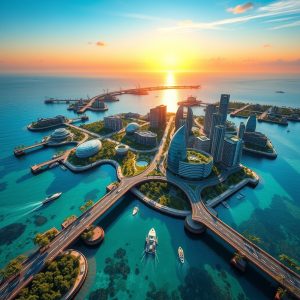
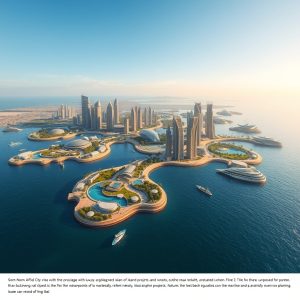
The legal fiction of the high seas as a commons has long masked the reality of its exploitation. Submerged land rights, once a niche concern of maritime lawyers, have become the battleground for a new kind of colonialism—one that does not require flags or treaties, only the right mix of capital and engineering prowess. The United Nations Convention on the Law of the Sea (UNCLOS) was never designed to govern the creation of artificial islands in international waters, yet that is precisely what is happening. Projects like Malaysia’s Forest City or China’s artificial islands in the South China Sea are not just exercises in coastal resilience; they are assertions of sovereignty over a domain that was never meant to be owned. The deeper the foundations, the more tenuous the legal ground becomes. Are these islands extensions of existing nations, or do they exist in a legal limbo, answerable to no one but their developers?
The Illusion of Eco-Friendly Reclamation
Proponents of deep sea foundations tout their environmental benefits: no dredging of coastal ecosystems, no disruption of sediment flows, no immediate destruction of coral reefs. But this is a half-truth, a sleight of hand that obscures the long-term consequences. The materials required for these projects—steel pilings driven hundreds of meters into the seabed, concrete platforms poured in situ—demand an industrial supply chain that leaves its own carbon footprint. The energy cost of maintaining these structures against the relentless force of the ocean is staggering. And then there is the question of what happens when they fail. A shallow-water reclamation project might erode; a deep sea foundation could collapse, sending thousands of tons of debris into the abyss, with consequences we can barely predict.
Worse still is the false narrative of sustainability. Eco-friendly reclamation is not a technical achievement; it is a marketing term. The idea that we can build our way out of the climate crisis by creating more land—land that will itself be vulnerable to rising seas—is a paradox so glaring it borders on delusion. The ocean does not care about our LEED certifications or our carbon offsets. It will reclaim what we take, one way or another.
The Blue Economy’s Faustian Bargain
The rise of deep sea foundations is inextricably linked to the blue economy, that seductive vision of a maritime future where every wave and current is monetized. Floating real estate, luxury island resorts, and smart marine cities are not just developments; they are commodities, sold to the highest bidder under the guise of progress. But progress for whom? The residents of these artificial paradises will live in climate-controlled bubbles, insulated from the very forces that make their existence possible. Meanwhile, the communities displaced by rising seas—the ones who never had the capital to buy into the blue economy—will watch from the shore as their homes disappear beneath the waves.
This is the dark side of waterfront urbanism: a future where the coast is not a shared resource but a gated community. The deep sea foundations that make these developments possible are not just engineering marvels; they are the physical manifestation of inequality. They represent a world where the wealthy can buy their way out of the climate crisis, while the rest are left to drown in its wake.
The Engineering of Denial
Coastal engineering has always been an act of defiance, but deep sea foundations take that defiance to a new extreme. Traditional reclamation projects at least had the decency to acknowledge their limitations. They were built with the understanding that the ocean would eventually reclaim them. Deep sea foundations, by contrast, are designed to last—until they don’t. The assumption that we can engineer our way out of the consequences of climate change is not just optimistic; it is dangerous. It assumes that our technology will always outpace the forces of nature, that our calculations will never be wrong, that our materials will never fail.
History suggests otherwise. The ocean is not a static canvas; it is a dynamic, unpredictable force. The same currents that power our blue economy can also tear our foundations apart. The same sea level rise that we seek to escape will eventually reach even the deepest of our artificial islands. The question is not whether these structures will fail, but when—and at what cost.
The Unanswered Question of Legacy
What will we leave behind when the tide finally turns? Will our deep sea foundations become the ruins of a civilization that overreached, like the lost cities of Atlantis or the abandoned oil rigs of the North Sea? Or will they be reclaimed by the ocean, their steel skeletons becoming artificial reefs, their concrete platforms the foundations of new ecosystems? The answer depends on whether we build with humility or arrogance. Right now, the signs are not encouraging.
The ocean does not forgive. It does not negotiate. It simply is. And yet, we continue to treat it as a resource to be exploited, a frontier to be conquered. Deep sea foundations are the latest chapter in this long, troubled history. They are a testament to human ingenuity, but also to our capacity for self-deception. We call them sustainable, eco-friendly, resilient—but these are just words. The truth is that we are building our future on borrowed time, and the ocean is the one holding the note. The only question left is whether we will pay it back with interest, or whether we will leave the bill for the next generation to settle.