The Future is Built Green: Embracing Sustainable Construction Methods
The construction industry, a cornerstone of global development, is undergoing a profound transformation. Driven by escalating environmental concerns, resource scarcity, and a growing awareness of the impact buildings have on our planet and well-being, sustainable construction methods are no longer a niche trend but an essential paradigm shift. This evolution is reshaping how we design, build, and inhabit our spaces, ushering in an era of eco-friendly architecture and energy-efficient design.
The Imperative for Sustainability in Construction
Traditional construction practices have often been associated with significant environmental footprints, from high energy consumption and greenhouse gas emissions to substantial waste generation and depletion of natural resources. Recognizing these challenges, the industry is increasingly turning towards sustainable construction methods that minimize environmental impact while maximizing resource efficiency and occupant health. This shift is not merely altruistic; it’s becoming a business imperative, with green building certification standards like LEED and BREEAM gaining prominence and influencing market demand.
Key Sustainable Construction Methods and Technologies
Building Information Modeling (BIM) for Efficiency
At the forefront of this revolution is Building Information Modeling (BIM). BIM is a digital process that creates and manages information on a construction project throughout its lifecycle. It moves beyond 2D drafting to create intelligent 3D models that can be used for design, visualization, simulation, and analysis. For sustainable construction, BIM is invaluable. It allows architects and engineers to optimize energy performance, analyze material choices for their embodied carbon, simulate natural lighting, and identify potential clashes early in the design phase, thereby reducing waste and rework. Its ability to integrate data from various disciplines facilitates a holistic approach to sustainability, ensuring that environmental considerations are embedded from the initial concept.
Advanced Building Materials and Prefabrication
The selection of materials plays a crucial role in eco-friendly architecture. There’s a growing emphasis on using recycled, renewable, and locally sourced materials with low embodied energy. Innovations in advanced building materials include self-healing concrete, bamboo composites, and recycled plastics for insulation and structural elements. Furthermore, modular construction trends and prefabricated home systems are gaining traction. These methods involve constructing building components or entire modules off-site in a controlled factory environment. This approach offers numerous sustainability benefits: reduced on-site waste, improved quality control, faster construction times, and less disruption to the surrounding environment. Precast concrete solutions, for instance, are a well-established form of prefabrication that can be highly efficient and sustainable when produced with optimized mixes and recycled aggregates.
Energy-Efficient Design and Smart Building Technology
Energy-efficient design is a cornerstone of sustainable building. This involves strategies such as passive solar design, high-performance insulation, energy-efficient windows, and advanced HVAC systems. Smart building technology takes this a step further. Integrated sensors and control systems can monitor and optimize energy consumption for lighting, heating, and cooling in real-time. Smart glass installation, which can dynamically adjust its tint to control solar heat gain and glare, is another example of how technology enhances energy performance and occupant comfort. The ultimate goal for many is the realization of zero carbon buildings, which aim to produce as much renewable energy as they consume over a year.
Modular and High-Rise Construction
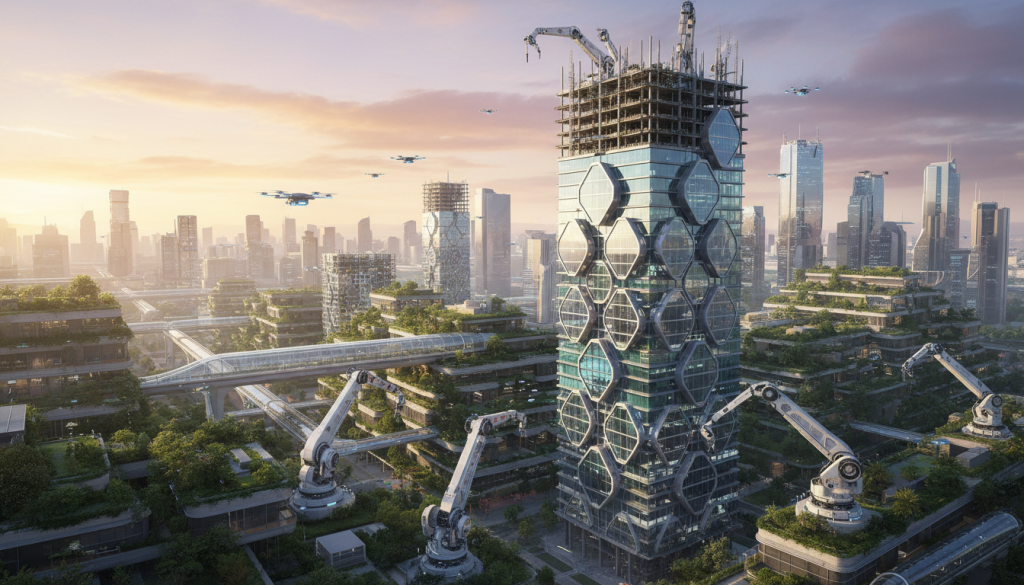
Modular construction is particularly well-suited for various applications, including residential building contractor projects and even elements of commercial property construction. Its inherent efficiency and waste reduction make it an attractive option for developers looking to build quickly and sustainably. Similarly, high-rise construction, often perceived as resource-intensive, is also benefiting from sustainable innovations. Modern steel structures, known for their strength and recyclability, are often employed in tall buildings. When combined with advanced façade systems and efficient vertical transportation, modern steel structures can contribute to the overall sustainability of high-rise developments. Urban infrastructure projects and industrial property development are also embracing these principles, recognizing that sustainable practices lead to long-term economic and environmental benefits.
The Path Forward: Integration and Innovation
The integration of these sustainable construction methods, from the initial digital planning with BIM to the final implementation of smart building technologies and advanced materials, signifies a fundamental shift. It’s about creating buildings that are not only resource-efficient and environmentally responsible but also healthier and more comfortable for their occupants. The ongoing advancements in construction site safety also contribute to the overall sustainability narrative, ensuring that the human element is prioritized throughout the building process. As we continue to innovate and adopt these practices, we are building a more resilient, efficient, and sustainable future for our cities and communities, one structure at a time.