Beyond the Skyline: Curating the Future of High-Rise Luxury and Transit-Linked Lifestyles
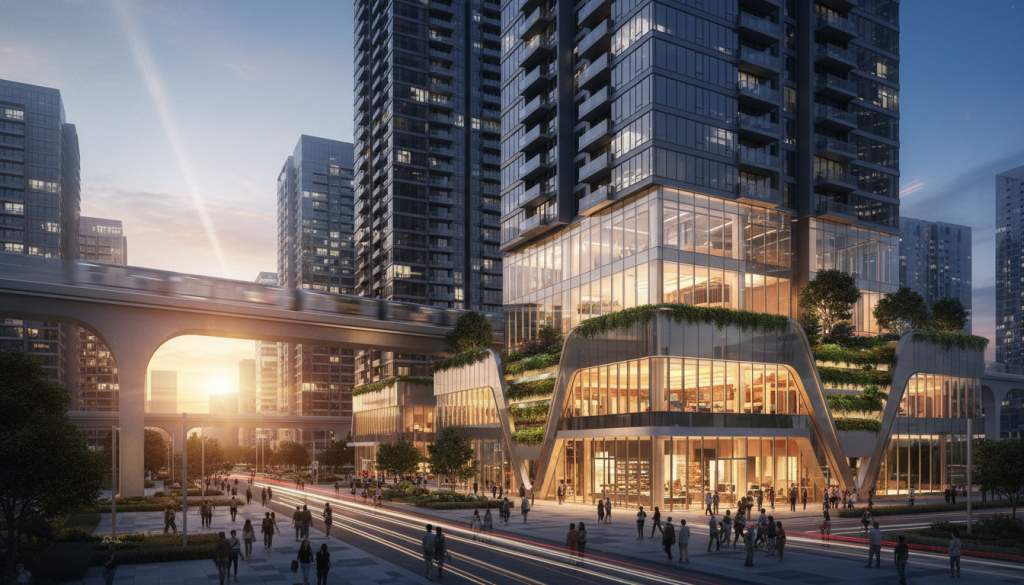
The modern metropolis is no longer just a collection of steel and glass reaching for the clouds; it is a living, breathing organism that pulses with the rhythm of millions of interconnected lives. As the golden hour casts its warm, amber glow across the city’s jagged skyline, a profound transformation is taking place beneath the surface of these concrete canyons. We are witnessing an architectural renaissance, a deliberate shift away from isolated residential towers toward holistic, hyper-connected ecosystems. Driven by meticulous urban property insights, today’s developers are orchestrating environments where the boundaries between home, work, and leisure dissolve into a seamless choreography of daily life.
The Rhythmic Pulse of Transit Oriented Development
At the heart of this urban evolution lies the concept of transit oriented development, a masterstroke of city planning that tethers vibrant community hubs directly to the arteries of public transportation. Imagine stepping out of your serene residential sanctuary and, within moments, gliding onto a sleek, high-speed rail network that connects you effortlessly to the wider world. This is not merely a convenience; it is a profound reimagining of spatial geography. By anchoring dense, multifaceted neighborhoods around transit stations, urban planners are drastically reducing the friction of the daily commute. The resulting streetscapes are pedestrian-friendly, bustling with energy, and devoid of the choking congestion that plagues older urban models. It is an environment where mobility feels less like a chore and more like a fluid extension of one’s personal freedom.
Crafting the Ultimate Sanctuary: Luxury Apartment Living
Suspended hundreds of feet above these bustling transit nodes, luxury apartment living is undergoing its own dramatic metamorphosis. The contemporary high rise apartment is no longer defined solely by its square footage or the prestige of its zip code. Instead, it is characterized by an obsessive attention to sensory detail and bespoke craftsmanship. Floor-to-ceiling windows do more than just offer panoramic vistas of the sprawling urban tapestry below; they invite the sky itself into the living space, bathing the interiors in shifting, natural light. The tactile experience of these homes—from the cool, honed marble of the kitchen islands to the rich, acoustic-dampening warmth of artisanal hardwood floors—speaks to a design philosophy that prioritizes psychological well-being as much as aesthetic grandeur.
The Brains Behind the Beauty: Smart Apartment Design
Yet, the true magic of these modern sanctuaries lies hidden within their walls. The integration of smart apartment design has transformed passive living spaces into active, intuitive companions. Advanced real estate analytics and property data analysis have revealed a deep consumer desire for homes that anticipate their needs. Consequently, developers are weaving invisible networks of sensors and algorithms into the very fabric of the building. Lighting systems that mimic the natural circadian rhythm, climate controls that learn your preferred temperature profiles, and security protocols managed through biometric recognition are now standard features. This technological invisible hand ensures that the environment is always perfectly calibrated to the resident’s mood and lifestyle, offering an unprecedented level of personalized comfort.
The Ecosystem of Experience: Retail and Culture Intersect
The journey from the private haven to the public sphere reveals yet another layer of this urban renaissance. The sterile, monolithic shopping centers of the past have been entirely reimagined. In their place, the lifestyle mall concept has emerged as a vibrant, experiential destination. These spaces are carefully curated to offer more than just transactional retail; they are immersive environments designed to captivate the senses. Verdant indoor gardens, cascading water features, and open-air promenades invite visitors to linger and socialize.
Furthermore, the lines between commerce and culture are increasingly blurred. It is now common to find a sophisticated art gallery space seamlessly integrated next to artisanal coffee roasters and bespoke fashion boutiques. This curation is heavily influenced by commercial real estate trends that emphasize experiential value over sheer volume. By transforming retail spaces into cultural hubs, developers are creating magnetic destinations that draw both residents and visitors alike, fostering a genuine sense of community within the commercial podiums of these towering developments.
Navigating the Future: Investment and Hospitality
Underpinning this entire architectural symphony is a foundation of rigorous property market research. Investors and developers are leaning heavily on a sophisticated property market forecast to identify opportunities that promise long-term resilience. The resulting structures are undeniably investment grade property, engineered to weather economic fluctuations through their diverse revenue streams and multifaceted utility. Interestingly, we are also seeing a significant cross-pollination with hospitality industry growth. The service standards, concierge amenities, and refined atmospheres traditionally reserved for five-star resorts are being injected directly into residential and commercial spaces, elevating the everyday experience to the realm of the extraordinary.
As the city lights begin to flicker on, painting the twilight with a million points of luminescence, the true triumph of these modern developments becomes undeniably clear. The orchestration of transit, technology, luxury, and lifestyle creates a tapestry of living that is infinitely richer than the sum of its parts. To reside in these elevated spaces is to be perfectly attuned to the heartbeat of the metropolis, anchored in a private sanctuary yet infinitely connected to the vibrant, unfolding drama of the urban landscape. It is a testament to human ingenuity, a bold declaration that the future of city living is not just about accommodating growth, but about profoundly enriching the human experience.