
Algorithmic Opulence: Evaluating the Merit of Sustainable Luxury in Smart City Real Estate
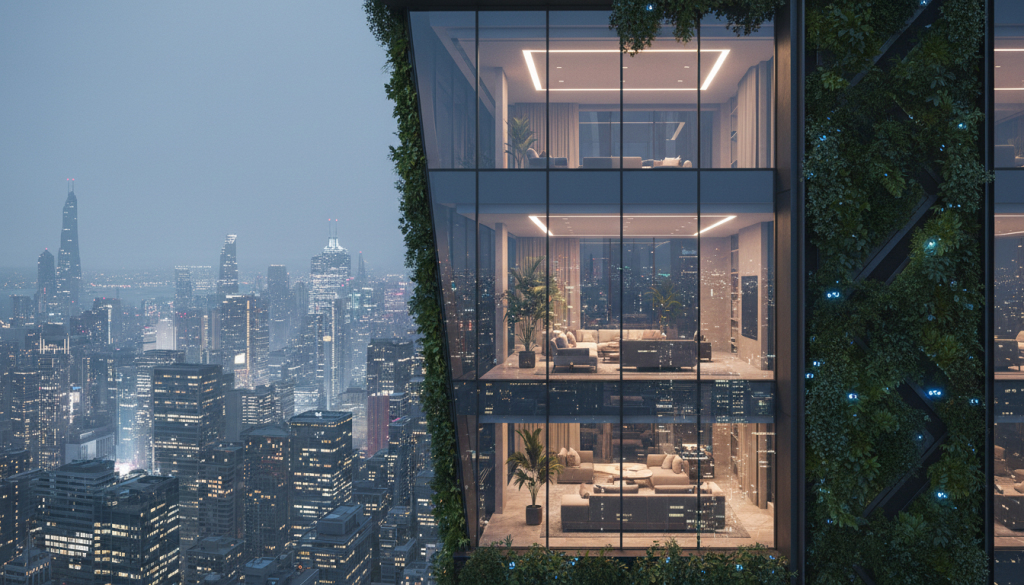
The contemporary real estate market is currently defined by a fascinating, albeit contradictory, convergence: the aggressive amalgamation of Luxury Smart Homes with Sustainable Green Homes. Developers are no longer selling mere square footage; they are peddling a curated ethos of algorithmic efficiency and ecological absolution. We are witnessing the rise of a new asset class within Smart City Real Estate, one that promises zero-carbon footprints without demanding any sacrifice in opulence. Yet, a rigorous examination of this sector reveals a persistent tension between genuine environmental stewardship and the simple repackaging of high-end consumerism.
The Metrics of Green Opulence
To understand the modern Eco Friendly Apartments or Premium Villa Living, one must look past the marketing brochures adorned with vertical gardens and reclaimed wood facades. The analytical reality of sustainable luxury often hinges on operational energy metrics rather than absolute consumption. A sprawling, ten-thousand-square-foot Modern Minimalist House may boast a LEED Platinum certification due to its geothermal HVAC system and solar roof tiles. However, the sheer volume of materials required—the embodied carbon of structural steel, imported marble, and vast expanses of triple-glazed glass—frequently negates the operational efficiencies achieved over the property’s lifecycle.
This is the paradox of green opulence. Developers leverage high-tech sustainability as a mechanism to justify excessive spatial consumption. The narrative suggests that because the energy is renewable and the climate control is managed by artificial intelligence, the scale of the consumption is rendered irrelevant. From a strictly ecological standpoint, this is a mathematical fallacy. True sustainability inherently demands a reduction in material footprint, a concept fundamentally at odds with the expansive nature of Prime Residential Land development.
Algorithmic Living and Urban Integration
The integration of these properties into the broader framework of Urban Living Spaces introduces another layer of critical complexity. Luxury Smart Homes are no longer isolated units; they are data-generating nodes within a massive urban network. Predictive analytics govern everything from ambient lighting to water usage, optimizing resource allocation with ruthless, machine-learned precision. The appeal to the affluent buyer is obvious: frictionless living where the environment anticipates human desire.
However, this hyper-efficiency comes at a distinct cost. The architecture of the smart home necessitates a continuous exchange of behavioral data. The sensors required to maintain the delicate balance of an eco-friendly luxury environment simultaneously function as a domestic panopticon. As High Rise Apartments become increasingly automated, the boundary between environmental optimization and invasive surveillance dissolves. Investors and buyers alike must critically evaluate whether the marginal gains in energy efficiency are worth the total surrender of domestic anonymity.
The High-Rise Dichotomy
When this model is applied to high-density environments and Luxury Penthouse Suites, the engineering challenges multiply. Vertical living has historically been praised for its density and consequent reduction in per-capita land use. Yet, the modern luxury iteration subverts this efficiency. Whole-floor penthouses with private cantilevered pools and dedicated car elevators require immense structural reinforcement and energy-intensive mechanical systems.
The inclusion of bio-philic design elements—such as automated hydroponic terraces—often serves more as a visual signifier of wealth than a functional ecological tool. The energy required to pump water and maintain the microclimates of these high-altitude gardens frequently outstrips the carbon dioxide they ostensibly absorb. It is a performative sustainability, engineered to satisfy ESG (Environmental, Social, and Governance) investment criteria rather than ecological imperatives.
The Economic Imperative of the Eco-Label
Ultimately, the proliferation of sustainable luxury is driven by the cold calculus of Real Estate Investment Opportunities. Institutional capital is increasingly bound by ESG mandates, meaning developers cannot secure prime financing for Suburban Housing Trends or Mixed Use Development unless the project bears the requisite green certifications. Consequently, sustainability has been weaponized as a premium feature, a line item that commands a 15 to 20 percent price premium in the current market.
This commodification of environmentalism effectively limits access to sustainable technologies to the upper echelons of the market. While Affordable Housing Projects struggle to integrate basic energy-efficient materials due to cost constraints, Luxury Waterfront Property flaunts self-healing concrete and kinetic energy-harvesting floors. When Commercial Shophouse Investment prioritizes high-end eco-certifications over accessible design, it inadvertently drives gentrification under the guise of environmental progress. The industry has effectively bifurcated the future of housing: sustainability is a luxury good, while the broader market remains reliant on outdated, carbon-intensive building practices.
The architectural evolution toward intelligent, green living spaces represents a necessary technological leap, yet it remains critically misapplied when used merely to sanitize luxury consumption. As long as the metrics for sustainability prioritize the efficiency of the systems over the scale of the demand, the smart luxury home will remain an exercise in aesthetic environmentalism. The true measure of innovation in future real estate will not be found in how intelligently a massive footprint can be masked, but in how effectively the industry can decouple genuine quality of life from relentless material expansion.